

Chapter 6: Yoga and its Relevance in the Modern Times
Original notes — ready CBSE (NCERT, English Medium) • Class 11 • Physical Education • Book: Health and Physical Education
Chapter 6: Yoga and its Relevance in the Modern Times — EG's own notes, in simple words
Book: Health and Physical Education (CBSE, Class 11) | Chapter 6 | Medium: English
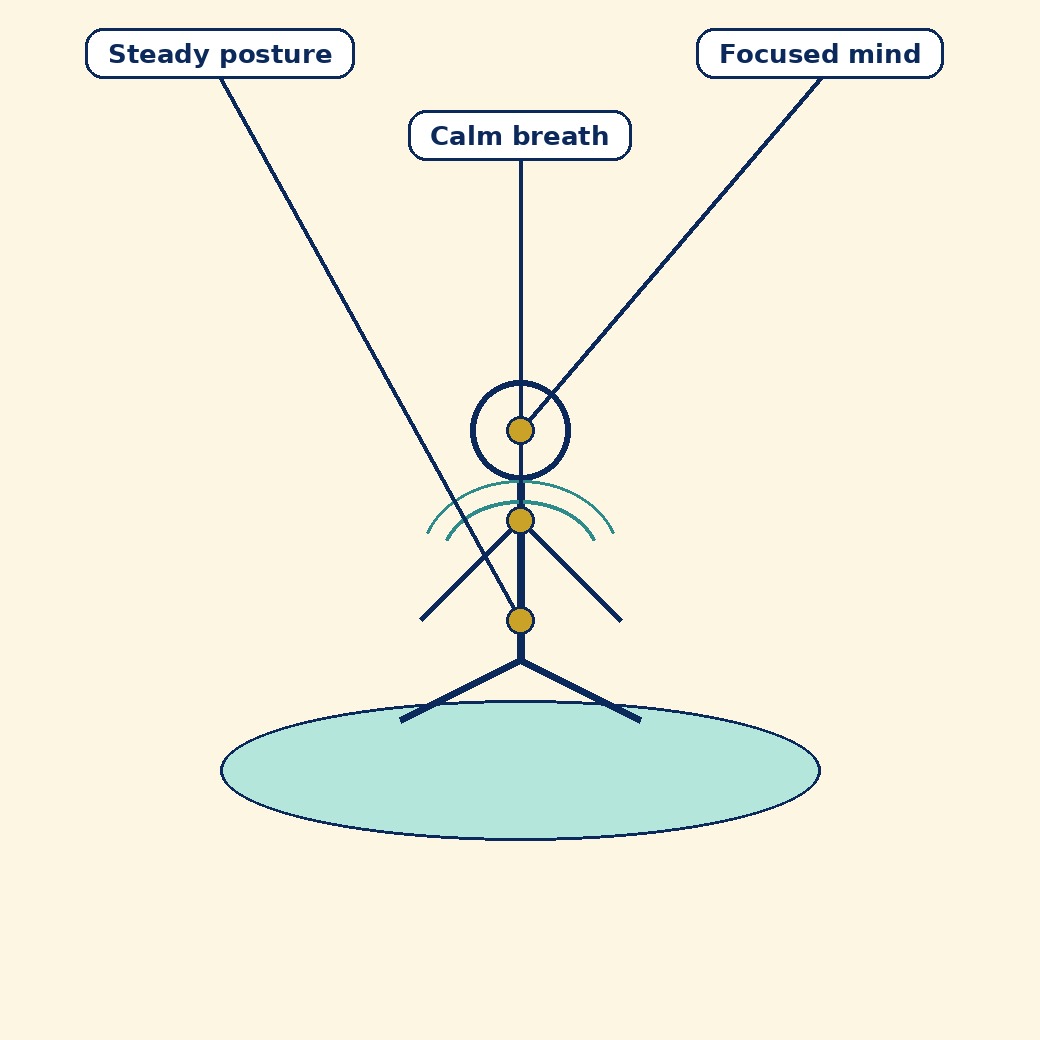
Diagram (labels on the image): Schematic (labels on the image): steady posture, calm breath, and a focused mind.
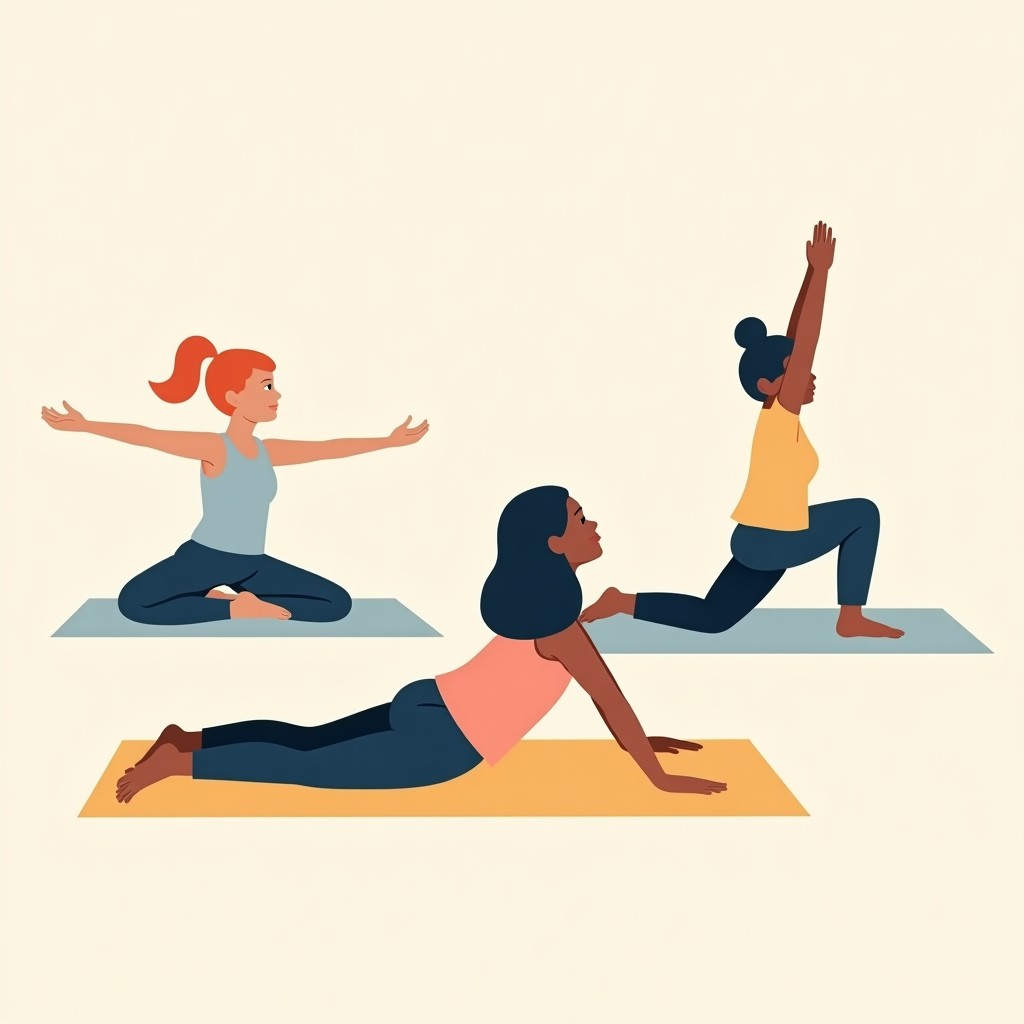
Morning practice: posture, breath and attention together.
What you should learn
- Trace the history and schools of yoga.
- State the guidelines for yoga practice before, during and after.
- Name the kriyas and the asanas taught in the chapter.
- Explain pranayama: deep breathing, Nadishodhana and Ujjayi.
- Describe bandhas and the process of dhyana.
1. 1. What yoga is
Yoga is an ancient Indian discipline joining body, breath and mind. The word comes from “yuj”, meaning to join or unite. It is not only physical exercise: its classical limbs include ethical conduct (yama, niyama), postures (asana), breath control (pranayama), sense withdrawal, concentration, meditation and, ultimately, union (samadhi).
Modern practice usually emphasises asana, pranayama and meditation, which is why yoga fits both physical education and stress management.
2. 2. Asanas and pranayama
Asanas are steady, comfortable postures held with awareness. Standing asanas (Tadasana, the mountain pose) build posture and balance; sitting asanas (Padmasana, the lotus pose) suit meditation; lying and inverted asanas rest or energise the body. Each asana should be learned correctly and held without strain.
Pranayama is breath regulation: slow, deep breathing (such as Anulom-Vilom, alternate-nostril breathing) calms the nervous system, improves lung capacity and supports concentration. Breathing should never be forced, and practice stops if dizziness occurs.
3. 3. Why yoga matters today
Modern life brings long sitting, screen strain, exam stress and poor sleep — all problems yoga directly addresses. Regular practice improves flexibility, posture, strength and balance, and reduces stress, anxiety and blood pressure. It needs no equipment and little space, so it suits homes, hostels and classrooms.
Yoga is recognised worldwide: the International Day of Yoga is celebrated on 21 June, and yoga is used in schools, hospitals, offices and sports training for recovery and focus.
4. 4. Practising safely
Safe practice means: learn from a trained teacher, warm up, practise on an empty or light stomach, wear comfortable clothes, breathe naturally, never force a posture, and avoid advanced practices with health conditions unless a teacher or doctor advises. Yoga complements medical care; it does not replace it.
5. 5. History and development of yoga; schools of yoga
Yoga is an ancient Indian discipline that joins body, breath and mind, and the chapter traces its history and development from early practice to the present day, when yoga is practised for health and wellness across the world. Its relevance in modern times comes from the same roots: a life of screens, sitting and stress needs the balance that yoga trains.
The schools of yoga differ in emphasis: some stress posture and physical practice, some stress breath and energy, and some stress meditation and knowledge. A student should know that these schools are paths to the same goal, not rival subjects, and that the chapter's practices draw on the yogic tradition as a whole.
6. 6. Guidelines for yoga practice
Guidelines are given for before, during and after yogic practice, because yoga done carelessly helps little and can harm. Before practice, the student should be guided by a teacher, wear comfortable clothing, and practise in a clean, calm place. During practice, movements should be slow and controlled, breathing should stay natural and easy, and pain is a signal to stop, not to push through.
After practice, the student should rest and relax, letting the body settle before returning to other work. These guidelines protect beginners most: yoga is not a competition, and a posture held with strain teaches nothing that a posture held with ease cannot teach better.
7. 7. Yogic kriyas and asanas for wellness
Yogic practices for wellness begin with kriyas, cleansing practices. Neti is a Hathayogic kriya concerned with cleansing the nasal passage and the throat as well; there are two types of Neti, including Jala neti, nasal cleansing with water. Agnisara is another kriya in the chapter, practised for abdominal strength and energy.
The asanas taught, each with stages for practice and benefits, are Vrikshasana, Padahastasana, Trikonasana, Parshvakonasana, Padmasana, Vajrasana, Bhadrasana, Ushtrasana, Shashankasana, Uttanamandukasana, Paschimottanasana, Suptavajrasana, Vakrasana, Ardhamatsyendrasana, Gomukhasana, Bhujangasana, Pawanmuktasana, Setubandhasana and Shavasana. Learn them by their stages and benefits, not by their names alone, and practise only those a teacher has taught.
8. 8. Pranayama
Pranayama is the yogic practice of breath control. The chapter begins with yogic deep breathing, which teaches slow, full breathing as the base for all other breathing practices. Deep breathing calms the mind and supplies the body steadily, and it is the practice to master first.
Nadishodhana pranayama is alternate-nostril breathing, practised in stages with its benefits for balance and calm. Ujjayi pranayama is the victorious breath, made with a soft sound in the throat and practised in stages for its calming benefits. Both are done gently, never forced, and both are stopped if there is discomfort.
9. 9. Bandhas and dhyana
Bandhas are yogic locks that direct energy in the body. Jalandhara bandha is the chin lock, and Uddiyana bandha is the abdominal lock; each is given with stages for practice and benefits, and each is learned only under a teacher, because a lock done wrongly strains rather than helps.
The process of dhyana, meditation, follows the same pattern: sit steady, breathe easy, and let attention rest on one point without forcing it. Dhyana is the goal towards which posture and breath lead, and the chapter's assessment tests whether the student can practise and explain these steps, not merely name them.
At a glance — chart / table
| Practice | What it is | Main benefit |
|---|---|---|
| Asana | Steady posture held with awareness | Flexibility, posture, strength |
| Pranayama | Regulated breathing | Calm, lung capacity, focus |
| Meditation (Dhyana) | Sustained focused attention | Stress relief, clarity |
| Yama / Niyama | Ethical conduct and self-discipline | Character, healthy habits |
Key Terms / Important Terms
- Yoga — An ancient Indian discipline joining body, breath and mind.
- Asana — A steady, comfortable posture held with awareness.
- Pranayama — Regulation of breath to calm and energise.
- Meditation — Sustained, focused attention of the mind.
- Tadasana — The mountain pose: a standing posture for balance and posture.
- Anulom-Vilom — Alternate-nostril breathing practice.
- Kriya — A yogic cleansing practice, such as Neti for the nasal passage.
- Bandha — A yogic lock, such as the chin lock (Jalandhara) or abdominal lock (Uddiyana), learned under a teacher.
- Dhyana — Meditation: steady sitting with attention resting on one point without force.
Remember
- Yoga = “yuj”, to join — body, breath and mind together.
- Asana = posture; pranayama = breath regulation; dhyana = meditation.
- International Day of Yoga: 21 June.
- Never force a posture or the breath; learn from a trained teacher.
- Every practice in the chapter has stages for practice and benefits — learn both.
Exam Tip / Common Mistake
Common mistake: defining yoga as only physical exercise. Examiners want the wider meaning — body, breath and mind, with ethical conduct and meditation as part of the classical system.
Practice set — try it yourself
- What does the word yoga mean, and why does that meaning matter? Hint: Hint: “Yuj” means to join — body, breath and mind.
- Distinguish asana from pranayama. Hint: Hint: One is posture, the other is breath regulation.
- Give three modern problems yoga helps with, and how. Hint: Hint: Sitting, stress and poor sleep are three.
- When is the International Day of Yoga celebrated? Hint: Hint: It falls in June, on the longest day in the northern hemisphere.
- List four safety rules for yoga practice. Hint: Hint: Trained teacher, warm-up, no forcing, comfortable clothes.
Questions with Answers
- What is yoga? Answer: Answer: Yoga is an ancient Indian discipline joining body, breath and mind. Its classical system includes ethical conduct, postures (asana), breath control (pranayama), concentration and meditation.
- Explain asana and pranayama with one example each. Answer: Answer: Asana is a steady, comfortable posture held with awareness, e.g. Tadasana (mountain pose). Pranayama is regulated breathing, e.g. Anulom-Vilom (alternate-nostril breathing), which calms the nervous system and improves lung capacity.
- Why is yoga relevant in modern times? Answer: Answer: Because modern life brings long sitting, screen strain, stress and poor sleep, which yoga directly addresses through movement, breathing and meditation, improving flexibility, posture, calm and focus without equipment or much space.
- When is the International Day of Yoga, and why does it matter? Answer: Answer: It is celebrated on 21 June. It matters because it recognises yoga worldwide and encourages schools, hospitals and workplaces to adopt it for health and well-being.
- State four safety rules for practising yoga. Answer: Answer: Learn from a trained teacher; warm up first; practise on an empty or light stomach in comfortable clothes; and never force a posture or the breath, stopping if dizziness occurs.
Extension Questions with Answers
- Why does the chapter give guidelines before, during and after practice? Answer: Answer: Because yoga done carelessly helps little and can harm. Guidance, a calm place, slow movement, natural breathing and rest afterwards protect beginners and make practice useful.
- What is Jala neti? Answer: Answer: Jala neti is one of the two types of Neti: nasal cleansing with water, a Hathayogic kriya that cleanses the nasal passage and helps the throat as well.
- Why must deep breathing be mastered before other pranayama? Answer: Answer: Because slow, full breathing is the base for all other breathing practices; it calms the mind and supplies the body steadily, and forced breathing without this base causes strain.
- Distinguish Nadishodhana from Ujjayi pranayama. Answer: Answer: Nadishodhana is alternate-nostril breathing for balance and calm. Ujjayi is the victorious breath, made with a soft sound in the throat, also for calming benefits.
- Why are bandhas learned only under a teacher? Answer: Answer: Because a lock directs energy and pressure in the body; done wrongly it strains rather than helps, so stages and benefits must be learned with guidance.
Board-pattern Questions with Answers
- What are the guidelines for yoga practice? Answer: Answer: Before: learn under a teacher, wear comfortable clothing, practise in a clean, calm place. During: move slowly, breathe naturally, stop at pain. After: rest and relax before other work.
- Name two kriyas from the chapter. Answer: Answer: Neti (including Jala neti, nasal cleansing with water) and Agnisara.
- Name five asanas taught in the chapter. Answer: Answer: Any five of: Vrikshasana, Padahastasana, Trikonasana, Parshvakonasana, Padmasana, Vajrasana, Bhadrasana, Ushtrasana, Shashankasana, Uttanamandukasana, Paschimottanasana, Suptavajrasana, Vakrasana, Ardhamatsyendrasana, Gomukhasana, Bhujangasana, Pawanmuktasana, Setubandhasana, Shavasana.
- What is Nadishodhana pranayama? Answer: Answer: Alternate-nostril breathing, practised in stages for balance and calm.
- Name the two bandhas in the chapter. Answer: Answer: Jalandhara bandha (chin lock) and Uddiyana bandha (abdominal lock).
Going deeper — Chapter 6: Yoga and its Relevance in the Modern Times
At the centre of this chapter are a few ideas that everything else hangs on: Yoga, Asana, Pranayama, Meditation. If you can explain those ideas in your own words without looking at the notes, you already hold the chapter's spine. Everything else on this page — the examples, the tables and the questions — is there to help you practise using those ideas, not to be memorised as separate facts.
Read the chapter in this order. First, read the summary slowly and ask yourself what question the chapter is answering. Then work through each section one at a time and, after each one, close the page and say its main point in two lines. The sections of this chapter are: 1. 1. What yoga is; 2. 2. Asanas and pranayama; 3. 3. Why yoga matters today; 4. 4. Practising safely; 5. 5. History and development of yoga; schools of yoga; 7. 7. Yogic kriyas and asanas for wellness. Each section adds one layer: an earlier section gives you the words and tools, and a later section shows you where those tools are used. When you revise, do not re-read passively — explain each section aloud as if you were teaching a classmate who missed the lesson.
In physical education answers, name the concept or procedure first, then give its steps or components in order, then its benefit or application. For fitness and training questions, give the correct term, the method, and one precaution or example.
Important Questions with Answers — deepening set
These questions go beyond the sets above. Try each one without looking, then check your answer against the notes.
- What does 'Yoga' mean? Explain it in your own words and say how it is used in this chapter.
An ancient Indian discipline joining body, breath and mind. In this chapter, Yoga is one of the ideas you must be able to use, not just define. When a question mentions Yoga, first write its meaning in one line, then apply it to the situation in the question. That two-step habit — meaning first, application second — is what turns a definition into marks. - What does 'Asana' mean? Explain it in your own words and say how it is used in this chapter.
A steady, comfortable posture held with awareness. In this chapter, Asana is one of the ideas you must be able to use, not just define. When a question mentions Asana, first write its meaning in one line, then apply it to the situation in the question. That two-step habit — meaning first, application second — is what turns a definition into marks. - What does 'Pranayama' mean? Explain it in your own words and say how it is used in this chapter.
Regulation of breath to calm and energise. In this chapter, Pranayama is one of the ideas you must be able to use, not just define. When a question mentions Pranayama, first write its meaning in one line, then apply it to the situation in the question. That two-step habit — meaning first, application second — is what turns a definition into marks. - What does 'Meditation' mean? Explain it in your own words and say how it is used in this chapter.
Sustained, focused attention of the mind. In this chapter, Meditation is one of the ideas you must be able to use, not just define. When a question mentions Meditation, first write its meaning in one line, then apply it to the situation in the question. That two-step habit — meaning first, application second — is what turns a definition into marks. - What does 'Tadasana' mean? Explain it in your own words and say how it is used in this chapter.
The mountain pose: a standing posture for balance and posture. In this chapter, Tadasana is one of the ideas you must be able to use, not just define. When a question mentions Tadasana, first write its meaning in one line, then apply it to the situation in the question. That two-step habit — meaning first, application second — is what turns a definition into marks. - What does 'Anulom-Vilom' mean? Explain it in your own words and say how it is used in this chapter.
Alternate-nostril breathing practice. In this chapter, Anulom-Vilom is one of the ideas you must be able to use, not just define. When a question mentions Anulom-Vilom, first write its meaning in one line, then apply it to the situation in the question. That two-step habit — meaning first, application second — is what turns a definition into marks.
Revision checklist and exam writing guide
Use this checklist the night before a test. Tick a point only if you can do it without opening the notes.
- I can explain '1. 1. What yoga is' in two lines without looking.
- I can explain '2. 2. Asanas and pranayama' in two lines without looking.
- I can explain '3. 3. Why yoga matters today' in two lines without looking.
- I can explain '4. 4. Practising safely' in two lines without looking.
- I can explain '5. 5. History and development of yoga; schools of yoga' in two lines without looking.
- I can explain '7. 7. Yogic kriyas and asanas for wellness' in two lines without looking.
- I can explain '8. 8. Pranayama' in two lines without looking.
- I can explain '9. 9. Bandhas and dhyana' in two lines without looking.
- I can write the chapter's key terms from memory, with one example for each.
- I can answer one long question from this chapter in five ordered paragraphs.
In physical education answers, name the concept or procedure first, then give its steps or components in order, then its benefit or application. For fitness and training questions, give the correct term, the method, and one precaution or example.
Common mistake to avoid: writing everything you remember about the chapter instead of answering the question asked. Read the question twice, underline its command word — explain, compare, why, what happens — and let that word decide the shape of your answer.
Recap
- Yoga joins body, breath and mind; schools differ in emphasis, not goal.
- Guidelines: before, during and after — slow, guided, never forced.
- Kriyas: Neti, Agnisara. Asanas: 19 named, each with stages and benefits.
- Pranayama: deep breathing, Nadishodhana, Ujjayi. Bandhas: Jalandhara, Uddiyana. Then dhyana.