

Chapter 22: Yogamaya Jīvana (Lifestyle for Holistic Health)
Yogamaya Jivana: a yogic lifestyle — food, sleep, rhythm and company, practised daily.
Original notes — ready CBSE (NCERT, English Medium) • Class 9 • Physical Education • Book: Khel Praveen
Chapter 22: Yogamaya Jīvana (Lifestyle for Holistic Health) — EG's own notes, in simple words
Book: Khel Praveen (CBSE, Class 9) | Chapter 22 | Section: Unit 6: Yoga for Holistic Health and Personal Excellence | Medium: English
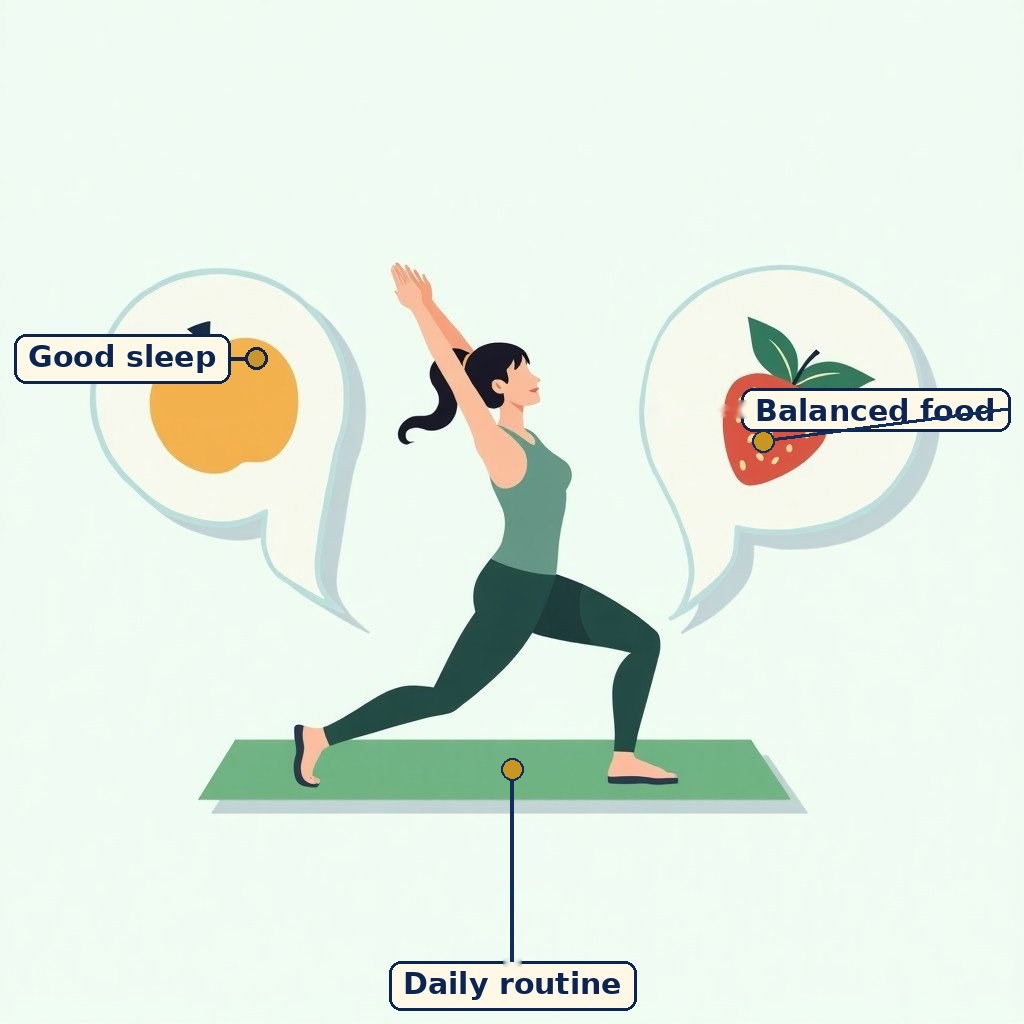
Diagram (labels are printed on the image): Sleep, balanced food and a steady routine — a yogic lifestyle. A general picture about healthy lifestyle; it is not a scene from the book.

A student starting the day with yoga and a healthy breakfast.

New labelled schematic (labels and gold dots are printed on the image): A yogic day wheel
What the chapter is about
Yogamaya jīvana means a life filled with yoga — not only poses on a mat, but a whole daily routine. It covers when you sleep and wake, what you eat, how you use screens, and how you treat others. Health, in this view, is built by daily choices.
A yogic routine is simple: sleep 8–10 hours, eat balanced food at regular times, move daily, limit junk food and late screens, and keep a few quiet minutes for breathing or reflection. Small rules, kept daily, matter more than big promises kept once.
This lifestyle also includes values: honesty, kindness, cleanliness and contentment. A calm, contented mind is part of health, not separate from it. When routine and values agree, life feels steady even during exams or stress.
Mitahara and the three kinds of food
Achieving holistic well-being is not an overnight process, but develops gradually through simple, daily habits — that is the chapter's first line and its whole argument. The first habit is mitahara, moderate eating: yoga reminds us that how we eat matters just as much as what we eat. Eat mindfully, without screens, asking before eating whether you are truly hungry, and reflecting after eating — the chapter's before, during and after eating check turns a slogan into a routine.
The Bhagavad-Gita classifies food into three broad types. Sattvika food includes fresh fruits, vegetables, grains, nuts, milk and ghee — fresh, light and calming. Rajasika food is stimulating and spicy, and tamasika food is stale, heavy and dulling. The advice is practical, not rigid: choose sattvika food more often, prefer local and seasonal produce, and check your plate against what your body systems actually need.
Sleep, rhythm, company and adolescence
Sleep is repair work: during sleep the body repairs tissues, restores energy, balances hormones, clears toxins and strengthens immunity. That is why the chapter pairs sleep with study and eating through the circadian rhythm — the body's natural 24-hour cycle. When sleep, study, meals and activity follow the same daily rhythm, mood and concentration improve; when screens and late nights break it, both fall.
Two more lifestyle pillars complete the chapter. Brahmacharya in daily life means moderation and right use of energy — including moderating screen time, gossip and overindulgence, the chapter's Section C exercise asks you to name one overindulgence and plan moderation for it. Good company matters because habits spread: friends who eat well, sleep on time and practise yoga make a yogic life easier. For adolescents, yoga itself helps by calming the mind during years of rapid change.
What you should learn
A yogic lifestyle builds health through daily routine — sleep, food, movement, limited screens and calm values — kept consistently.
Key Terms
- Yogamaya jīvana — A lifestyle filled with yoga principles in daily life.
- Routine — A regular daily pattern of sleep, food and activity.
- Balanced diet — Food with grains, vegetables, pulses, milk and fruit in right amounts.
- Contentment — Being satisfied with what one has.
- Screen time — Hours spent on phones, TV and computers.
Remember
- Yoga is a lifestyle, not only poses.
- Sleep, food, movement and screens all shape health.
- Small daily rules beat big rare promises.
- Calm values are part of health.
Exam Tip / Common Mistake
Common mistake: doing yoga but sleeping 5 hours and eating only junk. Yoga cannot fix a lifestyle that works against it.
Chart / Table: A yogic daily routine
| Point | Detail |
|---|---|
| Sleep | 8–10 hours, regular timings |
| Food | Balanced meals, less junk |
| Movement | Daily play or yoga |
| Screens | Limited, not before bed |
| Quiet time | Breathing or reflection daily |
Yogamaya Jivana is a daily rhythm: moderate, mindful eating with sattvika food first, regular sleep following the 24-hour cycle, moderated energy, and good company — built gradually, not overnight.
Practice set — try it yourself
- Write your ideal school-day routine with sleep, food and play.
Hint: Hint: Keep timings realistic. - Why does late screen use harm sleep?
Hint: Hint: Think bright light and busy mind. - What is a balanced diet for a teenager?
Hint: Hint: Grains, pulses, vegetables, milk, fruit. - Pick one small lifestyle change for this week.
Hint: Hint: Earlier bedtime or less junk food. - How do values like kindness affect health?
Hint: Hint: Think calm mind and good friendships.
Questions with Answers
- What is yogamaya jīvana?
A lifestyle filled with yoga principles — daily routine, balanced food, movement, limited screens and calm values — not only yoga poses. - Why is sleep part of a yogic lifestyle?
Because growing teenagers need 8–10 hours for growth, memory and mood. Poor sleep harms study, sport and health. - What is a balanced diet?
Food that gives all needs in right amounts: grains, pulses, vegetables, fruit, milk, and little junk food, oil and sugar. - Why limit screens before bed?
Because bright screens and exciting content keep the mind busy and delay sleep, leaving students tired next day. - How do values belong to health?
Because honesty, kindness and contentment calm the mind, and a calm mind supports the body. Health includes how we live with others.
Questions with Answers — Extension
- What is mitahara, and how is it practised before, during and after eating?
Moderate, mindful eating: before, ask if truly hungry; during, eat without screens and distractions; after, reflect on how the food made you feel. - Name the three Gita food types and give two examples of sattvika food.
Sattvika, rajasika, tamasika. Sattvika examples: fresh fruits, vegetables (also grains, nuts, milk, ghee). - What is the circadian rhythm, and how should it guide a student's day?
The body's natural 24-hour cycle: it should set regular times for sleep, study, meals and activity, so mood and concentration stay steady. - List four things the body does during sleep, according to the chapter.
Repairs tissues, restores energy, balances hormones, clears toxins — and strengthens immunity (any four). - Pick one overindulgence in your week (screen time, junk food or gossip) and write a moderation plan.
Any specific plan counts, e.g. screens off one hour before bed and meals without a phone — the chapter's point is naming the habit and fixing one step.
How to use this page: Read the summary, say the Key Terms in your own words, then try the practice set without looking. Use the Questions with Answers to check yourself afterwards. Ask your teacher or parent to check your answers.