

Chapter 23: Yoga for Personal Excellence
Yoga for personal excellence: Shreyas over Preyas, and four pillars to live by.
Original notes — ready CBSE (NCERT, English Medium) • Class 9 • Physical Education • Book: Khel Praveen
Chapter 23: Yoga for Personal Excellence — EG's own notes, in simple words
Book: Khel Praveen (CBSE, Class 9) | Chapter 23 | Section: Unit 6: Yoga for Holistic Health and Personal Excellence | Medium: English
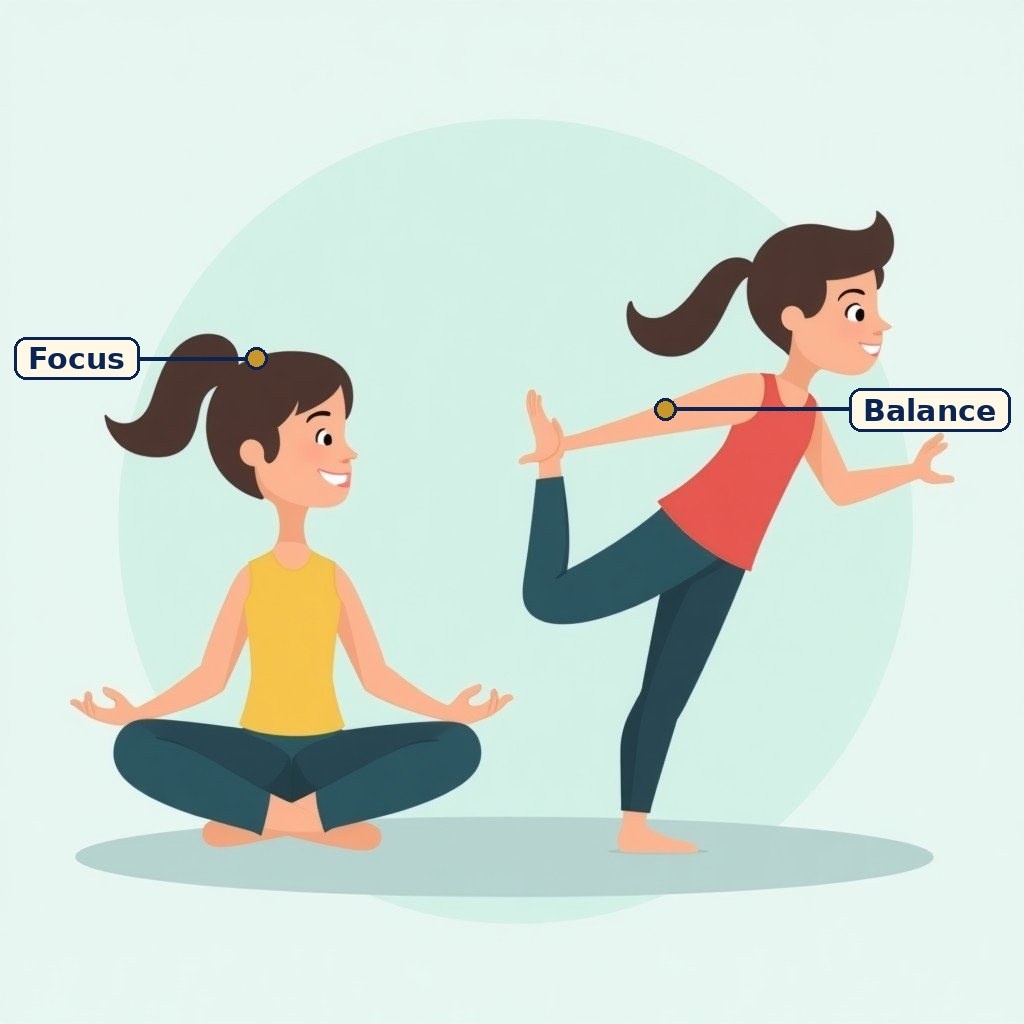
Diagram (labels are printed on the image): Focus, balance and self-control — yoga for personal excellence. A general picture about yoga and excellence; it is not a scene from the book.
A student meditating calmly before study.
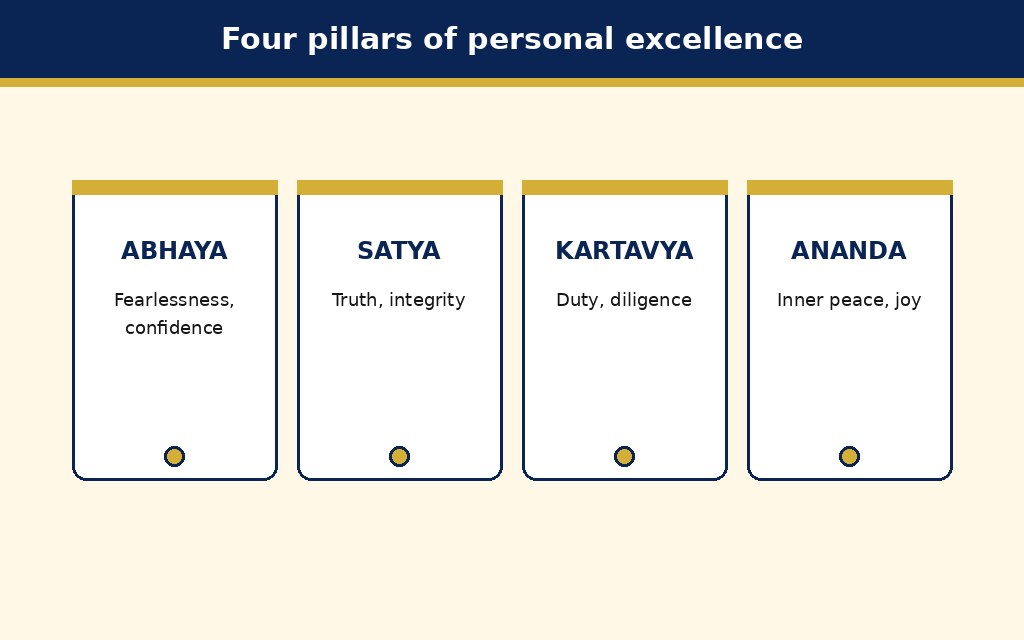
New labelled schematic (labels and gold dots are printed on the image): Four pillars
What the chapter is about
Personal excellence means becoming your best self — in sport, study and character. Yoga supports it through focus, self-control and balance of body, mind and willpower, the very qualities Olympic values also celebrate.
Abhinav Bindra, India's first individual Olympic gold medallist, practised meditation and mental training as seriously as shooting. His calm focus under pressure shows how yoga-like training turns talent into excellence.
For students, yoga for excellence is practical: breathing before an exam steadies nerves, a balancing pose trains concentration, and daily discipline builds willpower. Excellence here is personal best, not beating others.
Shreyas, Preyas and the choice of excellence
In the previous chapters we learned how yoga builds a strong, balanced body and mind. Now the chapter asks what to do with that strength: excellence is not an accident; it is a habit formed by your choices. The key choice is between shreyas and preyas. Preyas is the pleasant thing now — easy, attractive, short-lived happiness. Shreyas is the good thing — harder, lasting, the choice that builds a life.
The story of Nachiketa and Yama makes the choice concrete. Nachiketa stood before Death itself and refused pleasant gifts, asking instead for lasting truth — and the chapter asks which quality (abhaya) he built by standing up to pressure. The same choice appears in sport: the athlete who trains honestly rather than cheating for a quick win chooses shreyas. And the chapter's own warning fits yoga practice itself: just as you must be honest about your limits in a yoga pose to avoid injury, choosing shreyas teaches you to be honest with yourself and others.
Four pillars, higher goals and preparing body and mind
Excellence rests on four pillars. Abhaya is fearlessness and confidence — standing up to peer pressure like Nachiketa. Satya is truth and integrity — honesty in a pose, in a match, in life. Kartavya is duty and diligence — doing what needs to be done, because, as the chapter puts it, success comes from doing what needs to be done. Ananda is inner peace and joy — the happiness that remains when the trophy fades.
The chapter contrasts higher goals with small goals. A small goal — wanting respect, or a job in the palace, in the Chanakya example — can be destroyed by one insult. A higher goal survives setbacks and leads to peace, while smaller goals can lead to misery. The athletes the text names as examples of focusing on higher goals — including one of India's youngest shooting champions — prove that physical limitations cannot stop excellence. Preparing body and mind for shreyas through yoga practice is therefore the chapter's final task: postures, breath and meditation, practised daily, as the training ground for wise choices.
What you should learn
Yoga builds focus, self-control and balance, turning talent into personal excellence in sport, study and character.
Key Terms
- Personal excellence — Becoming your best self, not necessarily beating others.
- Focus — Steady attention on one task.
- Self-control — Managing feelings and impulses.
- Willpower — Steady determination to keep trying.
- Mental training — Practising calm and focus like physical training.
Remember
- Excellence means personal best.
- Focus and self-control can be trained.
- Balance of body, mind and willpower matters.
- Daily discipline builds willpower.
Exam Tip / Common Mistake
Common mistake: thinking yoga is only for flexibility. Its greatest gift for excellence is a trained, calm mind.
Chart / Table: Yoga tools for excellence
| Point | Detail |
|---|---|
| Balancing poses | Concentration and patience |
| Slow breathing | Calm nerves before pressure |
| Meditation | Focus and emotional control |
| Daily discipline | Willpower and habit |
| Reflection | Learning from success and failure |
Personal excellence is a habit of choosing shreyas over preyas, built on four pillars — abhaya, satya, kartavya and ananda — and trained daily through yoga for body and mind.
Practice set — try it yourself
- Practise 2 minutes of slow breathing before homework. Note the difference.
Hint: Hint: Compare focus before and after. - Try a balancing pose for 30 seconds. What does it train?
Hint: Hint: Focus, patience, body control. - How did mental training help Abhinav Bindra?
Hint: Hint: Calm focus under pressure. - What is personal excellence versus winning?
Hint: Hint: Best self versus beating others. - Set one excellence goal: a skill, not a rank.
Hint: Hint: 'Hold tree pose 1 minute' beats 'be first'.
Questions with Answers
- What is personal excellence?
Becoming your best self in skill, study and character — measured against your own past, not only against others. - How does yoga build focus?
Balancing poses, slow breathing and meditation train steady attention, so the mind wanders less under pressure. - Why is self-control important in sport?
Because it keeps players calm after mistakes, fair toward opponents, and steady in training over months. - How did Abhinav Bindra use mental training?
He practised meditation and mental training as seriously as shooting, so his calm focus became the key to Olympic gold in 2008. - Give a student's example of yoga for excellence.
Breathing slowly before an exam to calm nerves, then focusing better — a small yoga tool used for a personal best.
Questions with Answers — Extension
- What is the difference between shreyas and preyas, in terms of happiness?
Preyas gives pleasant, short-lived happiness now; shreyas gives lasting good — harder to choose, but happiness that survives setbacks. - Which pillar did Nachiketa build by standing up to Yama, and how does it apply to peer pressure?
Abhaya (fearlessness): refusing pleasant gifts for truth is the same courage as refusing a dare or cheating under peer pressure. - What Sanskrit term means 'duty' in 'success comes from doing what needs to be done'?
Kartavya — diligence and discipline in doing one's duty. - How does practising satya prevent injury in a yoga pose?
Honesty about your limits stops you forcing a pose beyond what your body can do safely — truth protects the body. - Why do higher goals lead to peace while smaller goals can lead to misery?
Higher goals survive insults and setbacks because they do not depend on one reward; small goals (respect, a single prize) collapse when that reward is denied.
How to use this page: Read the summary, say the Key Terms in your own words, then try the practice set without looking. Use the Questions with Answers to check yourself afterwards. Ask your teacher or parent to check your answers.