

Chapter 21: Samagra Svāsthya (Yoga for Holistic Health)
Samagra Svasthya: health as balance across body, mind, intellect, society and spirit.
Original notes — ready CBSE (NCERT, English Medium) • Class 9 • Physical Education • Book: Khel Praveen
Chapter 21: Samagra Svāsthya (Yoga for Holistic Health) — EG's own notes, in simple words
Book: Khel Praveen (CBSE, Class 9) | Chapter 21 | Section: Unit 6: Yoga for Holistic Health and Personal Excellence | Medium: English
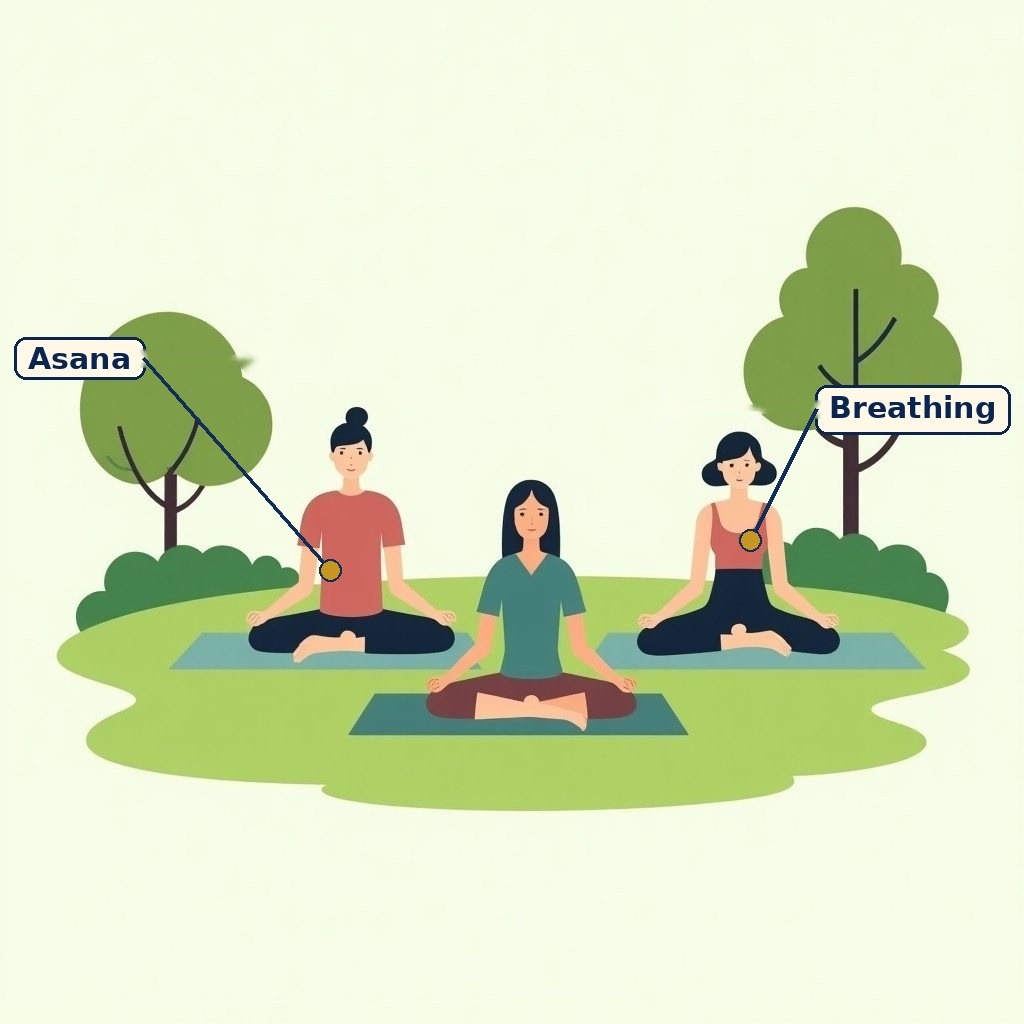
Diagram (labels are printed on the image): Yoga poses, breathing and a calm mind for whole health. A general picture about holistic yoga; it is not a scene from the book.
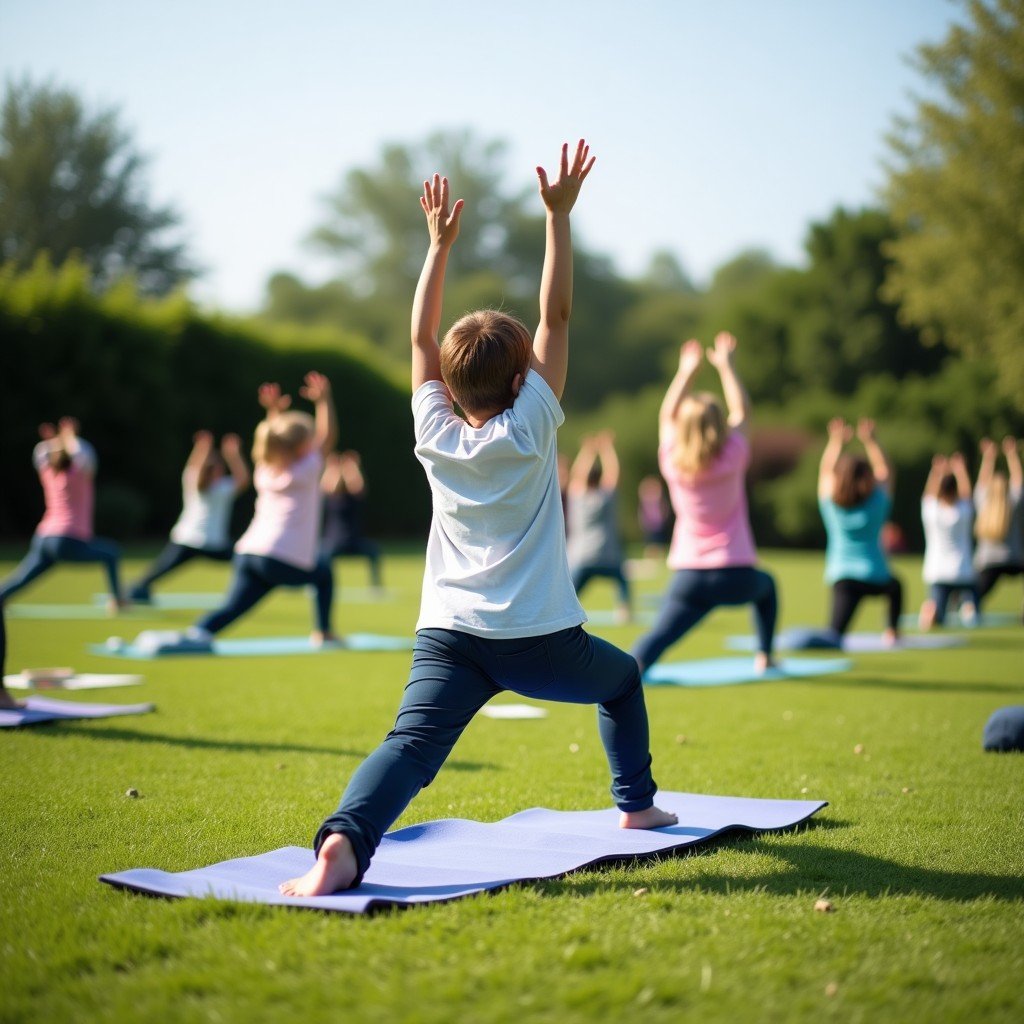
Students practising simple yoga poses in the school garden.
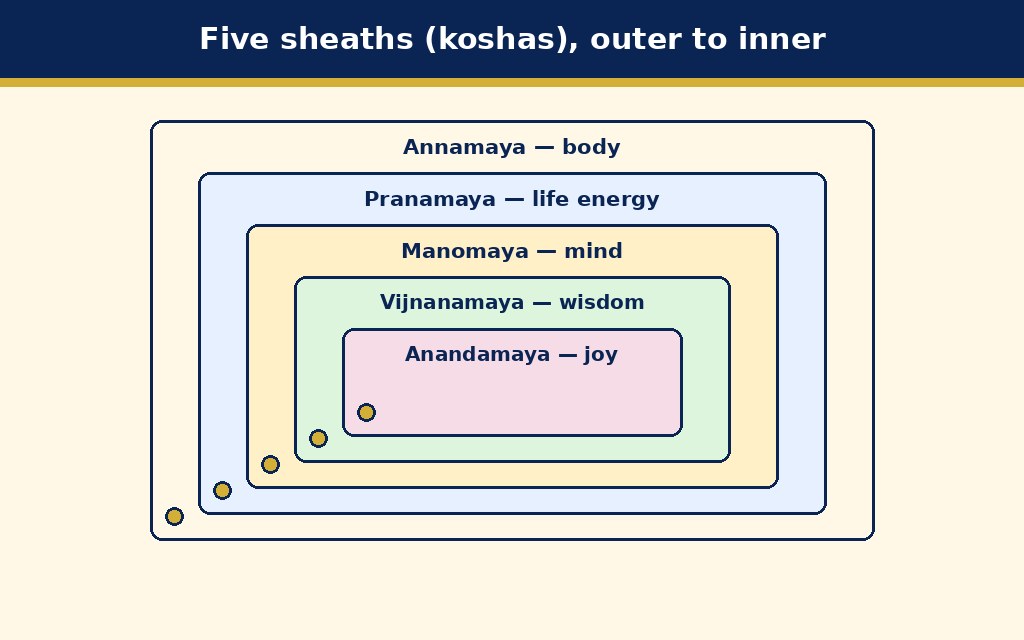
New labelled schematic (labels and gold dots are printed on the image): Five kosha layers
What the chapter is about
Samagra svāsthya means whole health — health of body, mind and spirit together. Yoga serves this wholeness: postures strengthen the body, breathing calms the mind, and meditation steadies emotions. It is not only exercise; it is a way of living well.
Indian thought speaks of pañchakośha, five layers of a person: body, energy, mind, wisdom and bliss. Yoga works on all layers — food and movement for the body, breath for energy, and quiet practice for mind and wisdom.
A short daily practice helps more than a rare long one. Ten mindful minutes — a few poses, slow breathing, a quiet minute — can improve flexibility, sleep and focus, and reduce stress before exams.
One long life, one big idea
The chapter opens with Swami Sivananda Baba, described as a real-life superhero of health and happiness. Born in 1897, he lived an extraordinary 128 years, thanks to his simple lifestyle, daily yoga practice and peaceful mind. In 2022 he was honoured with the Padma Shri for inspiring millions with his healthy habits. His life is the chapter's evidence: health is built daily, by simple habits, not bought in a single effort.
That leads to the chapter's definition. Many people equate being healthy with simply not being sick. Samagra Svasthya says health is much wider: it is balance across dimensions — physical, mental, intellectual, social and spiritual. A student who eats well but sleeps badly, or studies well but cannot handle anger, is not fully healthy by this measure.
Ease versus dis-ease, and the five sheaths
The chapter contrasts ease and dis-ease. Ease, the natural state of balance, shows as consistent daily activities, calm emotions, a healthy and strong body, a focused mind, good sleep and appetite, and compassion and friendliness. Dis-ease, disturbance and lack of ease, shows as tiredness and illness, emotional instability, poor sleep and appetite, lack of focus and a weak immune system. The contrast is a self-check: which list looks more like your week?
Indian thought maps the person through five sheaths (koshas), including the pranamaya-kosha, the sheath of prana or life force and energy that flows through the body. Yoga works on all the sheaths together — postures for the body, breath for energy, meditation for mind — which is why the chapter calls yoga a journey of awareness and self-development rather than mere exercise. The Check Your Progress self-audit (food, 7–8 hours of sleep, play and yoga, focus, emotions, decisions, contentment) turns the whole chapter into one honest page of self-review.
What you should learn
Samagra svāsthya is whole health, and yoga supports it through postures, breathing and meditation across body, energy and mind.
Key Terms
- Samagra svāsthya — Whole or holistic health of body, mind and spirit.
- Asana — A yoga posture held steadily and comfortably.
- Prānāyāma — Breathing practice that calms and energises.
- Pañchakośha — The five layers of a person in Indian thought.
- Meditation — Quiet practice of focused, calm attention.
Remember
- Yoga serves body, mind and spirit together.
- Postures, breathing and meditation each have a role.
- Short daily practice beats rare long sessions.
- Yoga reduces stress and improves sleep and focus.
Exam Tip / Common Mistake
Common mistake: forcing a pose to look like a photo. A pose should be steady and comfortable — pain means stop and adjust.
Chart / Table: Yoga for whole health
| Point | Detail |
|---|---|
| Asana | Strength, flexibility, balance |
| Prānāyāma | Calm energy, better breathing |
| Meditation | Focus, calm emotions |
| Good food and sleep | Supports all practice |
| Daily habit | Small regular practice wins |
Samagra Svasthya means total health: balance across body, mind, intellect, society and spirit, built daily through simple habits — as Swami Sivananda Baba's 128 years showed.
Practice set — try it yourself
- Practise 5 minutes: 2 poses, slow breathing, 1 quiet minute.
Hint: Hint: Keep poses comfortable. - What does samagra svāsthya mean?
Hint: Hint: Whole health. - How is yoga different from ordinary exercise?
Hint: Hint: Think mind and breath too. - Why is daily short practice better than monthly long practice?
Hint: Hint: Think habit and steady gains. - Which yoga part helps most before an exam, and why?
Hint: Hint: Breathing and calm focus.
Questions with Answers
- What is samagra svāsthya?
Whole or holistic health — the well-being of body, mind and spirit together, not only the absence of disease. - What are the parts of a yoga practice?
Postures (asana) for the body, breathing (prānāyāma) for energy and calm, and meditation for focus and emotions. - What is pañchakośha?
The Indian idea of five layers of a person: body, energy, mind, wisdom and bliss, all of which yoga seeks to balance. - Why practise yoga daily in small doses?
Because regular short practice builds habit, flexibility and calm steadily, while rare long sessions strain the body and fade. - How can yoga help a student?
It improves flexibility, sleep and concentration, and reduces exam stress through breathing and quiet practice.
Questions with Answers — Extension
- Who was Swami Sivananda Baba, and what does his life prove about health?
Born 1897, lived 128 years on simple lifestyle, daily yoga and a peaceful mind; Padma Shri 2022. His life proves health is built by daily habits, not single efforts. - How does Samagra Svasthya define health differently from 'not being sick'?
As balance across physical, mental, intellectual, social and spiritual dimensions — not being sick covers only one part. - Give three signs of ease and three signs of dis-ease from the chapter.
Ease: calm emotions, focused mind, good sleep and appetite. Dis-ease: tiredness and illness, emotional instability, lack of focus. - What is the pranamaya-kosha?
The sheath of prana — life force and energy — that flows through the body, worked on through breath practice. - Use the chapter's self-audit: which dimension of your own health needs most work this week, and what one habit would fix it?
Any honest answer naming one dimension (e.g. sleep: 7–8 hours nightly) with one concrete habit counts — the chapter's point is self-review leading to action.
How to use this page: Read the summary, say the Key Terms in your own words, then try the practice set without looking. Use the Questions with Answers to check yourself afterwards. Ask your teacher or parent to check your answers.