

Chapter 18: Indigenous Martial Arts and Sport
Thang-Ta, Gatka, Kalaripayattu and Mallakhamb — India's martial heritage in one chapter.
Original notes — ready CBSE (NCERT, English Medium) • Class 9 • Physical Education • Book: Khel Praveen
Chapter 18: Indigenous Martial Arts and Sport — EG's own notes, in simple words
Book: Khel Praveen (CBSE, Class 9) | Chapter 18 | Section: Unit 5: Sports | Medium: English
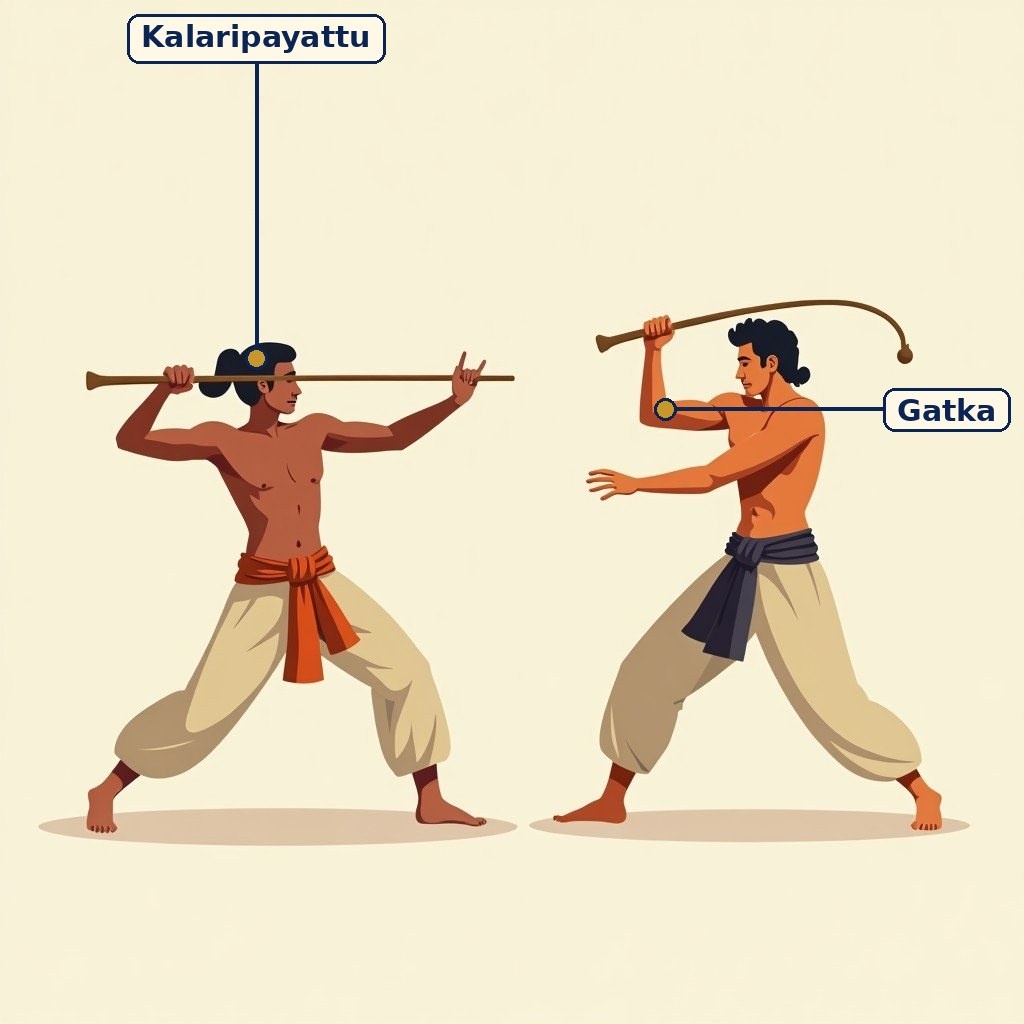
Diagram (labels are printed on the image): Kalaripayattu and Gatka — indigenous martial arts of strength and discipline. A general picture about Indian martial arts; it is not a scene from the book.
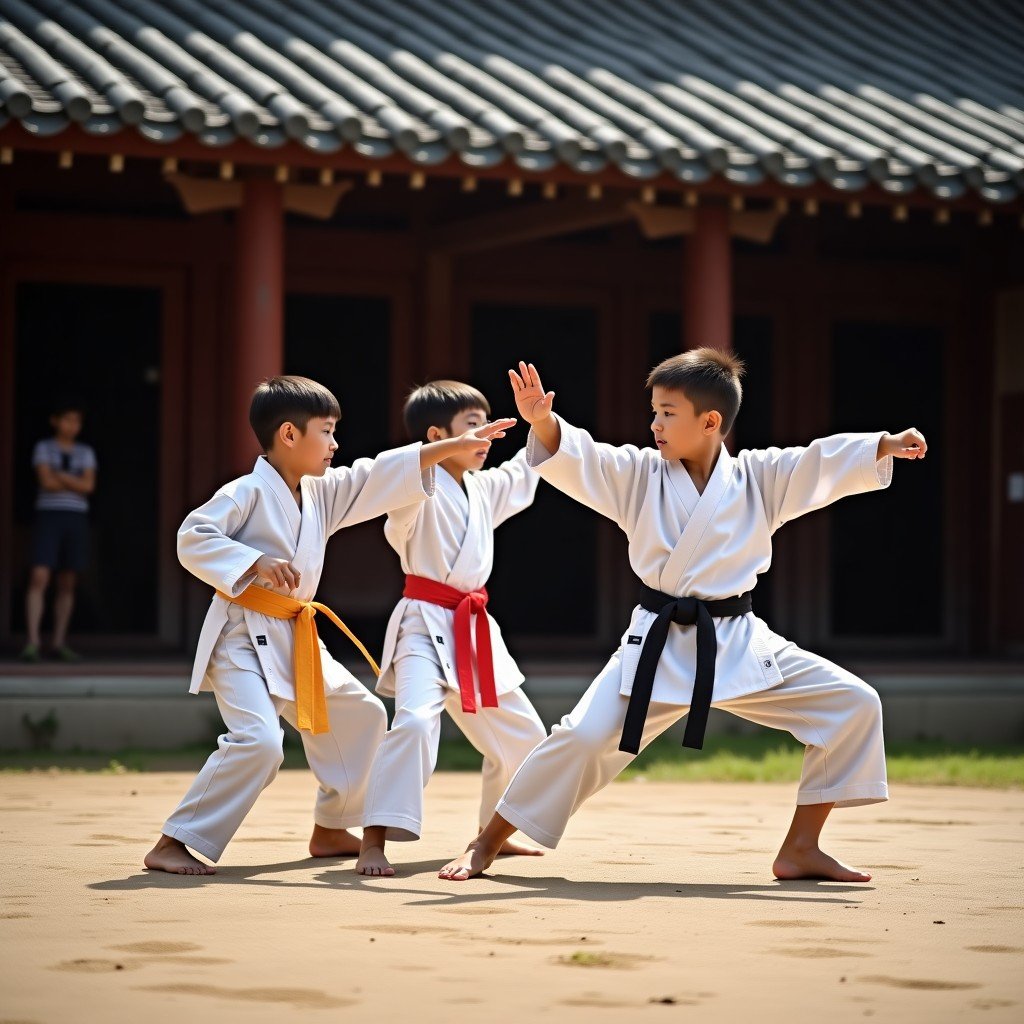
Students watching a traditional martial arts demonstration.
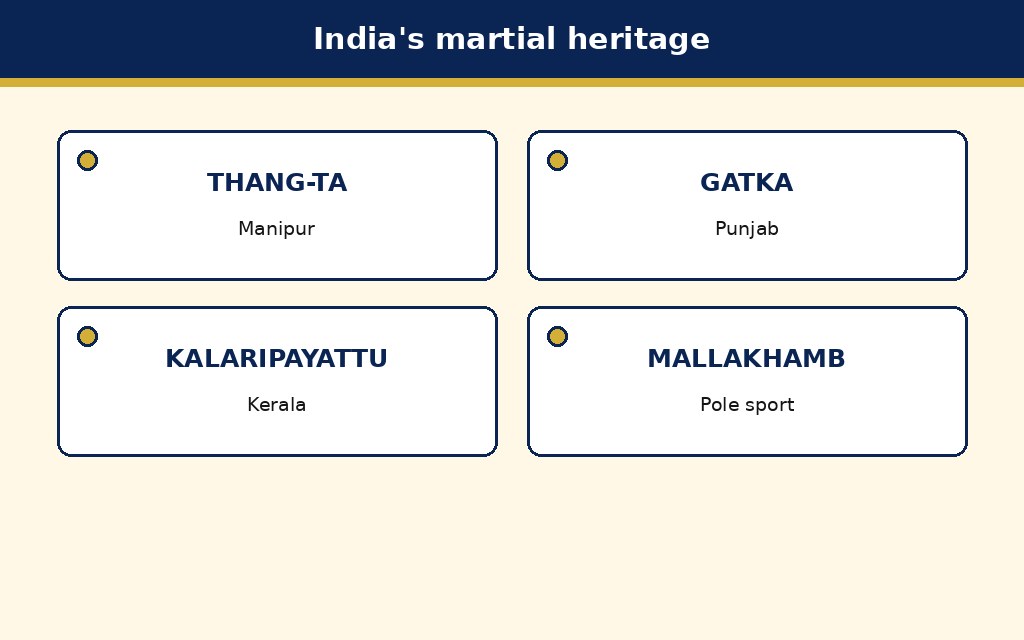
New labelled schematic (labels and gold dots are printed on the image): Four traditions
What the chapter is about
India's martial arts are living heritage. Kalaripayattu from Kerala is among the world's oldest martial arts, mixing kicks, strikes, weapons and healing knowledge. Gatka from Punjab uses sticks and swords with rhythm and courage. Thang-Ta from Manipur and Mallakhamb — pole and rope gymnastics — are other proud traditions.
These arts train more than fighting. They build flexibility, balance, focus and respect for teachers. Many include warm-ups, breathing and moral rules: never use skill to bully, always protect the weak.
Today these arts appear in competitions, films and school demonstrations, and Khelo India supports them. Learning one connects you to India's history through your own body.
Three martial arts, three regions
Thang-Ta is an indigenous martial art of Manipur, a fine combination of body, breath and blade. Its name joins sword (thang) and spear (ta) traditions, and its practice trains coordination, breath control and discipline together — the chapter stresses that it is a complete art, not just weapon play.
Gatka comes from Punjab. During the 16th century, the sixth Guru, Guru Hargobind Sahib Ji (1595–1644), initiated this historical art of self-defence. The chapter's weapon list — including swords and the teg — shows a system built for real defence, practised today as sport and cultural performance. Kalaripayattu, from Kerala, completes the trio: an ancient system of strikes, kicks, grappling and weapon work, famous for its flowing, acrobatic movement and its training in flexibility and body control.
Mallakhamb: the indigenous sport
Mallakhamb is the chapter's indigenous sport rather than a martial art, though it shares the same roots in strength training. It beautifully blends strength, flexibility, balance and concentration on a vertical wooden pole (or rope). It was revived during the reign of Bajirao Peshwa II (1796–1818) by his court gymnast Balambhat Dada Deodhar, to train soldiers for battle.
Modern recognition followed: Mallakhamb was declared the State Sport of Madhya Pradesh in 2013 and featured in the Khelo India Games and the 36th National Games in 2022. For exams, fix the chain: Peshwa-era revival for soldiers → state sport 2013 → national stage 2022. Together, the four traditions show one idea: Indian physical culture trained fighters, soldiers and performers through the same qualities — strength, balance, breath and focus.
What you should learn
India's indigenous martial arts — Kalaripayattu, Gatka, Thang-Ta, Mallakhamb — build skill, discipline and cultural pride.
Key Terms
- Kalaripayattu — Ancient martial art from Kerala with strikes, weapons and healing.
- Gatka — Punjabi martial art using sticks and swords.
- Thang-Ta — Martial art from Manipur with sword and spear.
- Mallakhamb — Gymnastics on a pole or rope.
- Martial art — A traditional system of combat training and discipline.
Remember
- Kalaripayattu is from Kerala; Gatka from Punjab.
- Thang-Ta is from Manipur; Mallakhamb is pole gymnastics.
- Martial arts train discipline, not bullying.
- They are living heritage, now in competitions too.
Exam Tip / Common Mistake
Common mistake: thinking martial arts are only about fighting. Their first lessons are respect, control and never misusing skill.
Chart / Table: Indigenous martial arts of India
| Point | Detail |
|---|---|
| Kalaripayattu | Kerala — kicks, strikes, weapons, healing |
| Gatka | Punjab — sticks and swords, rhythm |
| Thang-Ta | Manipur — sword and spear forms |
| Mallakhamb | Pole and rope gymnastics |
| All | Discipline, balance, respect for teachers |
Thang-Ta, Gatka and Kalaripayattu carry India's martial traditions, and Mallakhamb carries its pole-sport heritage — all four train strength, balance, breath and focus, and all four are now recognised on national stages.
Practice set — try it yourself
- Match each art to its state and weapon or tool.
Hint: Hint: Use the chart. - Why do martial arts teach respect first?
Hint: Hint: Think power and responsibility. - Try five minutes of balance and stretching like a martial artist.
Hint: Hint: Slow, controlled, focused. - How is Mallakhamb different from a fight art?
Hint: Hint: Think gymnastics on a pole. - Why should schools showcase indigenous arts?
Hint: Hint: Think heritage and pride.
Questions with Answers
- What is Kalaripayattu?
An ancient martial art from Kerala combining kicks, strikes, weapon forms and healing knowledge, among the world's oldest martial arts. - What is Gatka?
A Punjabi martial art practised with sticks and swords, performed with rhythm, courage and discipline. - Name two more indigenous arts and their homes.
Thang-Ta from Manipur, using sword and spear, and Mallakhamb, pole and rope gymnastics practised across India. - Do martial arts only teach fighting?
No. They teach flexibility, balance, focus, breathing and moral rules — above all, never to misuse skill to bully others. - Why are indigenous arts important today?
They carry India's heritage, build fitness and discipline, and are now supported in competitions and school programmes.
Questions with Answers — Extension
- Match each art to its region and one defining feature: Thang-Ta, Gatka, Kalaripayattu, Mallakhamb.
Thang-Ta — Manipur, body-breath-blade. Gatka — Punjab, Sikh self-defence tradition. Kalaripayattu — Kerala, flowing strikes and flexibility. Mallakhamb — pole sport, strength-balance-concentration. - Who revived Mallakhamb, when, and for what purpose?
Balambhat Dada Deodhar, court gymnast of Bajirao Peshwa II (1796–1818), revived it to train soldiers for battle. - Give Mallakhamb's modern recognition timeline.
State Sport of Madhya Pradesh in 2013; featured in the Khelo India Games and the 36th National Games in 2022. - Why is Thang-Ta described as a combination of body, breath and blade?
Because its practice joins physical movement, controlled breathing and weapon skill — none alone makes the art complete. - What single quality do all four traditions train, and why does it matter beyond fighting?
Focus and body control: balance, breath and concentration transfer to every sport and to daily discipline.
How to use this page: Read the summary, say the Key Terms in your own words, then try the practice set without looking. Use the Questions with Answers to check yourself afterwards. Ask your teacher or parent to check your answers.