

Chapter 17: Age is Just a Number
Fauja Singh at 100: why exercise is called the best medicine for ageing.
Original notes — ready CBSE (NCERT, English Medium) • Class 9 • Physical Education • Book: Khel Praveen
Chapter 17: Age is Just a Number — EG's own notes, in simple words
Book: Khel Praveen (CBSE, Class 9) | Chapter 17 | Section: Unit 4: Sports for All | Medium: English

Diagram (labels are printed on the image): Older adults staying active with yoga, walking and play. A general picture about sport at every age; it is not a scene from the book.
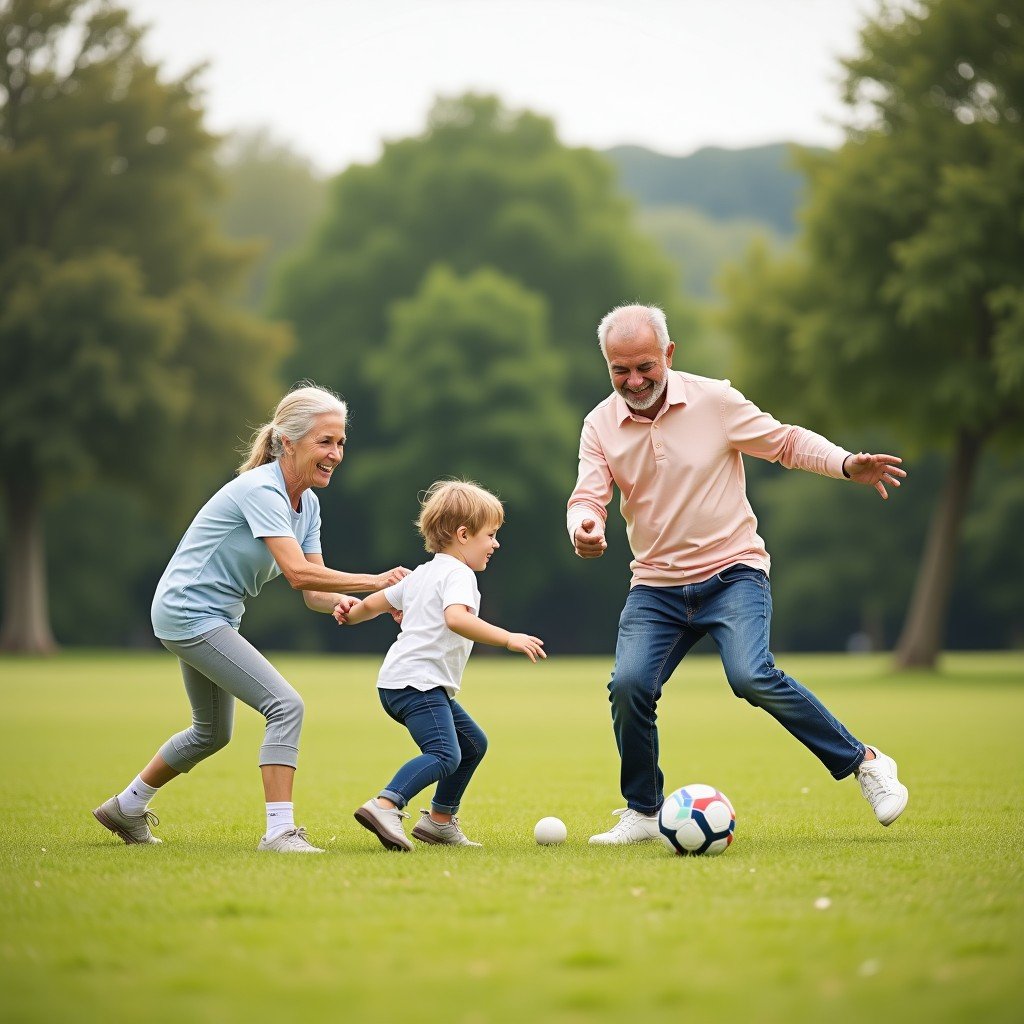
Grandparents and grandchildren playing together in a park.
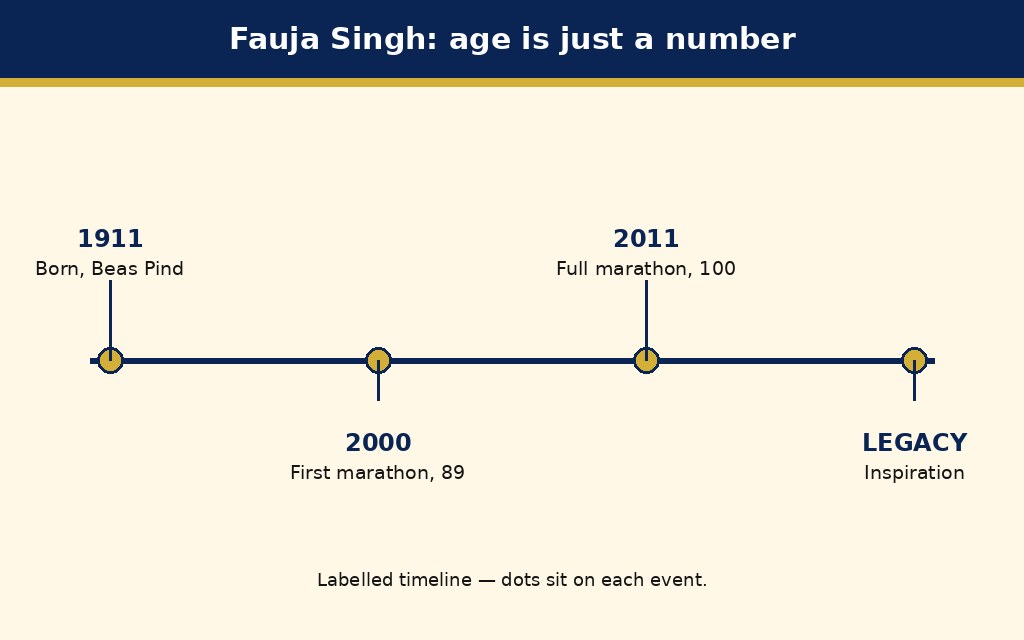
New labelled schematic (labels and gold dots are printed on the image): Fauja Singh timeline
What the chapter is about
Sport has no age limit. Children play, adults compete, and older people walk, practise yoga, swim and play games that keep them strong and cheerful. Age changes what suits us, but it never cancels movement.
Active ageing keeps bones, balance and memory stronger. Older adults who move regularly fall less, sleep better and feel less lonely. Games across generations — grandparents playing with grandchildren — build family bonds too.
The lesson for students is simple: choose activities you can enjoy for life. A sport you love at 15 and can still play at 50 is a gift. Respect older players, learn from them, and never tease anyone for being 'too old' to play.
One life that answers the chapter title
Fauja Singh was a British Sikh marathon runner of Indian origin and an inspiration for people of all ages. He was born on 1 April 1911 in Beas Pind village, Jalandhar, Punjab. At the age of 89 he started training seriously and completed his first marathon in 2000 at the London Marathon. In 2011, at the age of 100, he became the first centenarian to complete a full marathon, at the Toronto Waterfront Marathon.
Those three dates carry the chapter's argument. Age did not stop him because he started late and built gradually: serious training at 89, a first marathon at 89, a full marathon at 100. The title is literal — age is just a number when activity is regular, progressive and suited to the body. The chapter's activity asks you to talk to grandparents or older neighbours about the games they played when young, because ageing well begins with staying connected to play.
How exercise protects an ageing body
Inactivity raises the risk of heart disease, diabetes, obesity and weak bones. Exercise answers each one: it strengthens the heart and improves blood flow and circulation, helps control blood sugar and weight, keeps bones and muscles stronger, and improves balance, which prevents falls — the injury older adults fear most. That is why the chapter calls exercise the best medicine for ageing: one habit treats many risks at once, without side effects when done sensibly.
The exercises ask for five benefits of regular activity for older adults, and for the mechanism behind heart-disease and diabetes prevention. For revision, pair each benefit with its mechanism: stronger heart → better circulation; weight control → lower diabetes risk; stronger bones and muscles → fewer fractures; better balance → fewer falls; better mood and sleep → better daily life.
What you should learn
People of every age can and should stay active, with activities suited to their age, and lifelong sport protects health and joy.
Key Terms
- Active ageing — Staying physically and socially active in older age.
- Lifelong sport — An activity enjoyed across many decades.
- Balance training — Exercises that prevent falls in older adults.
- Intergenerational play — Different ages playing together.
- Sedentary — Sitting too much, with too little movement.
Remember
- Sport has no age limit.
- Older adults gain strength, balance and friends from activity.
- Choose sports you can enjoy for life.
- Respect players of every age.
Exam Tip / Common Mistake
Common mistake: thinking sport stops after school. The best athletes for life are those who keep a daily habit, not those who quit at 18.
Chart / Table: Activity for every age
| Point | Detail |
|---|---|
| Children | Free play, running, games |
| Teenagers | Team sports, training, adventure |
| Adults | Running, gym, team leagues |
| Older adults | Walking, yoga, swimming, balance |
| All ages | Play together, stay social |
Going deeper — Chapter 17: Age is Just a Number
At the centre of this chapter are a few ideas that everything else hangs on: Active ageing, Lifelong sport, Balance training, Intergenerational play. If you can explain those ideas in your own words without looking at the notes, you already hold the chapter's spine. Everything else on this page — the examples, the tables and the questions — is there to help you practise using those ideas, not to be memorised as separate facts.
Read the chapter in this order. First, read the summary slowly and ask yourself what question the chapter is answering. Then work through each section one at a time and, after each one, close the page and say its main point in two lines. The sections of this chapter are: What the chapter is about; One life that answers the chapter title; How exercise protects an ageing body. Each section adds one layer: an earlier section gives you the words and tools, and a later section shows you where those tools are used. When you revise, do not re-read passively — explain each section aloud as if you were teaching a classmate who missed the lesson.
In physical education answers, name the concept or procedure first, then give its steps or components in order, then its benefit or application. For fitness and training questions, give the correct term, the method, and one precaution or example.
Important Questions with Answers — deepening set
These questions go beyond the sets above. Try each one without looking, then check your answer against the notes.
- What does 'Active ageing' mean? Explain it in your own words and say how it is used in this chapter.
Staying physically and socially active in older age. In this chapter, Active ageing is one of the ideas you must be able to use, not just define. When a question mentions Active ageing, first write its meaning in one line, then apply it to the situation in the question. That two-step habit — meaning first, application second — is what turns a definition into marks. - What does 'Lifelong sport' mean? Explain it in your own words and say how it is used in this chapter.
An activity enjoyed across many decades. In this chapter, Lifelong sport is one of the ideas you must be able to use, not just define. When a question mentions Lifelong sport, first write its meaning in one line, then apply it to the situation in the question. That two-step habit — meaning first, application second — is what turns a definition into marks. - What does 'Balance training' mean? Explain it in your own words and say how it is used in this chapter.
Exercises that prevent falls in older adults. In this chapter, Balance training is one of the ideas you must be able to use, not just define. When a question mentions Balance training, first write its meaning in one line, then apply it to the situation in the question. That two-step habit — meaning first, application second — is what turns a definition into marks. - What does 'Intergenerational play' mean? Explain it in your own words and say how it is used in this chapter.
Different ages playing together. In this chapter, Intergenerational play is one of the ideas you must be able to use, not just define. When a question mentions Intergenerational play, first write its meaning in one line, then apply it to the situation in the question. That two-step habit — meaning first, application second — is what turns a definition into marks. - What does 'Sedentary' mean? Explain it in your own words and say how it is used in this chapter.
Sitting too much, with too little movement. In this chapter, Sedentary is one of the ideas you must be able to use, not just define. When a question mentions Sedentary, first write its meaning in one line, then apply it to the situation in the question. That two-step habit — meaning first, application second — is what turns a definition into marks. - What does 'Children' mean? Explain it in your own words and say how it is used in this chapter.
Free play, running, games In this chapter, Children is one of the ideas you must be able to use, not just define. When a question mentions Children, first write its meaning in one line, then apply it to the situation in the question. That two-step habit — meaning first, application second — is what turns a definition into marks.
Revision checklist and exam writing guide
Use this checklist the night before a test. Tick a point only if you can do it without opening the notes.
- I can explain 'What the chapter is about' in two lines without looking.
- I can explain 'One life that answers the chapter title' in two lines without looking.
- I can explain 'How exercise protects an ageing body' in two lines without looking.
- I can write the chapter's key terms from memory, with one example for each.
- I can answer one long question from this chapter in five ordered paragraphs.
In physical education answers, name the concept or procedure first, then give its steps or components in order, then its benefit or application. For fitness and training questions, give the correct term, the method, and one precaution or example.
Common mistake to avoid: writing everything you remember about the chapter instead of answering the question asked. Read the question twice, underline its command word — explain, compare, why, what happens — and let that word decide the shape of your answer.
Important Questions with Answers — deepening set
These questions go beyond the sets above. Try each one without looking, then check your answer against the notes.
- What does 'Teenagers' mean? Explain it in your own words and say how it is used in this chapter.
Team sports, training, adventure In this chapter, Teenagers is one of the ideas you must be able to use, not just define. When a question mentions Teenagers, first write its meaning in one line, then apply it to the situation in the question. That two-step habit — meaning first, application second — is what turns a definition into marks. - What does 'Adults' mean? Explain it in your own words and say how it is used in this chapter.
Running, gym, team leagues In this chapter, Adults is one of the ideas you must be able to use, not just define. When a question mentions Adults, first write its meaning in one line, then apply it to the situation in the question. That two-step habit — meaning first, application second — is what turns a definition into marks. - What does 'Older adults' mean? Explain it in your own words and say how it is used in this chapter.
Walking, yoga, swimming, balance In this chapter, Older adults is one of the ideas you must be able to use, not just define. When a question mentions Older adults, first write its meaning in one line, then apply it to the situation in the question. That two-step habit — meaning first, application second — is what turns a definition into marks. - What does 'All ages' mean? Explain it in your own words and say how it is used in this chapter.
Play together, stay social In this chapter, All ages is one of the ideas you must be able to use, not just define. When a question mentions All ages, first write its meaning in one line, then apply it to the situation in the question. That two-step habit — meaning first, application second — is what turns a definition into marks.
Important Questions with Answers — deepening set
These questions go beyond the sets above. Try each one without looking, then check your answer against the notes.
- What is the main point of the section 'What the chapter is about', and why does it come at that place in the chapter?
Work through the section slowly and write its main point in two lines of your own: what new idea it introduces, and how it follows from the section before it. In revision, if you cannot state that point without looking, re-read the section once, say it aloud, and only then move on. A section you can summarise is a section you have understood; a section you can only recognise is not yet ready for the exam. - What is the main point of the section 'One life that answers the chapter title', and why does it come at that place in the chapter?
Work through the section slowly and write its main point in two lines of your own: what new idea it introduces, and how it follows from the section before it. In revision, if you cannot state that point without looking, re-read the section once, say it aloud, and only then move on. A section you can summarise is a section you have understood; a section you can only recognise is not yet ready for the exam. - What is the main point of the section 'How exercise protects an ageing body', and why does it come at that place in the chapter?
Work through the section slowly and write its main point in two lines of your own: what new idea it introduces, and how it follows from the section before it. In revision, if you cannot state that point without looking, re-read the section once, say it aloud, and only then move on. A section you can summarise is a section you have understood; a section you can only recognise is not yet ready for the exam. - What is the one message or conclusion of Chapter 17: Age is Just a Number that you should never forget?
Every chapter in this book has one idea that ties its sections together. For this chapter, find that idea in the summary above and write it as a single sentence in your notebook. In the exam, when a long question feels confusing, that one sentence is your compass: start from it, add two supporting points from the sections, and close by repeating it in different words.
Fauja Singh began serious training at 89 and finished a full marathon at 100 — proof that regular, gradual exercise protects the heart, bones, balance and mood at every age.
Practice set — try it yourself
- Ask a grandparent what games they played as children.
Hint: Hint: Compare with your games. - Why does balance matter more as people age?
Hint: Hint: Think falls and safety. - Plan a family game that three generations can play.
Hint: Hint: Slow, fun, everyone included. - How does daily walking help older adults?
Hint: Hint: Heart, bones, mood, sleep. - What lifelong sport would you choose, and why?
Hint: Hint: Pick something you truly enjoy.
Questions with Answers
- What does 'age is just a number' mean in sport?
That people of every age can be active. Age changes suitable activities, but it does not stop anyone from moving and enjoying sport. - Why is activity important for older adults?
It keeps bones and muscles stronger, improves balance so falls are fewer, and supports sleep, memory and social life. - Give examples of good activities for older adults.
Walking, yoga, swimming, gentle cycling and balance exercises — all low-impact and social. - What is intergenerational play?
Play shared by different ages, like grandparents and grandchildren playing together. It builds family bonds and respect. - Why choose a lifelong sport young?
Because a sport you love can stay with you for decades, protecting health and joy long after school competitions end.
Questions with Answers — Extension
- List five benefits of regular physical activity for older adults.
Stronger heart and circulation, better blood-sugar and weight control, stronger bones and muscles, better balance (fewer falls), and better mood and sleep. - How does exercise help prevent heart disease and diabetes?
It strengthens the heart and improves circulation, and helps control weight and blood sugar — attacking the shared risk factors of both diseases. - Why is Fauja Singh's story more persuasive than a general claim that 'exercise is good'?
Because it gives verifiable dates: first marathon at 89 (London, 2000), full marathon at 100 (Toronto, 2011) — proof that late, gradual training works. - An older adult fears falling. Which exercises help most, and why?
Balance and leg-strength work: stronger legs and better balance directly reduce fall risk, the chapter's key safety benefit for older adults. - Justify the statement 'Exercise is the best medicine for ageing' in three sentences.
One habit addresses many risks — heart, diabetes, obesity, weak bones and falls — without drug side effects; it improves mood and sleep too; and Fauja Singh's marathons at 89 and 100 show it works even when started late.
How to use this page: Read the summary, say the Key Terms in your own words, then try the practice set without looking. Use the Questions with Answers to check yourself afterwards. Ask your teacher or parent to check your answers.