

Chapter 13: Sports and Disability
Disability is not inability: categories, benefits, barriers and the Paralympic stage.
Original notes — ready CBSE (NCERT, English Medium) • Class 9 • Physical Education • Book: Khel Praveen
Chapter 13: Sports and Disability — EG's own notes, in simple words
Book: Khel Praveen (CBSE, Class 9) | Chapter 13 | Section: Unit 4: Sports for All | Medium: English
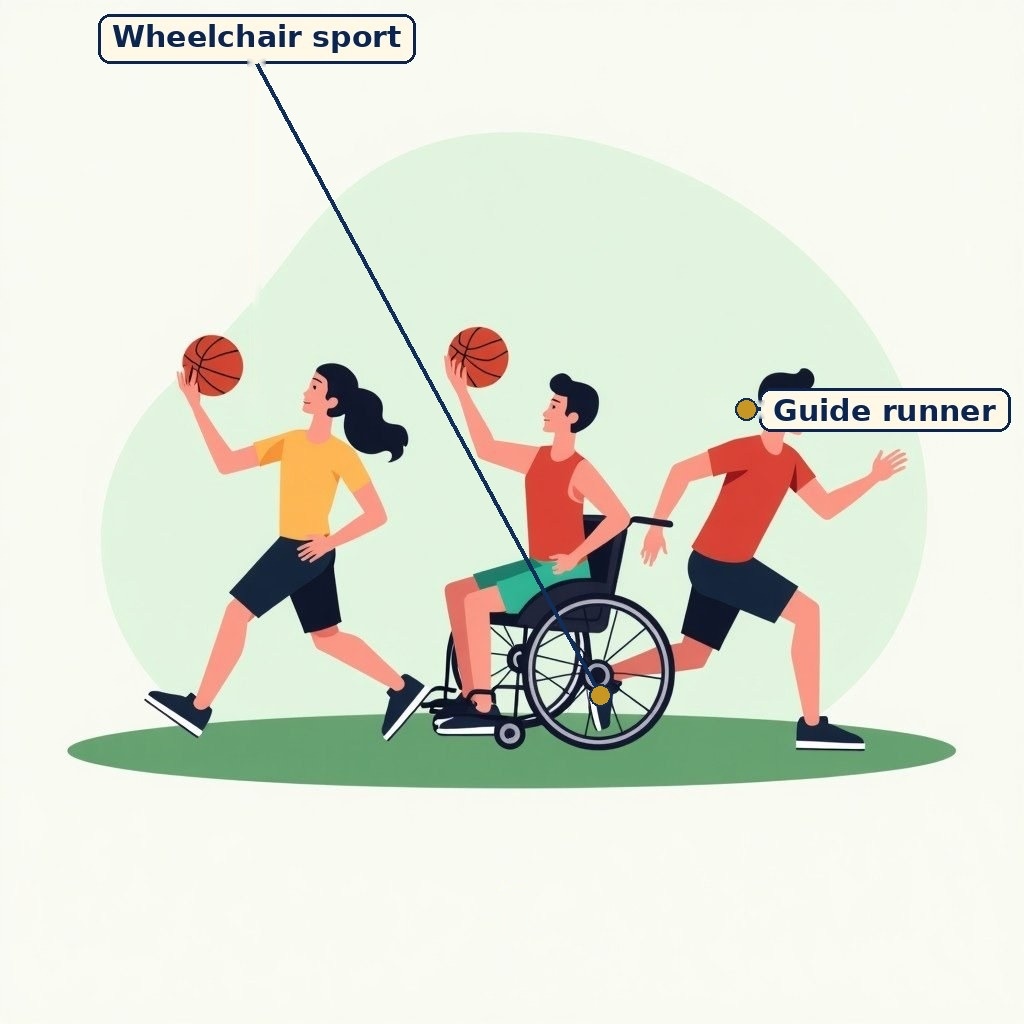
Diagram (labels are printed on the image): Wheelchair sport, guide running and adapted rules — sport shaped to athletes. A general picture about disability sport; it is not a scene from the book.
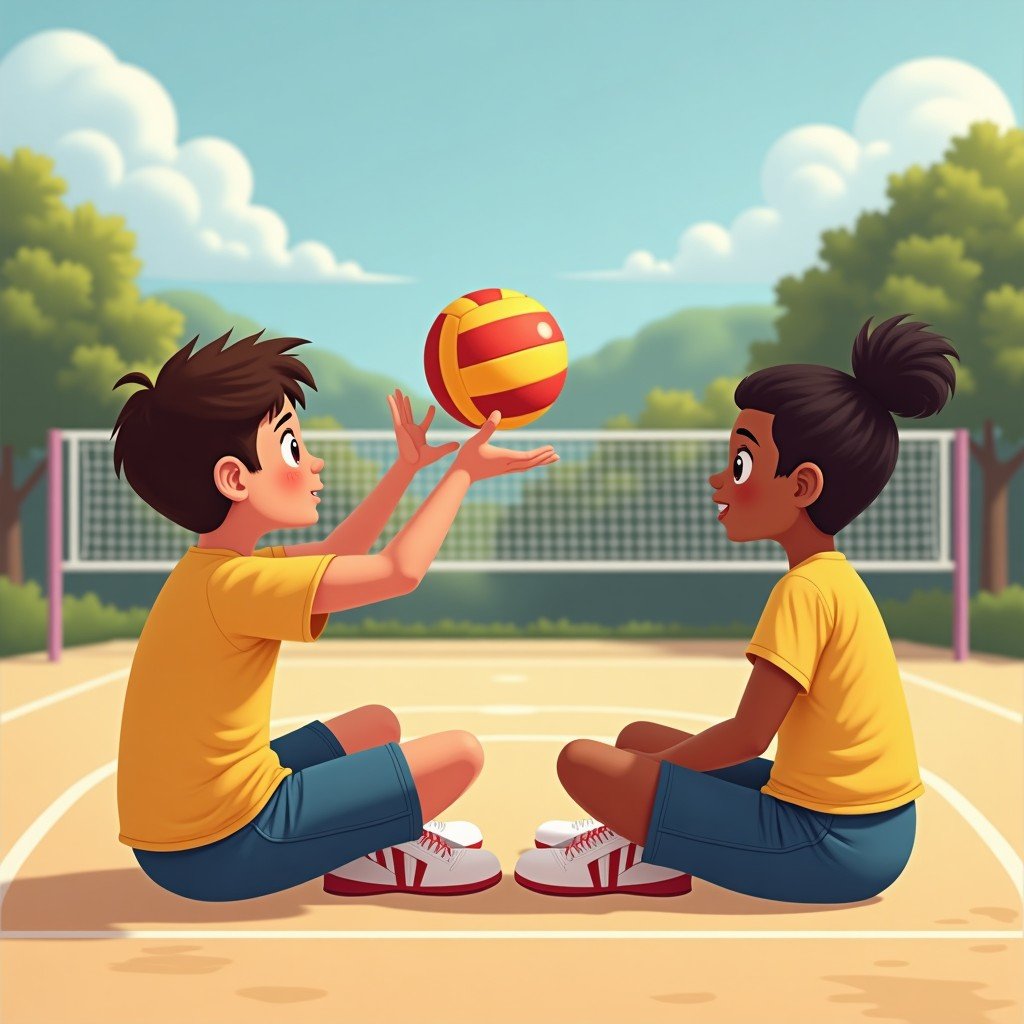
Students trying sitting volleyball, a game adapted for all.

New labelled schematic (labels and gold dots are printed on the image): Disability categories
What the chapter is about
Disability does not end sport — it changes how sport is played. Athletes with disabilities compete at the highest level in the Paralympics, and in schools, adapted games let every student play. The athlete comes first; the adaptation follows.
Different disabilities need different adaptations. Wheelchair basketball uses chairs and a lower hoop; blind runners run with guides; deaf players follow visual signals instead of whistles. The skill, effort and excitement stay the same.
Adaptive sport also needs the right attitude: talk to the person, not about them, and ask what help they want instead of assuming. Many disabled athletes say the biggest barrier is not their body, but other people's low expectations.
Understanding disability
The chapter begins by changing the attitude: disability does not mean inability. The World Health Organisation (WHO) and the Rights of Persons with Disabilities Act, 2016 (India) classify disabilities into broad categories — physical, sensory, intellectual, learning, psychosocial and multiple disabilities — and the RPwD Act recognises twenty-one types of disabilities for support. Knowing the number 21 matters for exams, and so does the split between visible disabilities, which can be seen, and invisible disabilities, which cannot but affect participation just as much.
Observation is the chapter's method: watch how a person moves, communicates and plays, and you learn more than any label tells you. The story of a village boy full of energy who loved playing, then faced a life-changing event, opens the chapter for a reason — it asks readers to see the player first and the disability second.
Benefits, barriers and opportunities
Sports participation benefits every age group. For children and teenagers it builds fitness, confidence and friendship; for adults it supports health and independence; for elite athletes it offers a professional stage. The Paralympic Games formalise that stage through ten eligible impairment types — including impaired muscle power, impaired range of movement, limb deficiency, vision impairment and intellectual impairment — with event categories built around them.
Barriers are physical (inaccessible grounds), social (low expectations, teasing) and organisational (no adapted equipment or trained coaches). Solutions match: accessible playgrounds, adapted sports, trained staff and changed attitudes. The chapter's question — are accessible playgrounds important? — answers itself: without a way in, no other inclusion measure can work.
What you should learn
Disability changes how sport is played, not whether it is played, and adaptations plus respectful attitudes make it possible.
Key Terms
- Adaptive sport — Sport changed in rules or equipment for athletes with disabilities.
- Paralympics — Elite Games for athletes with disabilities.
- Guide runner — A sighted runner who guides a blind runner.
- Wheelchair basketball — Basketball played in sports wheelchairs.
- Special Olympics — Games for athletes with intellectual disabilities.
Remember
- The athlete comes first, adaptation follows.
- Different disabilities need different adaptations.
- Skill and effort are the same in adaptive sport.
- Ask what help is wanted; do not assume.
Exam Tip / Common Mistake
Common mistake: praising disabled athletes only for 'trying'. Respect their skill and results like any athlete's — pity is not respect.
Chart / Table: Adaptations in sport
| Point | Detail |
|---|---|
| Wheelchair users | Sports wheelchairs, adapted courts |
| Blind athletes | Guide runners, sound balls |
| Deaf athletes | Visual signals, flags instead of whistles |
| Intellectual disability | Special Olympics, simplified rules |
| All athletes | Respect, fair competition, real medals |
Disability does not mean inability: twenty-one types are recognised in Indian law, adapted sport turns barriers into stages, and the Paralympics prove that excellence has many forms.
Practice set — try it yourself
- Try sitting volleyball in class. What skills does it need?
Hint: Hint: Passing, teamwork, quick reactions. - How would you adapt a race for a blind runner?
Hint: Hint: Guide runner and lane rope. - Why is pity not respect for disabled athletes?
Hint: Hint: Think skill versus sympathy. - Name two Paralympic sports and their adaptations.
Hint: Hint: Wheelchair basketball, blind football. - What should you ask, not assume, when helping a disabled classmate?
Hint: Hint: 'What help would you like?'
Questions with Answers
- What is adaptive sport?
Sport whose rules, equipment or setting are changed so athletes with disabilities can compete fairly and fully. - Give two examples of adaptations.
Wheelchair basketball uses sports chairs and adapted courts; blind runners run with sighted guides and lane ropes. - What are the Paralympics?
Elite international Games for athletes with disabilities, held after the Olympics in the same host city. - What are the Special Olympics?
International Games for athletes with intellectual disabilities, focused on participation, skill and inclusion. - What attitude should we show disabled athletes?
Respect for their skill and results, and the habit of asking what help they want, instead of pity or low expectations.
Questions with Answers — Extension
- Name the five broad categories of disability in the chapter, with one example each.
Physical (limb deficiency), sensory (vision impairment), intellectual (intellectual disability), learning (dyslexia-type difficulty), psychosocial (mental health condition) — plus multiple disabilities combining more than one. - How many types of disability does the RPwD Act, 2016 recognise, and why does the number matter?
Twenty-one: the number decides who qualifies for legal support, so it is a rights question, not just a definition. - What is the difference between a visible and an invisible disability, and why does it matter in sport?
Visible disabilities can be seen; invisible ones (like some learning or psychosocial conditions) cannot — so coaches must ask and adapt, not assume from appearance. - Name three Paralympic eligible impairment types and one sport adaptation for each.
Impaired muscle power (wheelchair racing), vision impairment (guides and sound balls), limb deficiency (prosthetic running blades) — each adaptation matches the impairment. - Design one adapted version of a school game, naming the barrier it removes.
For example, sitting volleyball for a mixed class removes the mobility barrier of standing play while keeping rally, teamwork and scoring intact.
How to use this page: Read the summary, say the Key Terms in your own words, then try the practice set without looking. Use the Questions with Answers to check yourself afterwards. Ask your teacher or parent to check your answers.