

Chapter 2: The Stage Is Yours
Step on stage: the space, the audience, and the nine rasas that carry every feeling.
Original notes — ready CBSE (NCERT, English Medium) • Class 9 • Arts • Book: Madhurima
Chapter 2: The Stage Is Yours — EG's own notes, in simple words
Book: Madhurima (CBSE, Class 9) | Chapter 2 | Section: Theatre | Medium: English
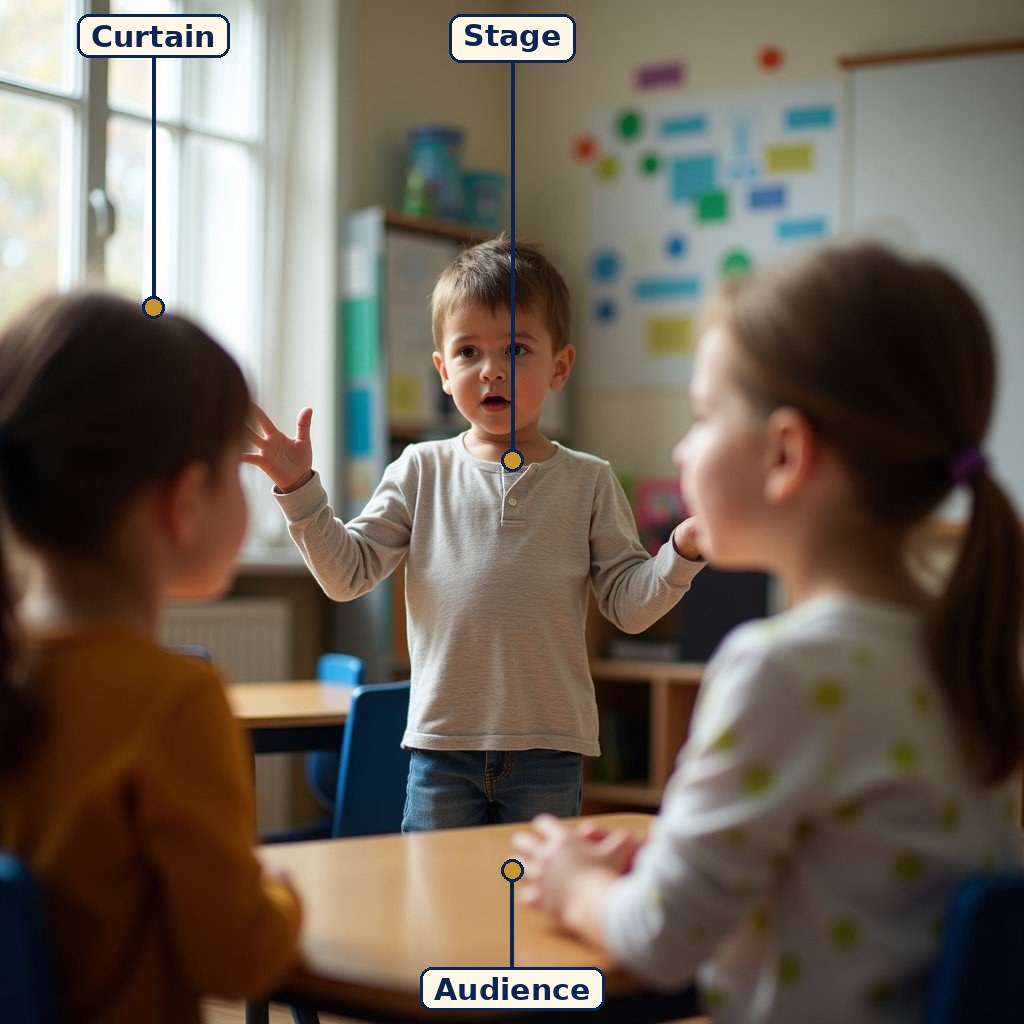
Diagram (labels are printed on the image): A stage with curtains, a raised platform and seats for the audience. A general picture about theatre space; it is not a scene from the book.

A student speaking with confidence on stage while classmates watch and listen.
What the chapter is about
Theatre begins the moment someone steps onto a stage and others watch. The stage is a special space where a story is told live, with bodies, voices and imagination instead of a screen. Even an empty classroom corner can become a stage, and no expensive infrastructure is needed to begin.
Every stage has parts that help the story: the acting area where performers move, the wings where they wait, and the audience area where viewers sit. Knowing these parts helps a performer feel at home on stage instead of feeling lost. Most of all, the stage belongs to whoever is brave enough to use it. Stage fear is normal, and it fades with practice, preparation and support from the group.
Theatre is collaborative
Theatre is never a one-person job. Actors, director, light and sound helpers and backstage workers all shape the same performance, and the audience completes it by watching and responding. A theatre workshop in your locality would need all of them, not just actors.
Theatre also teaches empathy. Playing another person, even briefly, asks you to feel how they feel and see a situation from their side. That is why theatre in school is about more than performance skills.
Rasa: the feelings a performance carries
Indian performing arts describe feeling through rasa. The nine rasas are Shringara (love and beauty), Hasya (laughter), Karuna (compassion and sorrow), Raudra (anger), Vira (courage), Bhayanaka (fear), Bibhatsa (disgust), Adbhuta (wonder) and Shanta (peace). Each rasa grows from a bhava, the feeling shown by the performer.
An actor does not just say a feeling; the face, voice and body show it, and the audience feels it in return. Matching a rasa to its expression is a basic theatre skill: the same line, spoken with different rasas, becomes a different scene.
What you should learn
A stage is a live, collaborative storytelling space, and confidence on stage grows through knowing the space, the rasas and practising in a supportive group.
Key Terms
- Stage — The raised or marked area where performers act.
- Audience — The people who watch a performance and complete it by responding.
- Wings — The hidden sides of a stage where performers wait before entering.
- Stage fright — The nervous feeling many people get before performing.
- Rehearsal — Practising a performance again and again before the real show.
- Rasa — The feeling or flavour of a performance, felt by the audience.
- Bhava — The emotion shown by the performer, from which rasa grows.
- Natyam — Drama or dance-drama: the art of theatre in the Indian tradition.
Remember
- Theatre is live: performers and audience share the same moment.
- Learn the parts of your stage before you perform.
- Stage fright is normal and gets smaller with practice.
- Theatre is collaborative — every worker and the audience matter.
- The nine rasas name the feelings a performance can carry.
Common mistake: standing frozen in one spot. Move with a purpose, face the audience, and use the whole stage space — and match your expression to the rasa of the scene.
Chart / Table: The nine rasas
| Point | Detail |
|---|---|
| Shringara | Love and beauty |
| Hasya | Laughter and humour |
| Karuna | Compassion, sorrow |
| Raudra | Anger |
| Vira | Courage and heroism |
| Bhayanaka | Fear |
| Bibhatsa | Disgust |
| Adbhuta | Wonder and surprise |
| Shanta | Peace and calm |
Practice set — try it yourself
- Draw and label a simple stage with five parts.
Hint: Use the chart and notes on this page. - Match each rasa with an expression: show Shringara, Hasya, Vira and Bhayanaka with face and body only.
Hint: Think about eyes, posture and speed of movement. - Plan a theatre workshop in your locality: who do you need besides actors?
Hint: Think director, lights, sound, backstage and audience. - What can you do if you feel nervous before going on stage?
Hint: Think about breathing, practice and friends. - Perform the same line in Karuna and in Hasya. What changes?
Hint: Notice voice, face and body.
Questions with Answers
- What makes theatre different from a film?
Theatre happens live in front of an audience. There is no retake, and performers and watchers share the same moment. - What are the wings of a stage?
The hidden areas at the sides of the stage where performers wait before they enter, and where props are kept ready. - How can stage fright be reduced?
By rehearsing well, knowing the stage, breathing slowly, and performing in a supportive group. It usually fades once you begin. - Why is the audience important in theatre?
The audience's attention, laughter and silence shape the performance. Actors respond to the energy of the watchers. - What does it mean to say ‘the stage is yours’?
It means the stage is open to everyone who is willing to try, not only to trained actors. Confidence comes from practice, not from being born talented.
Extension questions — go deeper
- Name the nine rasas and perform each with an expression.
Shringara, Hasya, Karuna, Raudra, Vira, Bhayanaka, Bibhatsa, Adbhuta, Shanta — each shown through face, eyes and body, not just words. - Why does theatre need no expensive infrastructure to begin?
An empty classroom is enough: a marked acting area, willing performers and watchers make a stage. Sets and lights add to theatre; they do not create it. - How is a bhava different from a rasa?
Bhava is the emotion the performer shows; rasa is the feeling the audience tastes and feels in return. - Which qualities would you associate with a good theatre group member?
Listening, patience, support for others, willingness to try and fail, and respect for every department's work. - Plan a 2-minute stage moment using only your voice and body.
No props needed — show a feeling with movement, face and voice, and let the audience name the rasa.
- Theatre is live and collaborative; even a classroom corner can be a stage.
- Know the stage parts: acting area, wings, audience area.
- Stage fright is normal; practice and a supportive group shrink it.
- Nine rasas: Shringara, Hasya, Karuna, Raudra, Vira, Bhayanaka, Bibhatsa, Adbhuta, Shanta.
- Bhava is shown by the performer; rasa is felt by the audience.
How to use this page: Read the summary, say the Key Terms in your own words, then try the practice set without looking. Use the Questions with Answers to check yourself afterwards. Ask your teacher or parent to check your answers.