

Chapter 3: Symbols and Metaphors on Stage
One chair, one lamp, one cloth — how small things on stage say very big things.
Original notes — ready CBSE (NCERT, English Medium) • Class 9 • Arts • Book: Madhurima
Chapter 3: Symbols and Metaphors on Stage — EG's own notes, in simple words
Book: Madhurima (CBSE, Class 9) | Chapter 3 | Section: Theatre | Medium: English
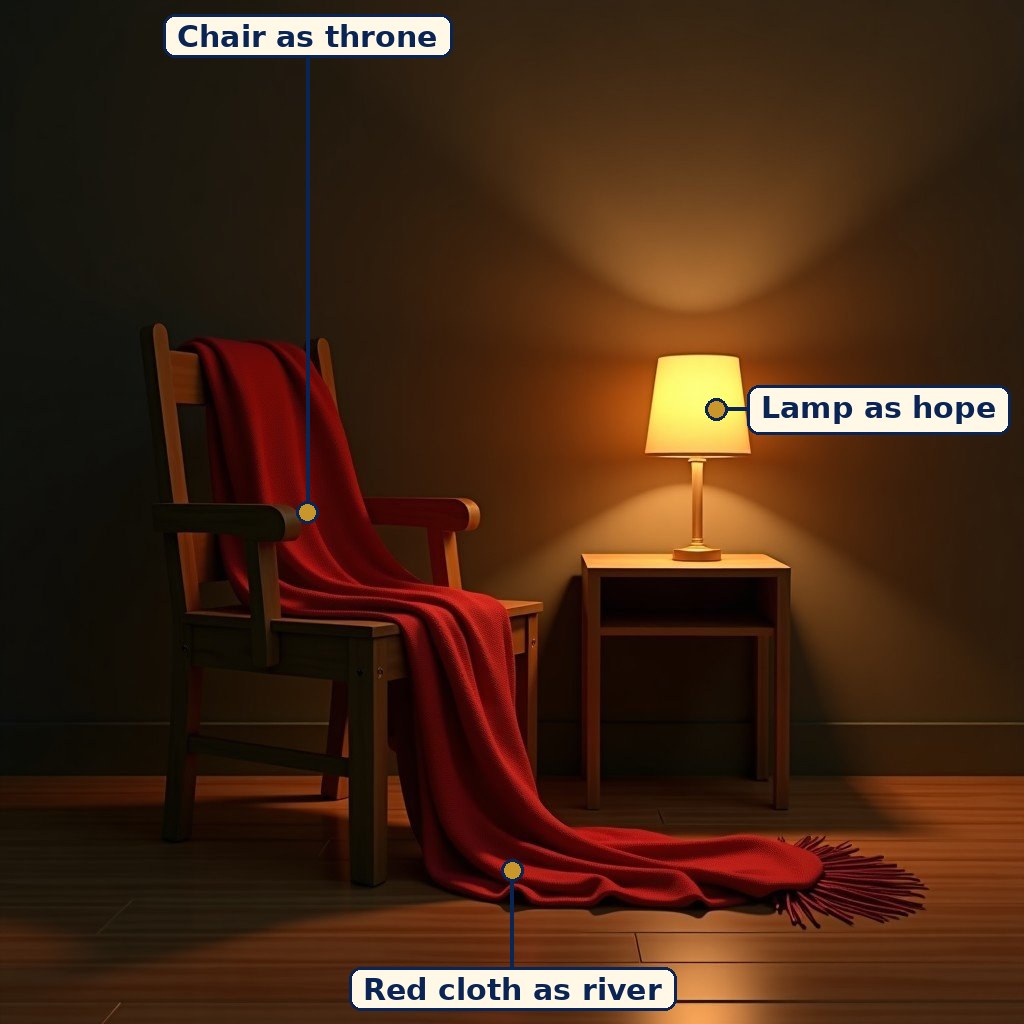
Diagram (labels are printed on the image): A chair, a lamp and a red cloth on stage, each standing for something bigger than itself. A general picture about stage symbols; it is not a scene from the book.
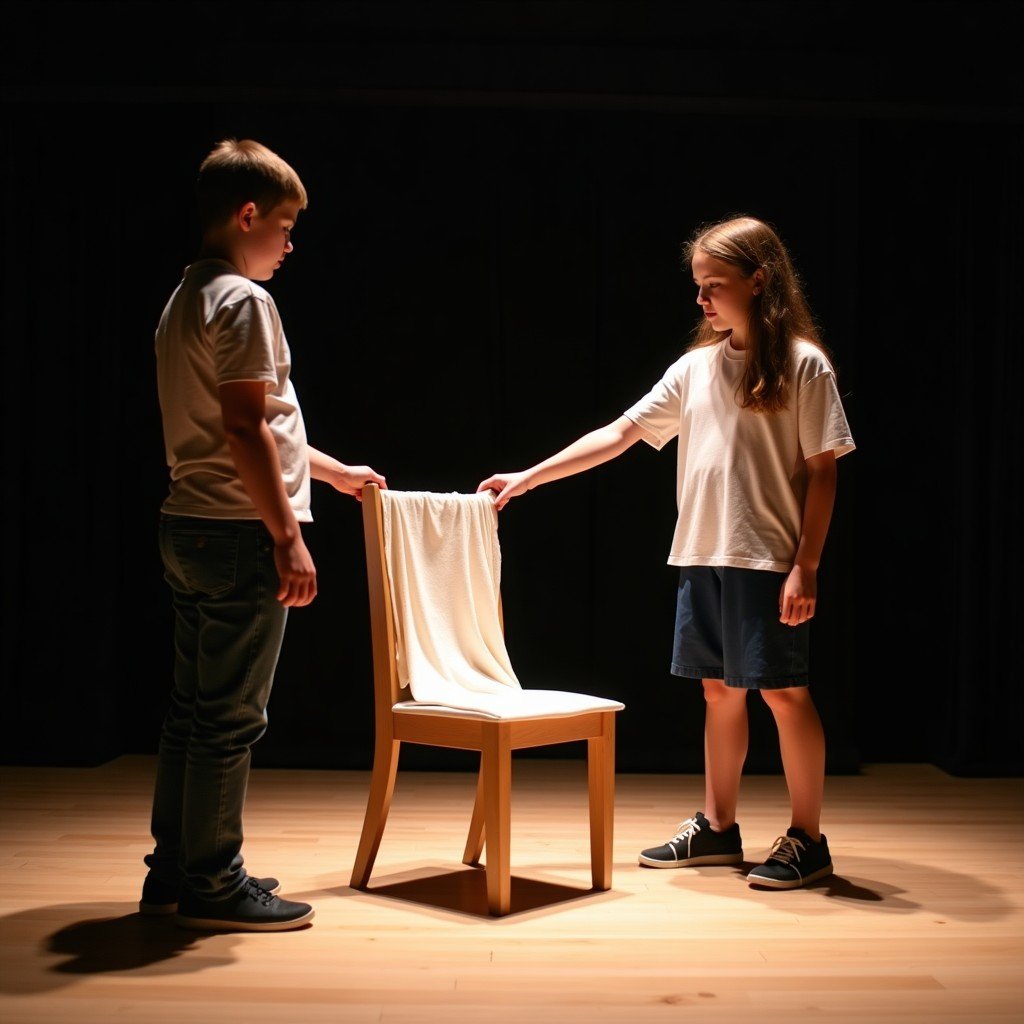
Students using simple objects to stand for bigger ideas in a classroom performance.
What the chapter is about
On stage, an object does not have to be what it looks like. A chair can become a throne, a lamp can stand for hope, and a piece of cloth can become a river. This is how theatre speaks in pictures, not only in words.
A symbol is an object or action that stands for a bigger idea. A metaphor on stage works the same way: one thing is used to suggest another. When the audience understands the symbol, a small prop can carry a whole feeling. Good symbols are simple and clear. If the audience cannot guess what a symbol means, it confuses the story instead of helping it. That is why actors often show a symbol's meaning through action, not just by placing it on stage.
Symbolism in theatre: definition and uses
Symbolism in theatre is when an object, action, colour, sound or movement represents something deeper than its literal meaning. A single lamp on stage might symbolise hope; a closed door might symbolise fear or opportunity; a repeated prop becomes a motif, carrying deeper meaning each time it returns.
Symbols also do practical work. They replace expensive realistic sets: one chair and one lamp can suggest a palace, a home or a whole journey. In Indian traditions like Kathakali and Yakshagana, gestures, colours and costumes are themselves symbolic, so the audience reads character and mood from how things look.
Colour and dance as visual metaphor
Colour is one of the most noticed things on stage and has the strongest impact on the mind — in lights, costumes, set or make-up. The Natyashastra links colours with rasas: for example, Vira, bravery, is shown in a yellowish-white colour. Colour choices are therefore part of the story, not decoration.
Dance on stage can itself be a visual metaphor. In this chapter, dance movements stand for ideas and stories without words, just as a cloth stands for a river. When movement, colour and props point the same way, the audience reads the meaning at once.
What you should learn
Symbols and metaphors let theatre say big ideas with small, simple objects, colours and actions — if the audience can read them.
Key Terms
- Symbol — An object, colour or action that stands for a bigger idea.
- Metaphor — Using one thing to suggest another, like a cloth standing for a river.
- Prop — An object used on stage during a performance.
- Gesture — A movement of the hands, head or body that expresses meaning.
- Motif — An object or image that returns again and again, gathering meaning each time.
- Audience reading — How watchers guess the meaning of what they see on stage.
- Visual metaphor — A picture on stage — often through dance or movement — that stands for an idea.
Remember
- A symbol stands for something bigger than itself.
- Keep symbols simple so the audience can follow them.
- Show a symbol's meaning through action, not only placement.
- Colour is a powerful symbol: in lights, costume, set and make-up.
- The same object can mean different things in different plays.
Common mistake: filling the stage with too many symbols. One clear symbol in a scene is stronger than five confusing ones.
Chart / Table: Common stage symbols and what they can mean
| Point | Detail |
|---|---|
| Lamp or light | Hope, knowledge, a new beginning |
| Chair placed high | Power, a throne, importance |
| Red cloth | A river, fire, anger or celebration |
| Empty chair | Absence, loss, someone who is gone |
| Open door | Freedom, a new chance, welcome |
| Closed door | Fear, or an opportunity not yet taken |
| Yellowish-white (Vira) | Bravery, as per the Natyashastra's rasa colours |
Practice set — try it yourself
- Pick an object and show two different meanings for it in two short scenes.
Hint: A stick could be a sword or a walking stick. - Why does a lamp often stand for hope on stage?
Hint: Think about light in darkness. - Show sadness on stage without speaking a sad word.
Hint: Use slow movement, a bowed head and soft light. - What happens if the audience does not understand a symbol?
Hint: Think about confusion in the story. - Design one symbol for ‘friendship’ and explain it to a friend.
Hint: Choose something two people can share.
Questions with Answers
- What is a symbol in theatre?
A symbol is an object, colour, sound or action on stage that stands for a bigger idea, feeling or thing beyond itself. - Give an example of a stage metaphor.
A red cloth flowing across the stage can stand for a river. The cloth is not water, but the audience reads it as a river from how the actors use it. - Why do directors use symbols instead of realistic sets?
Because symbols are cheap, flexible and powerful. One chair and one lamp can suggest a palace, a home or a whole journey. - How can actors make a symbol clear?
By using it in action: sitting on the chair like a king, or walking beside the cloth as if crossing a river, so the meaning becomes visible. - Can one symbol mean different things?
Yes. A lamp can mean hope in one play and knowledge in another. Its meaning comes from the story and how it is used.
Extension questions — go deeper
- Why is symbolism used on stage at all? Give three reasons.
It saves cost and space, it lets one object carry a big idea, and symbolic images stay with viewers long after the play ends — like a candle blowing out at the final moment. - Show a person growing in confidence using only a chair and light.
Start seated low in dim light; rise, move the chair higher or step forward as light brightens. Growth is shown, not announced. - Assign one friend a colour and explain why.
Answers vary: the colour must match a quality you see in them, and you must explain the link — that explanation is the symbolism. - How do Kathakali and Yakshagana use symbolism?
Through symbolic gestures, colours and costumes: the audience reads character, mood and rasa from how performers look and move, not only from words. - What is a motif, and how is it different from a single symbol?
A motif is a symbol that returns repeatedly, gathering deeper meaning each time it appears.
- Symbol = something small standing for something bigger.
- Lamp = hope; closed door = fear or opportunity; repeated prop = motif.
- Colour is a strong symbol — Natyashastra links rasa colours, e.g. Vira = yellowish-white.
- Show meaning through action, not just placement.
- One clear symbol beats five confusing ones.
How to use this page: Read the summary, say the Key Terms in your own words, then try the practice set without looking. Use the Questions with Answers to check yourself afterwards. Ask your teacher or parent to check your answers.