

Chapter 1: Physical Education
Original notes — ready CBSE (NCERT, English Medium) • Class 11 • Physical Education • Book: Health and Physical Education
Chapter 1: Physical Education — EG's own notes, in simple words
Book: Health and Physical Education (CBSE, Class 11) | Chapter 1 | Medium: English
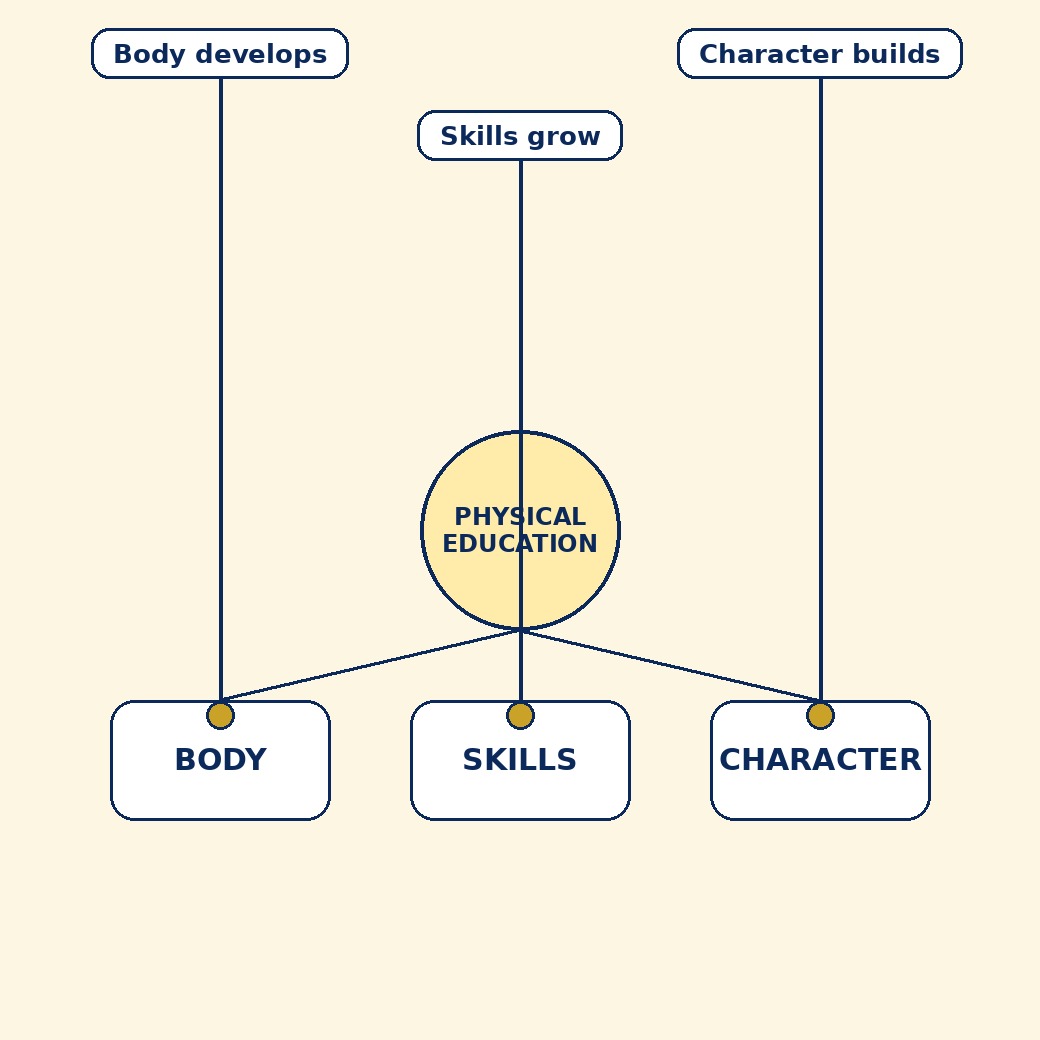
Diagram (labels on the image): Schematic (labels on the image): physical education develops the body, skills and character together.
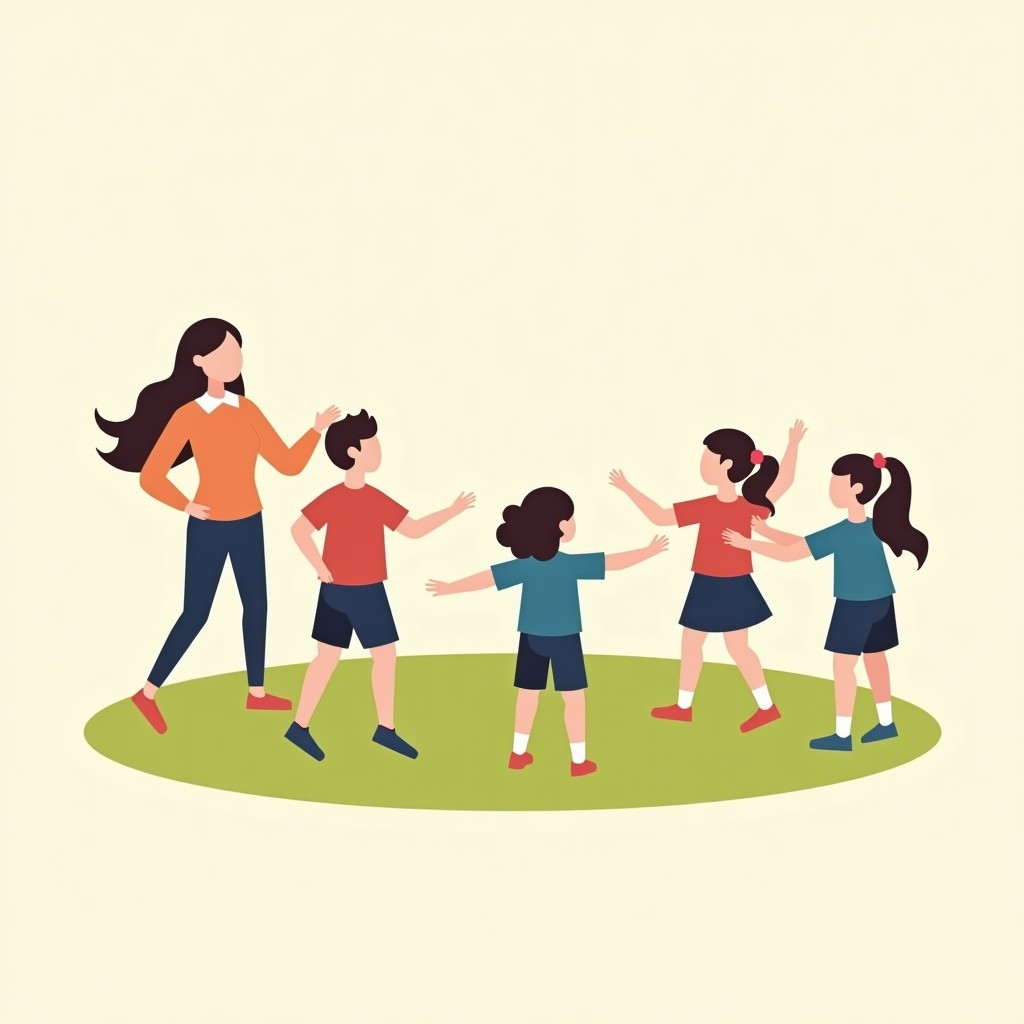
A planned class, not free play: warm-up, skill practice and teamwork in order.
What you should learn
- Define physical education in one line, as education through movement.
- State its broad aim: all-round development of the individual.
- Name the five developments: motor, mental, emotional, social and moral.
- Explain why physical education is needed at every stage of schooling.
- Use the chapter terms correctly: sport, drill, recreation, sports training.
1. 1. What physical education is
Physical education is education through movement: planned physical activity that develops the body, teaches skills, builds character and supports health. It is not merely playing games in free time — it has aims, a programme and assessment, like any other subject.
Its scope covers physical fitness, motor skills, knowledge of the body and health, and values such as teamwork, fair play and discipline. A student who learns the rules, practises skills and reflects on performance is studying physical education, not just exercising.
2. 2. Aims and objectives
The broad aim of physical education is the all-round development of the individual: physical, mental, social and emotional. Its objectives include developing physical fitness and motor skills, gaining knowledge about health and the body, forming good habits, and building social qualities such as cooperation and leadership.
Physical development means strength, endurance, flexibility and coordination. Mental development means focus, decision-making and confidence. Social development means learning to work in teams and respect opponents.
3. 3. Importance in school life
Regular physical education improves health, concentration and attendance, and reduces stress. It also teaches life skills that classrooms alone cannot: handling victory and defeat, leading a team, and following rules under pressure.
For careers, physical education opens paths as a teacher, coach, trainer, physiotherapist, sports manager, referee and fitness expert — a growing field as India invests in sport through programmes such as Khelo India.
4. 4. Misconceptions to drop
Two misconceptions harm the subject. First, that physical education is only for “sporty” students: its programme serves every fitness level. Second, that it wastes study time: research and school experience show active students concentrate better, so well-planned physical education supports academic work rather than competing with it.
5. 5. Definitions of physical education
Physical education is education that improves human performance through physical activity. Activities range from simple walking, jogging and running to hopping, jumping, climbing, throwing, pushing, pulling and kicking. Because life itself is characterised by movement, from a child's birth to the end of life, the chapter calls physical education movement education as well.
Different writers have defined it in similar ways: it is the part of total education that develops the whole person through movement, games and sport, and it gives a due place to exercise in the whole set-up of education. The key point for an answer is always the same: it is education through activity, not activity alone.
6. 6. The five developments
Motor development means gaining strength, speed, endurance and coordination through participation in activity. A child who practises regularly becomes more skilled, less easily tired, and more confident in movement. Mental development follows from the same participation: a physically fit person tends to be mentally sharp, and activity supports focus and learning.
Emotional development means learning to handle feelings such as fear, anger, joy, love and sorrow in a balanced way. Social development means gaining empathy, cooperation, friendliness, team spirit and respect for rules, which are essential for healthy relations with others. Moral development means learning right conduct, fair play and respect for opponents through the discipline of games.
7. 7. Need and importance of physical education
Physical education is needed because a balanced personality rests on physical development: a fit individual is usually mentally sharp, emotionally stable and socially well-adjusted. In an age of machines and screens, planned activity protects health, fitness, wellness, vigour and strength, and it builds habits that last beyond school.
Its importance is visible in school life too. It teaches social qualities that no textbook alone can teach, it gives every student a chance to participate, and it supports the growing national interest in games, sports and the fitness movement. That is why the chapter insists that health and physical education must continue through schooling.
8. 8. Terminology used in physical education
Sport means competitive physical activity played by set rules, while sports training means the planned, systematic preparation that improves performance in a sport. Gymnastics means exercises that develop strength, flexibility, balance and coordination, often on apparatus. Physical culture means the general development of the body through exercise and healthy habits.
Drill means ordered, disciplined movement that trains the body and mind together, and it is used in games and sports to build order and control. Health education means teaching the knowledge and habits that protect health, and recreation means enjoyable activity done in free time that refreshes body and mind. Knowing these terms apart earns marks in short-answer questions.
9. 9. Career options in physical education
Teaching and coaching are the best-known careers: a physical education teacher plans the school programme, while a coach trains players for performance. Health, sports and related careers include physical fitness instructor, dietician and sports medicine physician, who look after fitness, food and injuries.
Other groups are sports administration careers, which run programmes, curriculum and events; performance-related careers, for players, officials and support staff; communication-related careers, such as sports writers, sports publishers, photographers and television or radio reporters; and sales and management careers in the sports goods and fitness business.
At a glance — chart / table
| Area of development | What grows | Example |
|---|---|---|
| Physical | Fitness, skills, coordination | Running, jumping, throwing |
| Mental | Focus, decisions, confidence | Choosing a tactic in a game |
| Social | Teamwork, respect, leadership | Captaining a team fairly |
| Emotional | Handling wins and losses | Accepting defeat gracefully |
Key Terms / Important Terms
- Physical education — Education through planned physical activity for all-round development.
- Motor skills — Learned movements such as running, jumping and throwing.
- Physical fitness — The body's capacity for activity: strength, endurance, flexibility and more.
- Fair play — Honest, respectful conduct in sport, following rules and spirit.
- Khelo India — India's national programme promoting grassroots sport and fitness.
- Leadership — Guiding and motivating a team towards a shared goal.
- Moral development — Learning right conduct, fair play and respect for others through games and sport.
- Sports training — Planned, systematic preparation that improves performance in a sport.
- Health education — Teaching the knowledge and habits that protect and improve health.
Remember
- Physical education = education THROUGH movement, with aims and assessment — not free play.
- Aim: all-round development — physical, mental, social, emotional.
- It serves every fitness level, not only sporty students.
- Careers: teacher, coach, trainer, physiotherapist, sports manager, referee.
- Five developments: motor, mental, emotional, social, moral — all through movement.
Exam Tip / Common Mistake
Common mistake: defining physical education as “playing games”. Add its educational purpose — planned activity for development and health — to earn full marks.
Practice set — try it yourself
- Define physical education in your own words, including its educational purpose. Hint: Hint: Mention planned activity and all-round development, not just games.
- Give one objective of physical education in each area: physical, mental, social. Hint: Hint: Fitness, focus and teamwork are one set.
- Why does physical education support academic work rather than harming it? Hint: Hint: Think about health, concentration and stress.
- Name three careers in physical education and one job each does. Hint: Hint: Coach, physiotherapist and referee are three.
- Correct the misconception that physical education is only for sporty students. Hint: Hint: Its programme is designed for every fitness level.
Questions with Answers
- What is physical education? Answer: Answer: Physical education is education through planned physical activity, with aims, a programme and assessment, developing the body, skills, knowledge, health and character.
- State the broad aim of physical education. Answer: Answer: Its broad aim is the all-round development of the individual — physical, mental, social and emotional — through movement and sport.
- Give two objectives of physical education with examples. Answer: Answer: Developing physical fitness, e.g. building endurance through running; and developing social qualities, e.g. learning teamwork and fair play in team games.
- How does physical education help school life beyond fitness? Answer: Answer: It improves concentration and attendance, reduces stress, and teaches life skills such as handling victory and defeat, leading teams and following rules under pressure.
- Name four careers opened by physical education. Answer: Answer: Physical education teacher, coach, fitness trainer, physiotherapist, sports manager and referee are careers in the field.
Extension Questions with Answers
- Why is physical education called movement education? Answer: Answer: Because life is characterised by movement from birth to the end of life, and physical education develops the person through planned movement and activity, not through study alone.
- Give one example each of motor, social and moral development. Answer: Answer: Motor: gaining coordination by practising a throw. Social: learning cooperation and team spirit in a team game. Moral: accepting the referee's decision and respecting opponents.
- Distinguish drill from gymnastics. Answer: Answer: Drill is ordered, disciplined movement that trains body and mind together and builds order and control. Gymnastics is exercise, often on apparatus, that develops strength, flexibility, balance and coordination.
- Name two communication-related careers in physical education. Answer: Answer: Sports writer and sports photographer are two; sports publisher and television or radio reporter are two more.
- Why must health and physical education continue through schooling? Answer: Answer: Because it protects health and fitness, builds a balanced personality, and teaches social and moral qualities that support learning and life beyond school.
Board-pattern Questions with Answers
- Define physical education. Answer: Answer: Physical education is education through planned physical activity that improves human performance and develops the individual physically, mentally, emotionally, socially and morally.
- State the aims and objectives of physical education. Answer: Answer: Its aim is the all-round development of the individual. Its objectives include developing strength, speed, endurance and coordination, and building social qualities such as empathy, cooperation, friendliness, team spirit and respect for rules.
- Explain the need and importance of physical education in modern life. Answer: Answer: Modern life is machine-based and screen-based, so planned activity is essential for health, fitness, wellness, vigour and strength. It also builds a balanced personality and social qualities, and supports the national fitness movement.
- Distinguish sport from physical culture. Answer: Answer: Sport is competitive activity played by set rules. Physical culture is the general development of the body through exercise and healthy habits, without necessarily competing.
- List the groups of career options in physical education. Answer: Answer: Teaching or coaching; health, sports and related careers; sports administration; performance-related careers; communication-related careers; and sales and management careers.
Going deeper — Chapter 1: Physical Education
At the centre of this chapter are a few ideas that everything else hangs on: Physical education, Motor skills, Physical fitness, Fair play. If you can explain those ideas in your own words without looking at the notes, you already hold the chapter's spine. Everything else on this page — the examples, the tables and the questions — is there to help you practise using those ideas, not to be memorised as separate facts.
Read the chapter in this order. First, read the summary slowly and ask yourself what question the chapter is answering. Then work through each section one at a time and, after each one, close the page and say its main point in two lines. The sections of this chapter are: 1. 1. What physical education is; 2. 2. Aims and objectives; 3. 3. Importance in school life; 4. 4. Misconceptions to drop; 5. 5. Definitions of physical education; 6. 6. The five developments. Each section adds one layer: an earlier section gives you the words and tools, and a later section shows you where those tools are used. When you revise, do not re-read passively — explain each section aloud as if you were teaching a classmate who missed the lesson.
In physical education answers, name the concept or procedure first, then give its steps or components in order, then its benefit or application. For fitness and training questions, give the correct term, the method, and one precaution or example.
Important Questions with Answers — deepening set
These questions go beyond the sets above. Try each one without looking, then check your answer against the notes.
- What does 'Physical education' mean? Explain it in your own words and say how it is used in this chapter.
Education through planned physical activity for all-round development. In this chapter, Physical education is one of the ideas you must be able to use, not just define. When a question mentions Physical education, first write its meaning in one line, then apply it to the situation in the question. That two-step habit — meaning first, application second — is what turns a definition into marks. - What does 'Motor skills' mean? Explain it in your own words and say how it is used in this chapter.
Learned movements such as running, jumping and throwing. In this chapter, Motor skills is one of the ideas you must be able to use, not just define. When a question mentions Motor skills, first write its meaning in one line, then apply it to the situation in the question. That two-step habit — meaning first, application second — is what turns a definition into marks. - What does 'Physical fitness' mean? Explain it in your own words and say how it is used in this chapter.
The body's capacity for activity: strength, endurance, flexibility and more. In this chapter, Physical fitness is one of the ideas you must be able to use, not just define. When a question mentions Physical fitness, first write its meaning in one line, then apply it to the situation in the question. That two-step habit — meaning first, application second — is what turns a definition into marks. - What does 'Fair play' mean? Explain it in your own words and say how it is used in this chapter.
Honest, respectful conduct in sport, following rules and spirit. In this chapter, Fair play is one of the ideas you must be able to use, not just define. When a question mentions Fair play, first write its meaning in one line, then apply it to the situation in the question. That two-step habit — meaning first, application second — is what turns a definition into marks. - What does 'Khelo India' mean? Explain it in your own words and say how it is used in this chapter.
India's national programme promoting grassroots sport and fitness. In this chapter, Khelo India is one of the ideas you must be able to use, not just define. When a question mentions Khelo India, first write its meaning in one line, then apply it to the situation in the question. That two-step habit — meaning first, application second — is what turns a definition into marks. - What does 'Leadership' mean? Explain it in your own words and say how it is used in this chapter.
Guiding and motivating a team towards a shared goal. In this chapter, Leadership is one of the ideas you must be able to use, not just define. When a question mentions Leadership, first write its meaning in one line, then apply it to the situation in the question. That two-step habit — meaning first, application second — is what turns a definition into marks.
Revision checklist and exam writing guide
Use this checklist the night before a test. Tick a point only if you can do it without opening the notes.
- I can explain '1. 1. What physical education is' in two lines without looking.
- I can explain '2. 2. Aims and objectives' in two lines without looking.
- I can explain '3. 3. Importance in school life' in two lines without looking.
- I can explain '4. 4. Misconceptions to drop' in two lines without looking.
- I can explain '5. 5. Definitions of physical education' in two lines without looking.
- I can explain '6. 6. The five developments' in two lines without looking.
- I can explain '7. 7. Need and importance of physical education' in two lines without looking.
- I can explain '8. 8. Terminology used in physical education' in two lines without looking.
- I can write the chapter's key terms from memory, with one example for each.
- I can answer one long question from this chapter in five ordered paragraphs.
In physical education answers, name the concept or procedure first, then give its steps or components in order, then its benefit or application. For fitness and training questions, give the correct term, the method, and one precaution or example.
Common mistake to avoid: writing everything you remember about the chapter instead of answering the question asked. Read the question twice, underline its command word — explain, compare, why, what happens — and let that word decide the shape of your answer.
Recap
- Physical education = education through planned movement and activity.
- Aim: all-round development — motor, mental, emotional, social, moral.
- Terms to keep apart: sport, sports training, gymnastics, drill, recreation.
- Careers: teaching, coaching, health and sports, administration, performance, media, sales.