

Chapter 6: Cardiorespiratory System
Heart, lungs and blood — how oxygen reaches working muscles, and how training changes the system.
Original notes — ready CBSE (NCERT, English Medium) • Class 9 • Physical Education • Book: Khel Praveen
Chapter 6: Cardiorespiratory System — EG's own notes, in simple words
Book: Khel Praveen (CBSE, Class 9) | Chapter 6 | Section: Unit 2: Science and Sports | Medium: English
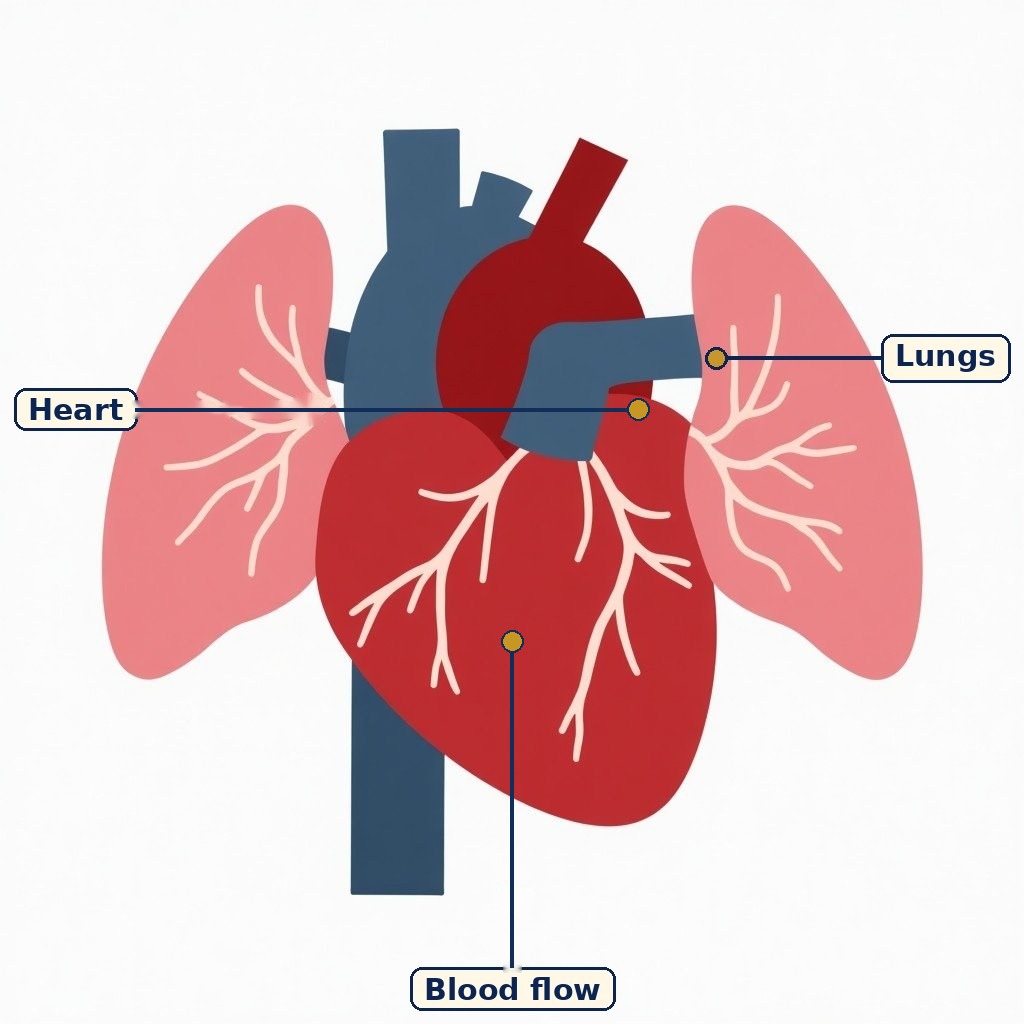
Diagram (labels are printed on the image): Heart and lungs working together to carry oxygen through the blood. A general picture about the cardiorespiratory system; it is not a scene from the book.
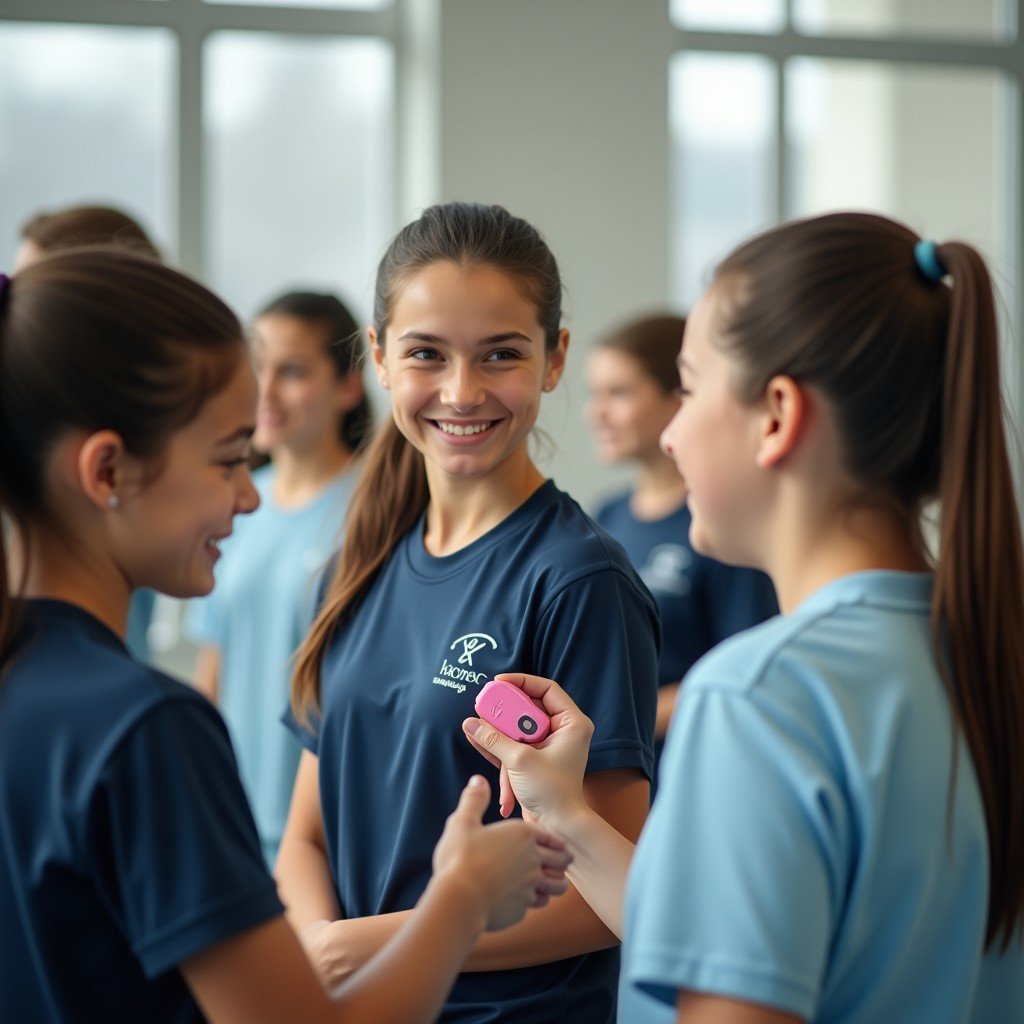
Students checking their pulse after a run.
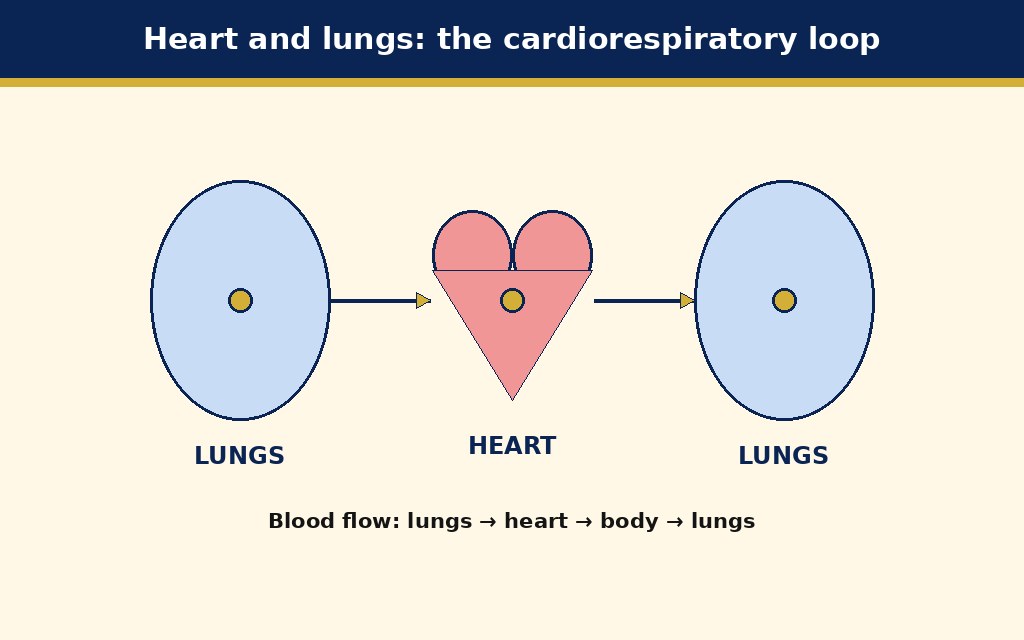
New labelled schematic (labels and gold dots are printed on the image): Heart and lungs loop
What the chapter is about
When you run, your heart beats faster and you breathe harder. This is your cardiorespiratory system at work: the lungs take in oxygen, the heart pumps blood, and the blood carries oxygen to muscles and brings waste away.
Regular endurance training makes this system stronger. A trained heart pumps more blood with each beat, so it does not need to beat as fast at rest. Trained players recover faster after effort, because their bodies clear waste and refill oxygen quickly.
You can measure this yourself. Count your pulse before and after running, and see how long it takes to return to normal. Over weeks of training, recovery becomes faster — a clear sign of growing fitness.
Breathing and the muscles behind it
For normal, quiet breathing the diaphragm does most of the work, helped by the intercostal muscles between the ribs. When exercise raises demand, accessory muscles join in — sternocleidomastoids in the neck, scalenes, internal and external intercostals, and the abdominal muscles including the external obliques. That is why hard running changes not just your breathing rate but the muscles you feel working.
Breathing brings air in, but respiration is the gas exchange itself. External respiration happens in the lungs, where oxygen enters the blood and carbon dioxide leaves it. Internal respiration happens in the tissues: oxygen moves from blood into body cells, and carbon dioxide moves from cells into blood to be carried away. Mixing up breathing and respiration is the chapter's classic confusion — keep them separate.
The heart, circulation and the training effect
Circulation is a complete circuit. The left side of the heart contracts and pumps oxygen-rich blood into the systemic circulation through the aorta, sending it to the whole body; blood returns, is re-oxygenated in the lungs, and the cycle repeats. The chapter's structure-of-the-heart figure exists so you can trace that loop without guessing.
Training changes the system measurably. A trained heart pumps more blood with each beat, so resting pulse falls and recovery after effort becomes faster. The chapter's own experiment proves it: measure heart rate and breathing rate during stair climbing and cycling, chart both, and compare. Upper-body and lower-body activities tire you differently because they use different muscle masses — another comparison the exercises ask you to make from your own data.
What you should learn
Lungs take in oxygen, the heart pumps it through blood to muscles, and training makes this system stronger and recovery faster.
Key Terms
- Heart — The pump that pushes blood around the body.
- Lungs — Organs that take oxygen from air into blood.
- Pulse — The heartbeat felt in an artery, like at the wrist.
- Oxygen — The gas muscles need to release energy.
- Recovery — The return of pulse and breathing to normal after exercise.
Remember
- Lungs take in oxygen; heart pumps it via blood.
- Exercise raises heartbeat and breathing for a reason.
- Trained hearts beat slower at rest.
- Faster recovery means better endurance fitness.
Exam Tip / Common Mistake
Common mistake: holding your breath during effort. Breathe steadily — muscles need a continuous oxygen supply, and holding breath raises pressure dangerously.
Chart / Table: What happens during exercise
| Point | Detail |
|---|---|
| Heart rate | Rises to pump more blood |
| Breathing | Deepens and quickens for oxygen |
| Muscles | Use more oxygen, make waste |
| After stopping | Pulse and breathing slowly return to normal |
| With training | Resting pulse falls, recovery quickens |
The cardiorespiratory system is one loop: lungs load oxygen, the heart pumps it through the aorta to working muscles, tissues exchange gases — and regular training makes every part of that loop stronger and faster to recover.
Practice set — try it yourself
- Count your pulse for 15 seconds at rest, then multiply by 4.
Hint: Hint: Use two fingers on your wrist. - Run for 2 minutes, then count pulse again. How long to recover?
Hint: Hint: Check every minute. - Why do we breathe harder when running?
Hint: Hint: Think oxygen demand. - How would a trained athlete's resting pulse differ from yours?
Hint: Hint: Think stronger pump, fewer beats. - Plan a 4-week running plan and track recovery time.
Hint: Hint: Same run, same measure, weekly.
Questions with Answers
- What is the cardiorespiratory system?
The heart, lungs and blood vessels working together to take in oxygen, pump it to muscles, and remove waste like carbon dioxide. - Why does the heart beat faster during exercise?
Because working muscles need more oxygen. Faster pumping delivers more oxygen-rich blood per minute. - What is pulse?
The rhythmic beat felt in an artery as the heart pumps. It is counted to measure heart rate. - Why do trained players recover faster?
Their hearts pump more per beat and their bodies use oxygen better, so pulse and breathing return to normal sooner. - What is a healthy resting pulse for a young person?
Roughly 60–100 beats per minute, with trained young athletes often lower. A falling resting pulse over weeks shows improving fitness.
Questions with Answers — Extension
- What is the difference between breathing and respiration?
Breathing is moving air in and out; respiration is gas exchange — external in the lungs, internal in the tissues where oxygen enters cells and carbon dioxide leaves them. - Why does the diaphragm matter most at rest but less alone during hard exercise?
At rest it does most of the work with the intercostals; during hard exercise accessory muscles (neck, scalene, abdominal) must join to meet the higher air demand. - Trace one full circuit of blood starting from the left side of the heart.
Left side contracts → aorta → systemic circulation to the body → blood returns → lungs for re-oxygenation → back to the heart, and the cycle repeats. - Two students do the same run. One recovers in 2 minutes, the other in 6. What does this suggest, and what training advice follows?
The faster recovery suggests a better-trained cardiorespiratory system; the slower student should build endurance gradually with regular aerobic activity, not sudden maximal effort. - Why would stair climbing and cycling change heart rate differently?
They use different muscle masses and movement patterns, so oxygen demand, heart rate and breathing rate rise by different amounts — which is why the chapter asks you to chart both and compare.
How to use this page: Read the summary, say the Key Terms in your own words, then try the practice set without looking. Use the Questions with Answers to check yourself afterwards. Ask your teacher or parent to check your answers.