

Chapter 1: Physical Education and Well-being
What physical education really means — and why well-being is bigger than not being ill.
Original notes — ready CBSE (NCERT, English Medium) • Class 9 • Physical Education • Book: Khel Praveen
Chapter 1: Physical Education and Well-being — EG's own notes, in simple words
Book: Khel Praveen (CBSE, Class 9) | Chapter 1 | Section: Unit 1: Evolution of Physical Education and Well-being | Medium: English
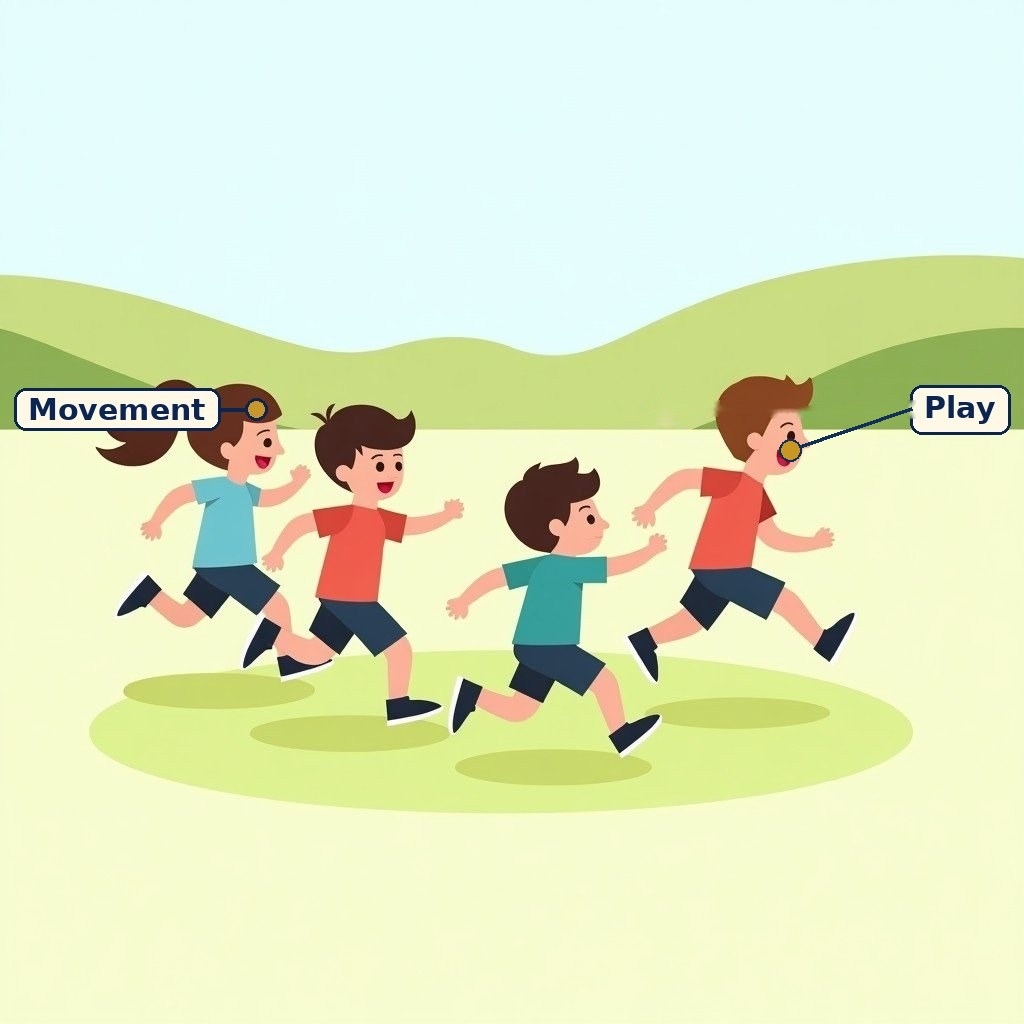
Diagram (labels are printed on the image): Children running, playing and stretching — movement for body, mind and well-being. A general picture about physical education; it is not a scene from the book.
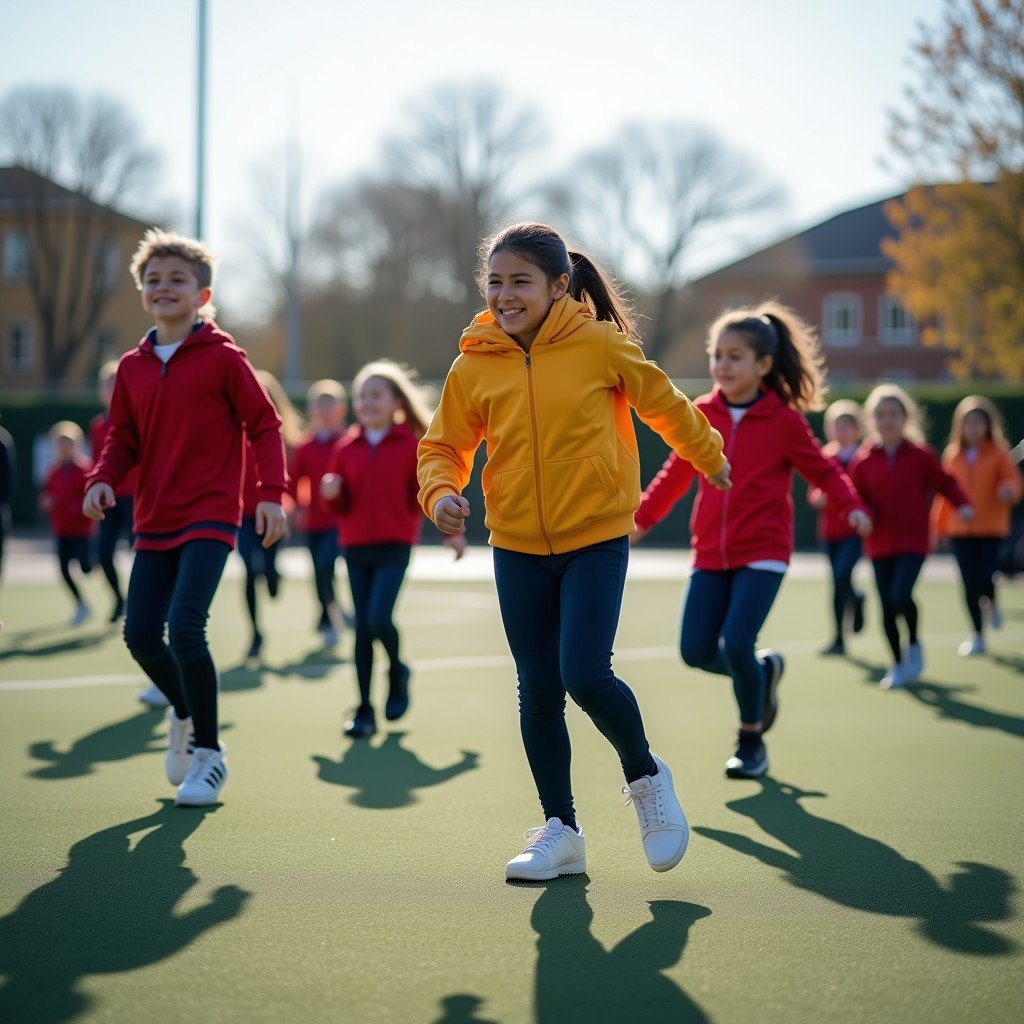
Students warming up together before games on the school ground.
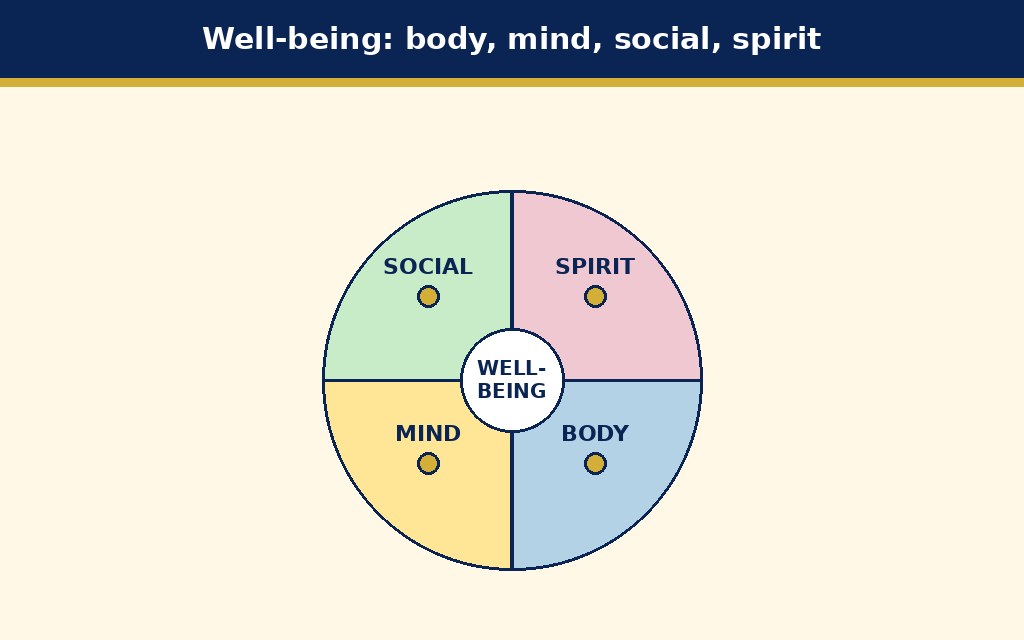
New labelled schematic (labels and gold dots are printed on the image): Well-being wheel: body, mind, social and spirit
What the chapter is about
Physical education is learning through movement. It is not only about winning games; it is about understanding your body, moving well, and building habits that keep you healthy for life. When you run, jump, balance and play, you train your body and your mind together.
Well-being means more than not being sick. It includes feeling strong, sleeping well, handling stress, getting along with others and enjoying life. Physical education supports all of these: active children usually concentrate better, feel happier and fall sick less often.
Physical literacy is the base of it all: the confidence and skill to move in many ways. Like reading, it is learned step by step — first simple movements, then games, then sports and lifelong activities.
The aims behind the subject
The Central Advisory Board of Physical Education and Recreation (1959, India) described physical education as the development of the total personality of the child to its fullness and perfection in body, mind and spirit. That one line explains why PE is not a break from learning: it is learning through the body. The National Curriculum Framework for School Education (NCF-SE) 2023 says the same thing in modern words — PE should nurture mind-body wellness, resilience, empathy, cooperation and fair play.
The National Education Policy (NEP) 2020 backs this up by making physical education an essential part of school education, not an extra. So when your school gives PE real time and attention, it is following national policy, not just filling the timetable. A good PE programme builds fitness, but it also builds character: patience when you lose, honesty when nobody is watching, and teamwork when the team needs you more than your own score does.
Physical literacy: the idea that ties the chapter together
Physical literacy means having the motivation, confidence, physical competence, knowledge and understanding to move well for life. It has four parts that work together: you want to move, you feel able to move, you can actually perform the skills, and you understand why movement matters. A student who is skilled at football but refuses to try any new sport is strong in competence but weak in motivation and confidence — and the chapter asks you to spot exactly that gap.
Movement skills fall into three families. Locomotor skills move the body from one place to another, like running and jumping. Non-locomotor skills are performed on the spot, like bending, twisting and balancing. Manipulative skills handle objects, like throwing, catching and kicking. Most games mix all three: a basketball player runs (locomotor), balances to shoot (non-locomotor) and controls the ball (manipulative) in a single play.
What you should learn
Physical education builds movement skill, fitness and well-being for life, not just for games periods.
Key Terms
- Physical education — Learning through movement, games and sport.
- Well-being — Feeling healthy in body, mind and social life.
- Physical literacy — The confidence and skill to move well in many activities.
- Locomotor skills — Movements that carry the body, like running and jumping.
- Manipulative skills — Skills of handling objects, like throwing and catching.
Remember
- PE is about lifelong health, not only winning.
- Well-being covers body, mind and social life.
- Movement skills are learned step by step.
- Active students usually focus and feel better.
Exam Tip / Common Mistake
Common mistake: thinking PE is only for sporty students. Every body benefits from movement, and every student can improve their own fitness.
Chart / Table: Three kinds of movement skills
| Point | Detail |
|---|---|
| Locomotor | Running, jumping, hopping, skipping |
| Non-locomotor | Bending, twisting, balancing in place |
| Manipulative | Throwing, catching, kicking, striking |
| Together | Games combine all three kinds |
Physical education develops body, mind and spirit together. Its goal is a physically literate person: motivated, confident, skilled and informed — someone who moves well, plays fair and keeps moving for life.
Practice set — try it yourself
- Show one locomotor, one non-locomotor and one manipulative skill.
Hint: Hint: Run, balance, then throw and catch. - How does PE help your studies?
Hint: Hint: Think about focus, sleep and mood. - What is physical literacy in your own words?
Hint: Hint: Think reading, but for movement. - Plan a 10-minute daily movement routine.
Hint: Hint: Include warm-up, play and cool-down. - Why is well-being bigger than just 'not sick'?
Hint: Hint: Think body, mind and friends.
Questions with Answers
- What is physical education?
Physical education is learning through movement — games, sports, exercise and play — that builds skill, fitness and healthy habits for life. - What does well-being include?
Physical health, mental calm, good sleep, confidence and happy relationships. It is the whole person feeling well, not just the absence of illness. - What is physical literacy?
The confidence, skill and desire to move in many ways — running, jumping, balancing, throwing — learned step by step like reading. - Name the three types of movement skills.
Locomotor skills move the body (running, jumping), non-locomotor skills move in place (bending, balancing), and manipulative skills handle objects (throwing, catching). - Why is PE compulsory in school?
Because movement supports growth, learning, mood and lifelong health. NEP 2020 treats it as essential education, not an extra.
Questions with Answers — Extension
- A student is skilled in football but avoids trying any new sport. Which component of physical literacy needs developing, and what one step would help?
Motivation and confidence need developing; competence is already strong. One step: pair the student with a friend in a low-pressure new game, so trying feels safe and enjoyable rather than a test. - Why does the chapter treat PE as education rather than recreation?
Because its stated aims are total personality development — body, mind and spirit — plus resilience, empathy, cooperation and fair play, all of which are learning outcomes, not just fun. - Give one game moment that uses all three movement-skill families at once.
A basketball lay-up: running to the basket (locomotor), balancing and stretching for the shot (non-locomotor), and controlling and releasing the ball (manipulative). - How would you explain to a parent that PE time is not wasted study time?
NEP 2020 makes PE essential, and NCF-SE 2023 links it to wellness, resilience and cooperation; active students also concentrate better, so PE supports study instead of competing with it. - From the chapter's word list (movement, skills, nutrition, fitness, confidence, sleep cycle, motivation, knowledge of health, rules, values), pick three that belong most to physical literacy and justify them.
Confidence, motivation and knowledge of health: literacy is not just skill — it is wanting to move, feeling able to move, and understanding why movement matters.
How to use this page: Read the summary, say the Key Terms in your own words, then try the practice set without looking. Use the Questions with Answers to check yourself afterwards. Ask your teacher or parent to check your answers.