

Chapter 11: Dance as Visual Storytelling
No words needed: how a dancer's body, voice and costume tell a whole story.
Original notes — ready CBSE (NCERT, English Medium) • Class 9 • Arts • Book: Madhurima
Chapter 11: Dance as Visual Storytelling — EG's own notes, in simple words
Book: Madhurima (CBSE, Class 9) | Chapter 11 | Section: Dance | Medium: English
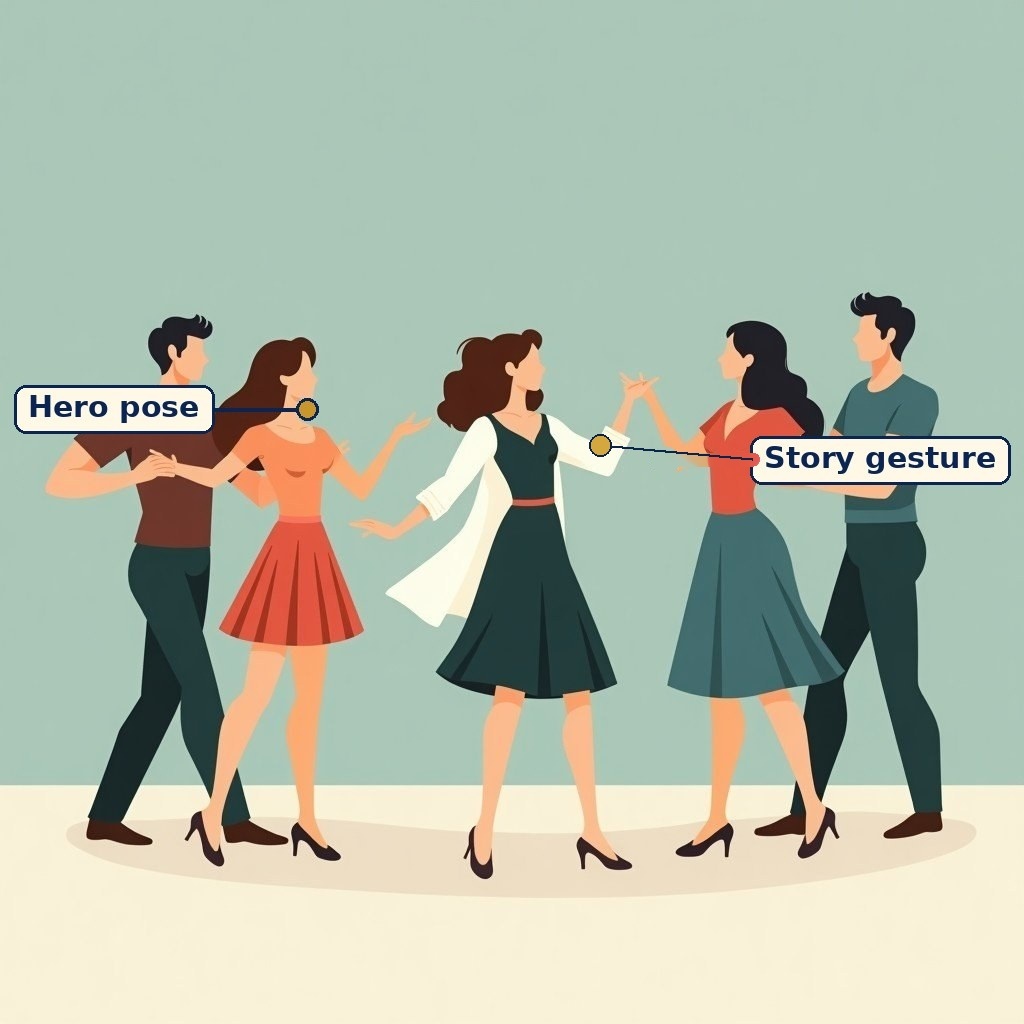
Diagram (labels are printed on the image): Dancers telling a story through poses and gestures while the audience watches. A general picture about dance storytelling; it is not a scene from the book.

Students telling a short story through dance, without speaking a word.
What the chapter is about
Many Indian dance forms are deeply rooted in the tradition of storytelling. Often described as visual storytelling, dance can carry a whole tale — characters, feelings, places — without a single spoken explanation.
This chapter asks how. The answer is the abhinayas working together: the body shapes the story, words and song support it, costume and appearance place it, and inner feeling makes the audience believe it. Storytelling in dance is a team effort inside one performer.
Angika and vachika in storytelling
Angika abhinaya tells the story through the body: hand gestures, footwork, postures and movements shape characters and events. The chapter's exercises ask you to describe and show how you would use these elements in your own angika abhinaya — for example, showing a character's age, mood or journey without words.
Vachika abhinaya adds verbal elements you have explored: spoken or sung words, poetry and rhythmic syllables. In some traditions dancers sing while they dance, so word and movement arrive together; in others, a singer or musician carries the words while the dancer answers with the body. Either way, story lives in the meeting of word and gesture.
Aharya: costume as storyteller
Aharya abhinaya — costume, jewellery, make-up and props — tells the audience who a character is before they move. The chapter asks you to explain the elements of aharya in two dance forms you have explored, comparing how each form dresses its stories.
A good question to debate is whether appropriate costume enhances the movement, the angika, itself. A flowing costume can extend a gesture; a heavy crown can slow and dignify it. Costume does not decorate the dance from outside — it changes how the body can move, and therefore what the story can say.
What you should learn
Dance tells stories visually: angika shapes the tale, vachika supports it with words, aharya places it with costume, and sattvika makes it felt.
Key Terms
- Visual storytelling — Telling a story through what is seen: movement, gesture, costume.
- Angika abhinaya — Storytelling through the body.
- Vachika abhinaya — Storytelling supported by words, song and rhythm syllables.
- Aharya abhinaya — Storytelling through costume, jewellery, make-up and props.
- Sattvika abhinaya — Storytelling through truly felt inner emotion.
- Gesture — A hand or body movement that carries meaning.
- Character — A person in the story, shown by body, costume and feeling.
Remember
- Indian dance forms are rooted in storytelling traditions.
- Angika: body shapes characters and events.
- Vachika: words and song support the story.
- Aharya: costume tells who a character is before they move.
- Costume can change movement itself, not just decorate it.
Common mistake: thinking costume is only decoration. In dance storytelling, costume, movement and feeling must agree, or the story confuses the audience.
Chart / Table: Parts of a dance story
| Point | Detail |
|---|---|
| Character | Shown by costume, posture and gesture |
| Feeling | Shown by face, sattvika and rasa |
| Place | Suggested by props, costume and movement quality |
| Event | Shown by sequences of gestures and footwork |
| Words | Spoken or sung support (vachika) |
| Ending | The feeling the audience carries away (rasa) |
Practice set — try it yourself
- Tell a one-minute story using only angika abhinaya.
Hint: No words: gestures, posture and footwork only. - Show the same story with vachika added. What changes?
Hint: Notice what words make clearer — and what they spoil. - Describe the aharya of two dance forms you have explored.
Hint: Compare costume, jewellery and make-up. - Does appropriate costume enhance angika? Argue both sides.
Hint: Think flowing cloth versus heavy crown. - Watch a dance story and name its character, feeling and place.
Hint: Use only what you saw, not what you were told.
Questions with Answers
- How can dance tell a story without words?
Through visual storytelling: the body shapes characters and events (angika), costume places them (aharya), and inner feeling (sattvika) makes the audience believe and feel the tale. - Describe how you can use angika elements in storytelling.
Hand gestures show objects and actions, postures show character and mood, footwork shows journey and rhythm — together they form a readable story. - Which vachika elements have you explored, and how do they help?
Spoken or sung words, poetry and rhythmic syllables: they name, explain and colour what the body shows. - In which dance forms do dancers sing and dance at the same time?
In traditions like the Sadir artists' practice, dancers sing live while dancing, so word and movement arrive together. - Explain aharya abhinaya in two dance forms.
Answers compare costume, jewellery, make-up and props in two forms explored in class, showing how each form dresses its characters and stories.
Extension questions — go deeper
- Do you think appropriate costume enhances the movement (angika) itself? Explain.
Yes, when cloth extends a gesture or a crown dignifies posture; no, when costume restricts the very movement the story needs. The test is whether movement and costume agree. - Create a dance story in which the same gesture means two things.
Change the context — costume, music, preceding gesture — and the audience reads the same hand shape differently. - Compare visual storytelling in dance with storytelling in a comic strip.
Both tell stories in pictures and sequence; dance adds live rhythm, breath and rasa, while comics add speech balloons and frozen frames. - How does sattvika complete a dance story?
Without felt emotion, gestures are only shapes. Sattvika turns shapes into feelings the audience carries away as rasa. - Plan a group dance story with all four abhinayas assigned.
Decide who carries body, words, costume and feeling — then check that all four tell the same story.
- Dance = visual storytelling: no words needed, but all abhinayas needed.
- Angika shapes the tale; vachika supports it with words.
- Aharya places the story: costume, jewellery, make-up, props.
- Costume can change movement, not just decorate it.
- Sattvika makes the story felt as rasa.
How to use this page: Read the summary, say the Key Terms in your own words, then try the practice set without looking. Use the Questions with Answers to check yourself afterwards. Ask your teacher or parent to check your answers.