

Chapter 6: Yoga
Steady and comfortable — eight limbs, twelve salutations, and a calmer mind.
Original notes — ready CBSE (NCERT, English Medium) • Class 8 • Physical Education • Book: Khel Yatra
Yoga — EG's own notes, in simple words
Book: Khel Yatra (CBSE, Class 8) | Chapter 6 | Medium: English
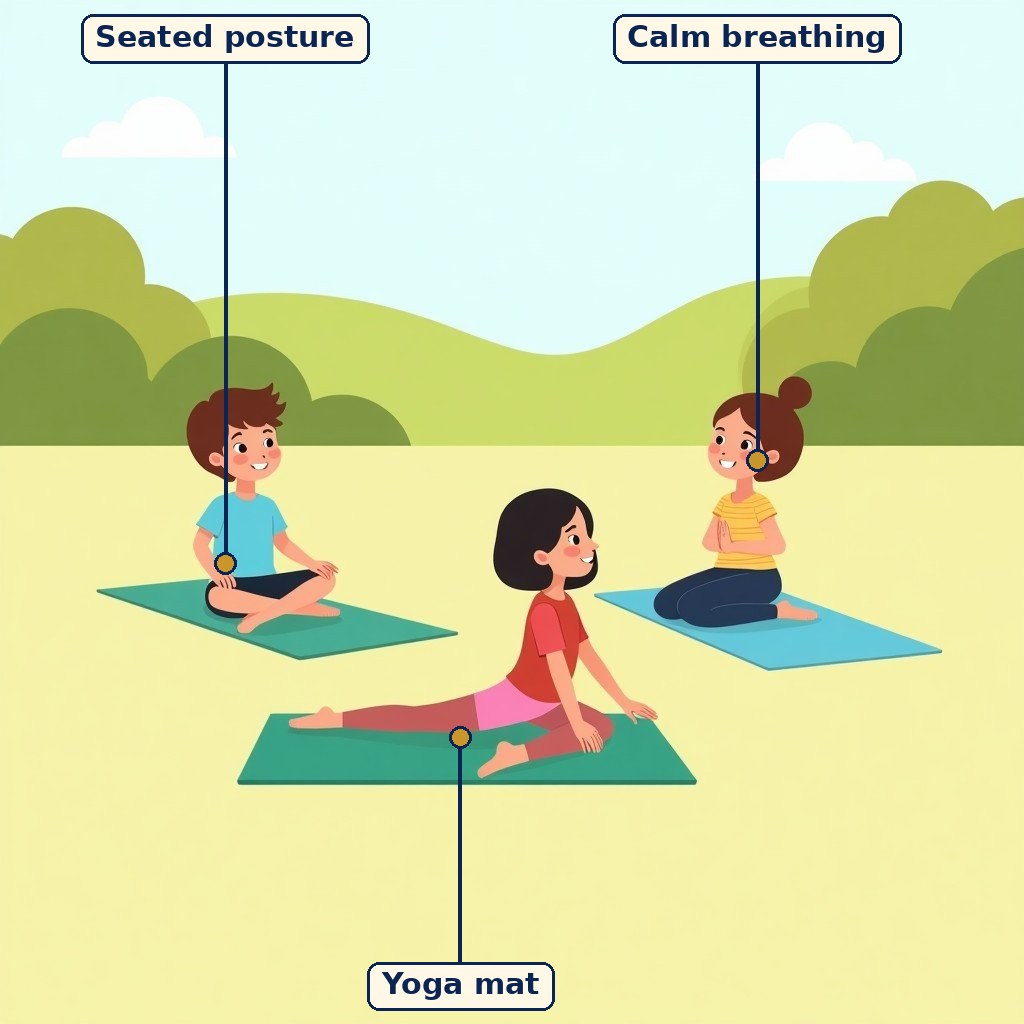
Diagram (labels are printed on the image): A student practising a standing yoga pose with arms raised. A general picture about yoga, not a book scene.
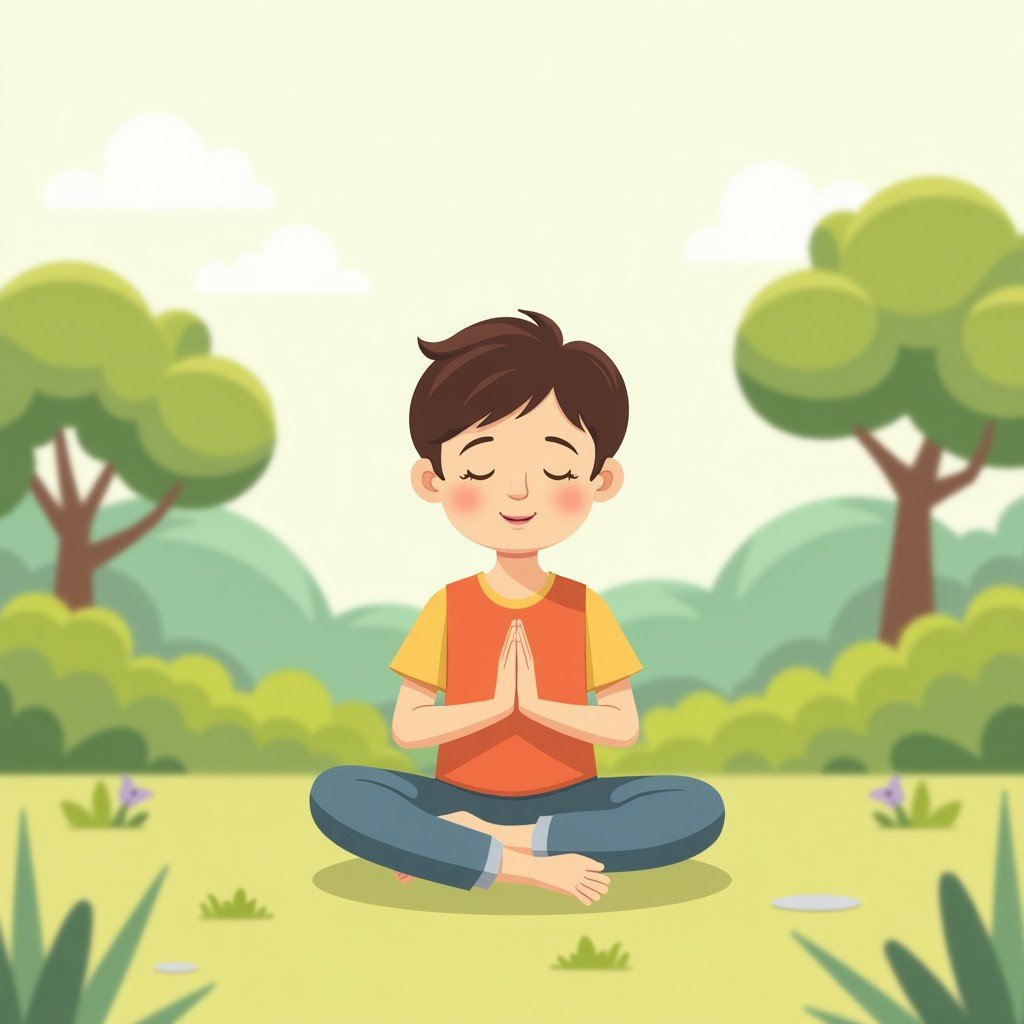
Students sitting calmly in meditation posture. A general picture about yoga practice.
What the chapter is about
Yoga is a journey of self-discovery that balances body, mind and spirit. It is more than stretching and bending: it is an ancient practice that helps us mindfully connect with the world around us, focus on the present moment, and support ourselves in daily life. In Grade 8 the unit revisits what was learnt in Grade 7 — loosening exercises, Surya Namaskara, asanas, pranayama — and goes further: the philosophy of the eight limbs, new asanas, new breathing practices, mudra, pratyahara, dharana, dhyana and samadhi, yoga nidra, and yoga practices for anxiety and anger management, including games that build emotional well-being during adolescence (ages 10–19).
The unit also teaches how a session is structured, with general instructions for beginning and ending, an opening prayer of gratitude to Maharishi Patanjali for teachings that promote a healthy mind, clear speech and a healthy body, and a closing prayer. Practise slowly, with full attention and awareness of the breath, and only under a teacher's guidance — never force a posture.
How a yoga session runs
- Sit comfortably in Sukhasana with the spine upright.
- Close the eyes, relax the facial muscles, and bring awareness to the breath.
- Place the hands in Chin Mudra and observe the natural rhythm of the breath for a few moments.
- Take a deep, slow breath in; as it is released, gently chant "Om".
- Bring the hands to Namaskara Mudra and chant the opening prayer.
- Notice any changes or sensations that arise after chanting.
- Rub the palms together softly, place them over the closed eyes, and gently open the eyes into the warmth of the hands.
- Follow the session plan: loosening exercises, Surya Namaskara, asanas, relaxation, pranayama, mudras and dhyana as planned.
The closing prayer is "Om Sarve Bhavantu Sukhinah", with its meaning explained in the book, closing the session in the same calm spirit in which it began.
Yoga for daily life and the eight limbs
Yoga has been practised for thousands of years, and its texts and stories — including Shri Rama's example of yogic principles for understanding life — are used in the unit to connect practice with values. Pupils are asked to name a favourite sacred text or philosophical scripture, choose a favourite quote, write what it means to them, and share it with classmates. The unit's central framework is Ashtanga Yoga, the eight limbs, which together train body, breath, senses and mind:
| Limb | Meaning in this unit |
|---|---|
| 1. Yama | How we behave towards others — restraints |
| 2. Niyama | How we care for ourselves — personal observances |
| 3. Asana | Steady, comfortable posture |
| 4. Pranayama | Breathing practices, beyond simple respiration |
| 5. Pratyahara | Withdrawing the senses from distractions |
| 6. Dharana | Concentration on a single point |
| 7. Dhyana | Meditation, sustained focus |
| 8. Samadhi | Deep absorption, a natural state of perfection in what is practised |
Yama: five restraints
Through Yamas we learn to interact with the world kindly and honestly. The five Yamas are: Ahimsa (non-violence), Satya (truthfulness), Asteya (non-stealing), Brahmacharya (moderation) and Aparigraha (non-possessiveness). Pupils choose one Yama, explain it in their own words with an example, discuss how Yamas help us become responsible, and act them out — for example, deciding about wanting an expensive new item such as a mobile phone even when it is not needed. The unit's story of Anjali and the clear pond teaches the same lesson for the mind: just as a pond clouds when disturbed, the mind clouds with messy thoughts, and clearing it — like the Yama of non-possessiveness applied to desires — restores clarity. The hindrances named in this discussion are desire, anger, greed, attachment, arrogance and jealousy.
Niyama: five personal observances
Niyamas help us focus on our inner self and lead a joyful, fulfilling life. The five Niyamas are: Shaucha (cleanliness — physical and mental purity, through a clean body, healthy diet, regular exercise, chanting, selfless service, cheerfulness and compassion), Santosha (contentment — appreciating what you already have, finding joy in giving, kindness and forgiveness, without ignoring growth), Tapas (self-discipline, dedication and determination — the willpower to stay consistent and set aside immediate comfort for a larger goal), Svadhyaya (self-study — understanding yourself through reading, meditation, self-reflection and focused work) and Ishvara Pranidhana (surrender to the divine). Pupils choose one Niyama to focus on, set one small, simple wish related to it rather than a big goal, and track it — for example, a tiny daily act of cleanliness or contentment.
Yama faces outward — how you treat others (non-violence, truth, non-stealing, moderation, non-possessiveness). Niyama faces inward — how you care for yourself (cleanliness, contentment, discipline, self-study, surrender). The unit's own line is the memory hook: "Through Yamas, we learn to interact with the world; Niyamas help us focus on our inner self."
Asanas: steady and comfortable
Maharishi Patanjali's Yoga Sutra (2.46) defines asana as Sthirasukham asanam — the posture should be steady and comfortable. Asanas are more than physical exercise: practised carefully and slowly, with breath awareness, they prepare us for meditation and teach us to care for the body, turning attention inward. They are grouped as meditative, cultural (physical), relaxing and balancing poses. The unit first revises Grade 7 asanas — Ardhakati Chakrasana, Padmasana, Bhujangasana, Shalabhasana, Utkat asana, Sarvangasana and Matsyasana, with Gomukhasana, Uttanapadasana and Sarala Dhanurasana also pictured — then teaches new ones in this grade.
Surya Namaskara, the sun salutation, is a flow of twelve poses learnt in Grade 7 and revisited here, each round beginning with Namaskara Mudra and chanting. Its steps in order are:
- Pranamasana (prayer pose)
- Hasta Uttanasana (raised-arms pose)
- Padahastasana (hand-to-foot pose)
- Ashvasanchalanasana (equestrian pose)
- Dandasana (plank / staff pose)
- Shashtanga Namaskara (eight-limbed salutation)
- Bhujangasana (cobra pose)
- Parvatasana (mountain pose)
- Ashvasanchalanasana (equestrian pose, other leg)
- Padahastasana (hand-to-foot pose)
- Hasta Uttanasana (raised-arms pose)
- Pranamasana (prayer pose)
The unit says Surya Namaskara helps develop qualities like friendship, and its loosening warm-ups (Sukshma Vyayama) prepare the joints before the flow.
New asanas in this grade include Supta Vajrasana (sleeping thunderbolt pose — an extension of Vajrasana that improves digestion, entered from Vajrasana and always released back into it, relaxing afterwards in Shithila Tadasana) and Utthita Padmasana (raised lotus pose — Padmasana means lotus pose; this form strengthens fingers, wrists, arms and more, and must only be attempted when Padmasana itself is comfortable). Every asana in the book carries benefits and limitations — for example, a practice may be avoided after recent surgery or hip or leg injury, or with heart disease or hernia — so limitations must be read before practising, and the teacher's notes set safe progressions (such as three rounds in a session, gradually rising to five, without moving the body during the practice).
Pranayama, mudra and yoga nidra
Pranayama is often described as breath control, but the unit stresses it goes beyond simple respiration: it is a disciplined way of working with breath, energy and conduct, practised gradually. Grade 7 practices revised here are Nadishuddhi Pranayama, Bhramari Pranayama and Bhastrika Pranayama (Bhastrika was used in Grade 7 to regulate the breath). New in this grade are Surya Bhedana Pranayama (right-nostril breathing — sit in Vajrasana or Sukhasana with spine erect, practise on an empty stomach or at least three hours after eating; it strengthens the immune system and generates heat) and Chandra Bhedana Pranayama (left-nostril breathing, which cools the body and reduces body heat). Kapalabhati — "cleaning the frontal region of the brain", from kapala (skull) and bhati (shining) — is also revised in depth: sit in Vajrasana or Sukhasana, keep the body relaxed, and note that it helps eliminate excess Kapha dosha; its most critical aspect is the sharp, controlled exhalation pattern taught by the teacher.
A mudra uses the whole body, combining asana, pranayama and focused visualisation; ancient texts treat mudras as a key part of yoga, best learnt after basic practices are comfortable. This grade teaches Tadagi Mudra, the pond gesture (tadagi = a human-made pond or reservoir; mudra = a seal or gesture): from Dandasana, legs stretched out and feet slightly apart, eyes closed, body relaxed especially the abdomen, lean forward and grasp the big toes with thumb, index and second finger, head facing forward, inhale slowly and deeply expanding the abdomen fully, then exhale slowly and deeply relaxing it; repeat the breathing five times, release the toes and return to Dandasana, relaxing in Shithila Dandasana. It strengthens the diaphragm and tones the pelvic floor muscles, improves appetite and helps digestive disorders — but must be practised on an empty stomach, early or at least three hours after the last meal, and avoided after recent surgery, with hip or leg injury, heart disease or hernia.
Yoga Nidra is a guided relaxation that energises the body while deeply relaxing it. Lie comfortably on the back in Shavasana, eyes gently closed, take slow deep breaths, and move awareness slowly through the body — right foot, left foot, each leg — feeling each part relax in turn, then rest in peaceful stillness for a few minutes. The unit presents it as an effective tool for deep relaxation and for preparing the mind for meditation.
Pratyahara, dharana, dhyana, samadhi — and handling anxiety and anger
Pratyahara, the fifth limb, teaches focus by gently drawing attention away from distractions — prati means "away from" and ahara means "nourishment", so it is withdrawing the senses from external stimuli, like a tortoise drawing its limbs into its shell. The book's activity, "My Inner Tortoise Shell", practises this sense by sense: sight (focus only on the darkness behind closed eyelids), hearing (listen only to quiet thoughts), smell (notice air moving in and out of the nose), taste (notice without changing it), touch (observe sitting sensations without getting involved) — then returning awareness to the world after a minute or two and noticing the quieter mind. The Katha Upanishad verse quoted is: "That is called Yoga, where the senses are controlled and held steady."
Dharana (concentration on one object), Dhyana (sustained meditation) and Samadhi (deep absorption) complete the limbs: focus has two aspects — keeping the mind within a boundary and not letting it wander, and actively choosing to stay with one thing even when distractions multiply. Samadhi is described as reaching perfection in something practised long and well — a natural state, not something forced.
For anxiety and anger management, the unit is explicit: anxiety and anger are natural responses everyone experiences, and asanas, relaxation techniques, pranayama, mudras and dhyana can help navigate them towards a calmer state — but frequent or intense anxiety or anger that significantly disrupts life needs adult help, not yoga alone. Adolescents often feel frustration and anger when they cannot get what they want; the unit's games support this learning — a naming game (Yama, Niyama, sun names, asanas, pranayama or mudras named in turn, anyone repeating or failing being out, with a variation pairing each asana or pranayama with its benefits) and "Ha-Ha-Ha" (a circle game building self-awareness, healthy emotions and lung capacity: the first pupil says "HA" once, the second twice, and so on up to five times, clearly spoken; anyone laughing or missing the number is out, without pressure).
Never force a posture, never practise Surya Bhedana or Tadagi Mudra on a full stomach, and always follow the listed limitations (surgery, injury, heart disease, hernia). And if anxiety or anger feels frequent, intense or disruptive, tell a trusted adult or teacher — yoga supports calm, it does not replace help.
Key Terms
- Ashtanga Yoga — The eight limbs: Yama, Niyama, Asana, Pranayama, Pratyahara, Dharana, Dhyana, Samadhi.
- Sthirasukham asanam (2.46) — The posture should be steady and comfortable.
- Surya Namaskara — The twelve-pose sun salutation flow.
- Pranayama — Breathing practice beyond simple respiration; includes Nadishuddhi, Bhramari, Bhastrika, Surya Bhedana, Chandra Bhedana.
- Kapalabhati — Skull-shining breath, cleaning the frontal region; helps eliminate excess Kapha dosha.
- Tadagi Mudra — The pond gesture: seated forward bend with toe grasp and abdominal breathing.
- Pratyahara — Withdrawing the senses from distractions, like a tortoise into its shell.
- Yoga Nidra — Guided deep relaxation in Shavasana, moving awareness through the body.
Remember
- Session order: Sukhasana, breath awareness, Chin Mudra, "Om", opening prayer, palms over eyes — then the planned practice.
- Yama (outward): Ahimsa, Satya, Asteya, Brahmacharya, Aparigraha. Niyama (inward): Shaucha, Santosha, Tapas, Svadhyaya, Ishvara Pranidhana.
- Asana rule: steady and comfortable (Sthirasukham asanam, 2.46); never force it.
- Surya Namaskara has twelve poses, beginning and ending in Pranamasana.
- Surya Bhedana (right nostril) warms and strengthens immunity; Chandra Bhedana (left nostril) cools.
- Tadagi Mudra: Dandasana, grasp big toes, five slow deep breaths, empty stomach only; avoid with surgery, hip/leg injury, heart disease or hernia.
- Pratyahara is the tortoise skill: senses drawn gently inward to protect focus.
- Anxiety and anger are natural; yoga helps manage them, but frequent or intense feelings need a trusted adult.
Most Yoga questions ask for a list in order: the eight limbs, the five Yamas, the five Niyamas, the twelve Surya Namaskara poses, or the session steps. Learn them as sequences, not as isolated facts, and give the Sanskrit name with its plain meaning.
Yoga in Class 8 moves from poses to a whole way of living: behave kindly (Yama), care for yourself (Niyama), sit steady and comfortable (asana), breathe with discipline (pranayama), draw the senses inward (pratyahara), concentrate, meditate, and rest deeply (yoga nidra). Practised regularly and gently, it steadies the body, clears the mind like Anjali's pond, and gives adolescents real tools for anxiety and anger.
Practice set — try it yourself
- Name the eight limbs of Ashtanga Yoga in order.
Hint: Start with Yama and Niyama, then Asana and Pranayama, then the four mind limbs. - Give one Yama and one Niyama, each with a daily-life example.
Hint: Yama faces others, Niyama faces yourself. - List the twelve Surya Namaskara poses in order.
Hint: It begins and ends in Pranamasana, with Bhujangasana in the middle. - How do Surya Bhedana and Chandra Bhedana differ?
Hint: Right nostril warms, left nostril cools. - What is pratyahara, and what is the tortoise comparison?
Hint: Withdrawing senses from distractions, like limbs into a shell.
Questions with Answers
- What does "Sthirasukham asanam" mean, and why does it matter?
It means the posture should be steady and comfortable (Yoga Sutra 2.46). It matters because asanas are not forced gymnastics: practised carefully, slowly and with breath awareness, they build stability and comfort, prepare the body for meditation, and teach care for the body. A posture that is shaky or painful is not yet the asana. - List the five Yamas and the five Niyamas with meanings.
Yamas (outward): Ahimsa (non-violence), Satya (truthfulness), Asteya (non-stealing), Brahmacharya (moderation), Aparigraha (non-possessiveness). Niyamas (inward): Shaucha (cleanliness, physical and mental purity), Santosha (contentment), Tapas (self-discipline), Svadhyaya (self-study), Ishvara Pranidhana (surrender to the divine). - Describe the twelve steps of Surya Namaskara in order.
Pranamasana, Hasta Uttanasana, Padahastasana, Ashvasanchalanasana, Dandasana, Shashtanga Namaskara, Bhujangasana, Parvatasana, Ashvasanchalanasana (other leg), Padahastasana, Hasta Uttanasana, Pranamasana — each round beginning with Namaskara Mudra and chanting. - How is Tadagi Mudra practised, and what are its benefits and limitations?
From Dandasana, legs out, feet slightly apart, eyes closed, abdomen relaxed: lean forward, grasp the big toes with thumb, index and second finger, head forward; inhale slowly and deeply expanding the abdomen, exhale slowly relaxing it; repeat five times, release and relax in Shithila Dandasana. Benefits: stronger diaphragm, toned pelvic floor muscles, better appetite, help for digestive disorders. Limitations: empty stomach only (early morning or three hours after eating); avoid after recent surgery, with hip or leg injury, heart disease or hernia. - What is yoga nidra, and how is it practised?
Yoga nidra is guided deep relaxation that also energises the body. Lie on the back in Shavasana, eyes gently closed, breathe slowly and deeply, and move awareness slowly through the body — right foot, left foot, each leg — feeling each part relax, then rest in peaceful stillness for a few minutes. It is an effective tool for deep relaxation and for preparing the mind for meditation.
Questions with Answers — Extension
- (Match) Match: Ahimsa — non-violence; Santosha — contentment; Tapas — self-discipline; Pratyahara — withdrawing the senses; Kapalabhati — skull-shining breath.
- (Sequence) Put the session opening in order: palms over eyes, Chin Mudra breath observation, "Om" on release, Namaskara Mudra prayer, Sukhasana with upright spine. — Sukhasana, Chin Mudra observation, "Om", Namaskara Mudra prayer, palms over eyes.
- (Distinguish) Surya Bhedana versus Chandra Bhedana — nostril, effect, and one rule. — Surya: right nostril, warming, strengthens immunity. Chandra: left nostril, cooling, reduces body heat. Both: practise gradually, Surya Bhedana never after eating.
- (Reason) Why must Utthita Padmasana only be attempted when Padmasana is comfortable? — Because it builds on the lotus seat; without a steady, comfortable Padmasana, the raised form strains fingers, wrists and arms instead of strengthening them.
- (Apply) A pupil feels distracted by noise and a food smell while studying. Which limb's activity helps, and how? — Pratyahara, "My Inner Tortoise Shell": gently draw each sense inward — darkness behind closed eyelids, quiet thoughts instead of sounds, air in and out of the nose — then return after a minute or two with a quieter mind.
- (True / False) Yoga alone is enough for frequent, intense anxiety that disrupts daily life. — False. The unit says such anxiety or anger needs adult help; yoga supports calm but does not replace help.
- (Explain) What does Anjali's clear pond teach about the mind? — That messy thoughts (desire, anger, greed, attachment, arrogance, jealousy) cloud the mind like disturbance clouds a pond, and that clearing them — as a Yama like non-possessiveness clears desires — restores clarity.
- (Compare) How are asanas grouped, and why revisit Grade 7 asanas first? — Grouped as meditative, cultural, relaxing and balancing poses. Revisiting Ardhakati Chakrasana, Padmasana, Bhujangasana, Shalabhasana, Utkatasana, Sarvangasana and Matsyasana reinforces correct technique and prepares the body for the harder asanas of this grade.
- (Numbers) What do these numbers mean: 12, 5, 8, 3-to-5? — Twelve Surya Namaskara poses; five Yamas and five Niyamas (and five breaths in Tadagi Mudra); eight limbs of Ashtanga Yoga; three rounds of Tadagi Mudra in a session, gradually rising to five.
- (Reflect) A pupil chooses Santosha as their Niyama focus. What small wish might they set, and why small? — For example, naming one good thing they already have each evening, or one act of giving or forgiveness a day. Small, because the unit says to set one small, simple wish rather than a big goal, so the practice is actually kept.
How to use this page: Read the summary, say the Key Terms in your own words, then try the practice set without looking. Use the Questions with Answers to check yourself afterwards. Ask your teacher or parent to check your answers.