

Chapter 2: Exploring Substances: Acidic, Basic, and Neutral
Indicators, neutralisation and the acid–base chemistry hidden in kitchens, gardens and lakes.
Original notes — ready CBSE (NCERT, English Medium) • Class 7 • Science • Book: Curiosity
Chapter 2: Exploring Substances: Acidic, Basic, and Neutral — EG's own notes, in simple words
Book: Curiosity (CBSE, Class 7) | Chapter 2 | Medium: English
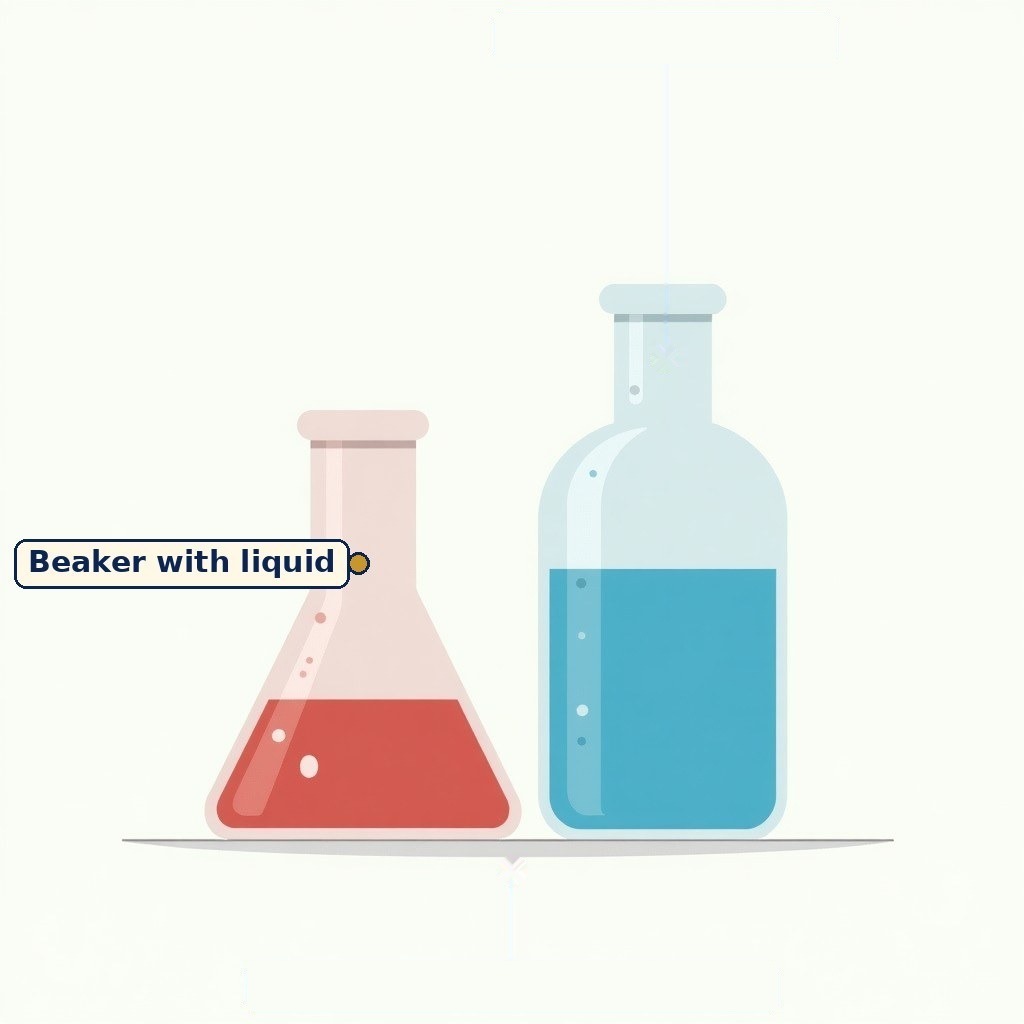
Diagram (labels are printed on the image): Litmus paper testing of liquids in beakers. A general picture of indicator testing; it is not a scene from the book.

Everyday substances such as lemon, vinegar, soap and baking soda. A general picture, not a book scene.
What the chapter is about
Substances around us can be grouped by how they behave. Acids taste sour and are found in things like lemon juice, vinegar and curd. Bases feel soapy or slippery and are found in things like soap water and baking soda solution. Substances that are neither acidic nor basic, like pure water and common salt solution, are called neutral.
We test substances with indicators. Litmus paper is the simplest indicator: blue litmus turns red in an acid, and red litmus turns blue in a base. Neither changes colour in a neutral substance. Other indicators, like turmeric and china rose, also change colour and help us identify acids and bases without tasting anything, which is important because tasting unknown chemicals is unsafe.
When an acid and a base mix in the right amounts, they cancel each other's effect and form a salt and water. This is called neutralisation. It is useful in daily life: antacids neutralise extra acid in the stomach, and a baking soda paste can soothe an ant sting, which is acidic in nature.
2.1 Nature of substances — testing with indicators
The chapter opens at a science fair on National Science Day, where a white sheet sprayed with a liquid suddenly shows the words “Welcome to the Wonderful World of Science”. The secret is an indicator: a substance that changes colour in acidic and basic solutions. Lemon juice, amla juice, tamarind water and vinegar are acidic samples; soap solution, baking soda solution, lime water and washing powder solution are basic; tap water, sugar solution and salt solution are neutral — they change neither litmus colour.
With litmus, the rule is simple: blue litmus turns red in an acid and stays blue in a base; red litmus turns blue in a base and stays red in an acid. A sample that changes neither is neutral. The chapter sorts the tested samples into Group A (turn blue litmus red — acidic), Group B (turn red litmus blue — basic) and Group C (no change — neutral).
Natural indicators work the same way. Red rose extract turns acidic solutions a shade of pink or red and basic solutions a shade of green; turmeric paper stays yellow in acids and turns reddish-brown in bases. Beetroot, purple cabbage, jamun and red hibiscus (gudhal) can also act as indicators. Every indicator in this chapter is read by colour — so a blindfolded person cannot read the result alone: in the chapter's exercise about Manya, the point is to notice that a colour test needs eyes, and she would need a partner to read the colour for her.
2.2 What happens when acids mix with bases
When an acid and a base are mixed in the right amounts, the resulting solution is neither acidic nor basic. This is a neutralisation reaction, and it forms salt and water with the release of heat: Acid + Base → Salt + Water + Heat. Adding more acid to a neutralised mixture makes it acidic again; adding more base makes it basic again — the nature of the mixture depends on which side is in excess.
2.3 Neutralisation in daily life
An ant bite injects an acidic liquid, formic acid, into the skin and stings; rubbing moist baking soda, a base, on the affected area neutralises the acid and relieves the pain. Acidic soil, often made acidic by excessive chemical fertilisers, can be treated with lime, a base; basic soil is treated by adding organic matter such as manure and composted leaves, which release acids that neutralise its basic nature. Factory waste that is acidic must be neutralised with basic substances before it is released, or the fish and plants in a lake will suffer. Hydrangea flowers give a living clue to soil nature: they are blue in acidic soil and pink or red in basic soil.
What you should learn
Learn to sort substances as acidic, basic or neutral using indicator tests, and remember that neutralisation is an acid and a base cancelling each other to give salt and water.
- Use litmus, rose extract and turmeric to classify a sample as acidic, basic or neutral.
- Write the neutralisation word equation and explain why heat is released.
- Apply neutralisation to ant bites, soil treatment and factory waste.
Key Terms
- Acid — A substance that turns blue litmus red; many acids taste sour.
- Base — A substance that turns red litmus blue; bases often feel soapy.
- Neutral — Neither acidic nor basic; does not change litmus colour.
- Indicator — A substance that changes colour in acids and bases, used to test them.
- Neutralisation — The reaction of an acid with a base to form salt and water.
- Indicator — A substance that changes colour in acids and bases, showing the nature of a solution.
- Neutralisation — A reaction between an acid and a base that forms salt and water and releases heat.
- Neutral solution — A solution that is neither acidic nor basic and changes neither litmus colour.
Remember
- Blue litmus turns red in acid; red litmus turns blue in base.
- Neutral substances do not change the colour of litmus paper.
- Never taste an unknown chemical to test it; use an indicator.
- Acid plus base gives salt plus water in neutralisation.
Exam Tip / Common Mistake
Common mistake: writing that all acids are strong and dangerous. Weak acids like lemon juice and vinegar are used in food. Strength and concentration are different ideas; always name the test result, not just a guess.
Indicators exist precisely so that you do not have to taste a chemical. In the chapter's activities, samples are tested with paper strips and extracts, never by tasting laboratory liquids.
Chart / Table: Testing substances with litmus
| Point | Detail |
|---|---|
| Acid (lemon juice) | Blue litmus turns red; red litmus stays red |
| Base (soap water) | Red litmus turns blue; blue litmus stays blue |
| Neutral (pure water) | No change in either litmus paper |
| Neutralisation product | Salt and water; the mixture becomes neutral |
Table: Three indicators at a glance
| Indicator | In acid | In base | In neutral |
|---|---|---|---|
| Blue litmus | Turns red | Stays blue | No change |
| Red litmus | Stays red | Turns blue | No change |
| Red rose extract | Pink / red shade | Green shade | No clear change |
| Turmeric paper | Stays yellow | Turns reddish-brown | Stays yellow |
Steps: testing a sample with litmus paper
- Cut small pieces of blue and red litmus paper and spread them on a clean, dry surface.
- Put one drop of the sample on a blue piece and one drop on a red piece, using separate droppers.
- Note both colour changes, then sort the sample into Group A (acidic), Group B (basic) or Group C (neutral).
Practice set — try it yourself
- What happens to blue litmus paper in lemon juice?
Hint: Think about the colour change in an acid. - How can you test a colourless liquid without tasting it?
Hint: Think about indicators. - Why is soap water called basic?
Hint: Think about what it does to red litmus. - What is formed when an acid reacts with a base?
Hint: Think about salt and water. - Why is an antacid taken for acidity?
Hint: Think about cancelling extra acid.
Questions with Answers
- How does litmus paper tell an acid from a base?
Blue litmus turns red in an acid, while red litmus turns blue in a base. If neither paper changes colour, the substance is neutral. The colour change is the test, so no tasting is needed. - Why should we never taste a chemical to check whether it is an acid?
Many chemicals are harmful or corrosive. Tasting is unsafe and unreliable. Indicators like litmus give the answer safely, without touching the tongue. - What is neutralisation? Give one daily-life example.
Neutralisation is the reaction between an acid and a base that forms a salt and water. For example, an antacid tablet neutralises excess acid in the stomach and relieves acidity. - A liquid turns red litmus blue. Is it acidic, basic or neutral? Give a reason.
It is basic, because only a base turns red litmus blue. An acid would turn blue litmus red, and a neutral liquid would change neither paper. - Turmeric stain turns red when soap touches it. What does this show?
Turmeric is a natural indicator. It turns red in a basic substance, so the colour change shows that soap water is basic in nature.
More questions with answers — extension
- A liquid turns blue litmus red but leaves red litmus unchanged. What is its nature, and why do both results point the same way?
It is acidic. Blue litmus turning red is the acid test; red litmus staying red only confirms that the liquid is not basic, so both observations agree on acidic. - A laboratory sample gives: red litmus → no change, blue litmus → turned red, turmeric → no change in colour. Identify its nature with justification.
It is acidic. Blue litmus turning red is the acid test, and it is the decisive result. Red litmus staying unchanged is exactly what an acid does (it only changes in a base), and turmeric staying yellow is also what an acid does (it only changes in a base) — so all three results agree on acidic. - Grape juice mixed with red rose extract gets a red tint. What happens when baking soda is added? Justify.
The red tint shows the mixture is acidic. Baking soda is basic, so it neutralises the acid; the rose extract colour shifts from the acidic shade toward the basic (green) shade as the mixture becomes basic. - Red rose extract turns liquid X green. What is X, and what happens if excess amla juice is added to X?
X is basic, because rose extract turns green only in bases. Amla juice is acidic; adding it in excess neutralises the base and then makes the mixture acidic, so the colour moves back from green toward the acidic pink-red shade. - You have vinegar, baking soda solution and sugar solution. Can turmeric paper alone identify all three? Explain.
No. Turmeric paper turns reddish-brown only with the baking soda solution (basic), so it identifies that one. Vinegar (acidic) and sugar solution (neutral) both leave turmeric yellow, so they cannot be told apart with turmeric alone — litmus is needed for those two. - Keerthi writes a secret message with orange juice for her grandmother. Which indicator reveals it, and how?
Orange juice is acidic and dries invisible on paper. A basic indicator treatment — for example, the chapter's spray-and-reveal idea using an indicator that changes colour with acids — makes the writing appear, because the dried juice reacts differently from the plain paper. In the chapter's opening trick, the sprayed liquid is the indicator that reveals the hidden writing. - A garden's soil is acidic and its plants look unhealthy. What treatment does the chapter suggest, and why does it work?
Add basic substances such as lime to the soil. The base neutralises the excess acid in the soil, bringing it closer to neutral so that plant roots can grow healthily. - Factory waste that is acidic is flowing into a lake and fish are dying. What should be done before releasing the waste, and why?
The waste should be neutralised by adding basic substances before release. Untreated acidic waste changes the lake water's nature and harms fish; neutralisation brings the waste toward neutral so it is far less harmful. - Why are hydrangea flowers blue in acidic soil and pink or red in basic soil? What does this tell a gardener?
Hydrangea contains natural pigments that act like indicators, changing colour with soil nature. A gardener can read the flower colour as a clue to the soil's acidic or basic nature and adjust the soil treatment accordingly. - Design a table of secret-message combinations from the chapter's opening: what could be the writing liquid and what could be in the spray bottle?
The chapter itself suggests one possibility: write with a soap solution (basic, invisible when dry) and spray with a turmeric solution — the writing turns reddish-brown where the base meets the turmeric. Other combinations follow the same rule: an acidic invisible ink (lemon or amla juice) revealed by a spray that changes colour in acids, such as rose extract. The key rule is that the writing and the spray must react to show a colour.
- Acid: blue litmus → red. Base: red litmus → blue. Neutral: no change in either.
- Rose extract: acid pink-red, base green. Turmeric: base reddish-brown, acid yellow.
- Neutralisation: Acid + Base → Salt + Water + Heat — used for ant bites, soil and waste.
How to use this page: Read the summary, say the Key Terms in your own words, then try the practice set without looking. Use the Questions with Answers to check yourself afterwards. Ask your teacher or parent to check your answers.