

Chapter 4: Too Many People Too Few Trees
Original notes — ready Bihar Board — BSEB • Class 9 • English • Book: Panorama Bhag-1 (Purani pustak — 2025 se pehle wali)
Too Many People Too Few Trees — EG's own notes, in simple English
Book: Panorama Bhag-1 (Purani pustak — 2025 se pehle wali) (BSEB, Class 9) | Chapter 4 (Prose 4) | Type: Prose
This page carries Educational Galaxy's own original notes — a theme-level summary in simple English, not a copy of the textbook. No official textbook PDF is given here.

Diagram (labels are printed on the image): A crowded town beside a shrinking patch of trees. Labels are printed on the picture itself. This is a general picture, not a scene from the book.
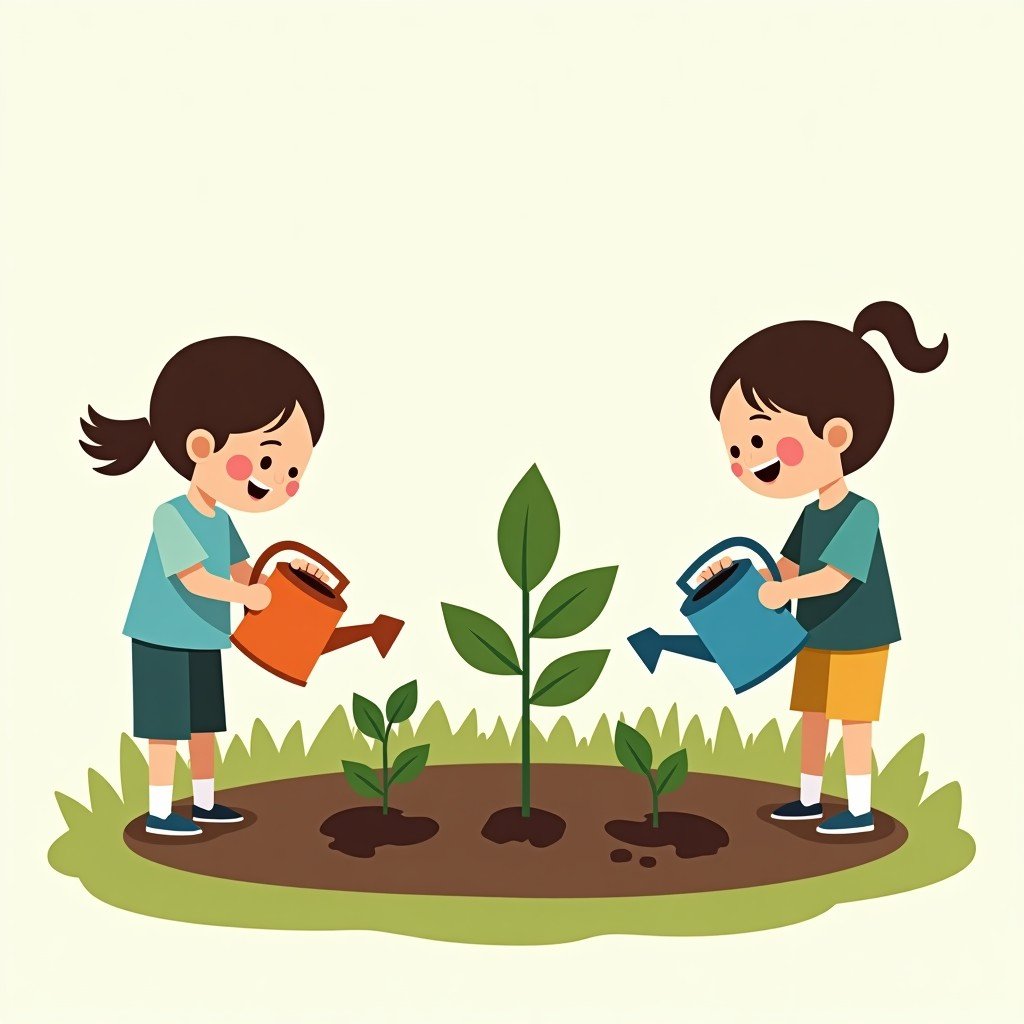
Children planting saplings — a general picture about restoring balance, not a book scene.
What the chapter is about
This lesson is about a simple but serious imbalance: the number of people keeps growing, while the number of trees keeps falling. People need houses, roads, fields, and fuel, and forests are cut to make room. The lesson asks us to see the result — less clean air, less rain, hotter days, and animals losing their homes.
The lesson does not only describe the problem; it points to the answer. We must plant trees, protect forests, and use resources wisely. Every tree planted is a small step back towards balance. The lesson teaches that human life and nature depend on each other, and caring for trees is caring for our own future.
What you should learn
People and nature must stay in balance: protect forests and plant trees.
Key Terms
- Population — The number of people living in a place.
- Deforestation — Cutting down forests on a large scale.
- Balance — A state where different things stay in fair proportion.
- Environment — The natural world around us — air, water, land, plants, animals.
- Sapling — A young tree that has just been planted.
Remember
- More people means more pressure on land and forests.
- Trees give clean air, shade, rain, and homes to animals.
- Cutting trees without planting harms our own future.
- Planting and protecting trees restores balance.
Exam Tip / Common Mistake
Common mistake: writing only about population. Always link the two sides: too many people AND too few trees, and the answer — planting and protection.
Chart / Table: Cause and Effect
| Point | Detail |
|---|---|
| More houses and roads | Forests are cut for land |
| Fewer trees | Less clean air and shade |
| Less forest cover | Less rain and hotter days |
| Planting trees | Balance slowly returns |
Practice set (try on your own)
- What imbalance does the title describe?
Hint: Think about people and trees together. - Name two harms of cutting forests.
Hint: Think about air, rain, and animal homes. - Why do people cut trees?
Hint: Think about houses, roads, and fuel. - What can students do about it?
Hint: Think about planting and protecting. - Why is planting one tree useful?
Hint: Think about air, shade, and future.
Questions with Answers
- What problem does the lesson describe?
The lesson describes the imbalance between a growing population and shrinking forests — too many people, too few trees. - Why are forests cut?
Forests are cut to make room for houses, roads, fields, and fuel for a growing population. - What happens when trees disappear?
Air becomes less clean, days grow hotter, rain is affected, and animals lose their homes. - What is the solution the lesson suggests?
The solution is to plant more trees, protect existing forests, and use natural resources wisely. - How are human life and trees connected?
Human life depends on trees for clean air, rain, shade, and a healthy environment, so caring for trees is caring for ourselves.
How to use this page: First read the summary, say the key terms in your own words, then try the practice set without looking. Finally check yourself with the questions and answers. Get your answers checked by your teacher or parents.