

Prose 5: Ideas That Have Helped Mankind
Essay • Author: Bertrand Russell • Original EG notes in simple English
Ideas That Have Helped Mankind — EG's own notes, in simple English
Book: Rainbow Bhag-2 (Purani pustak — 2025 se pehle wali) (BSEB, Class 12) | Prose 5 | Type: Essay | Author: Bertrand Russell
This page carries Educational Galaxy's own original notes — a theme-level summary in simple English, not a copy of the textbook. No official textbook PDF is given here.
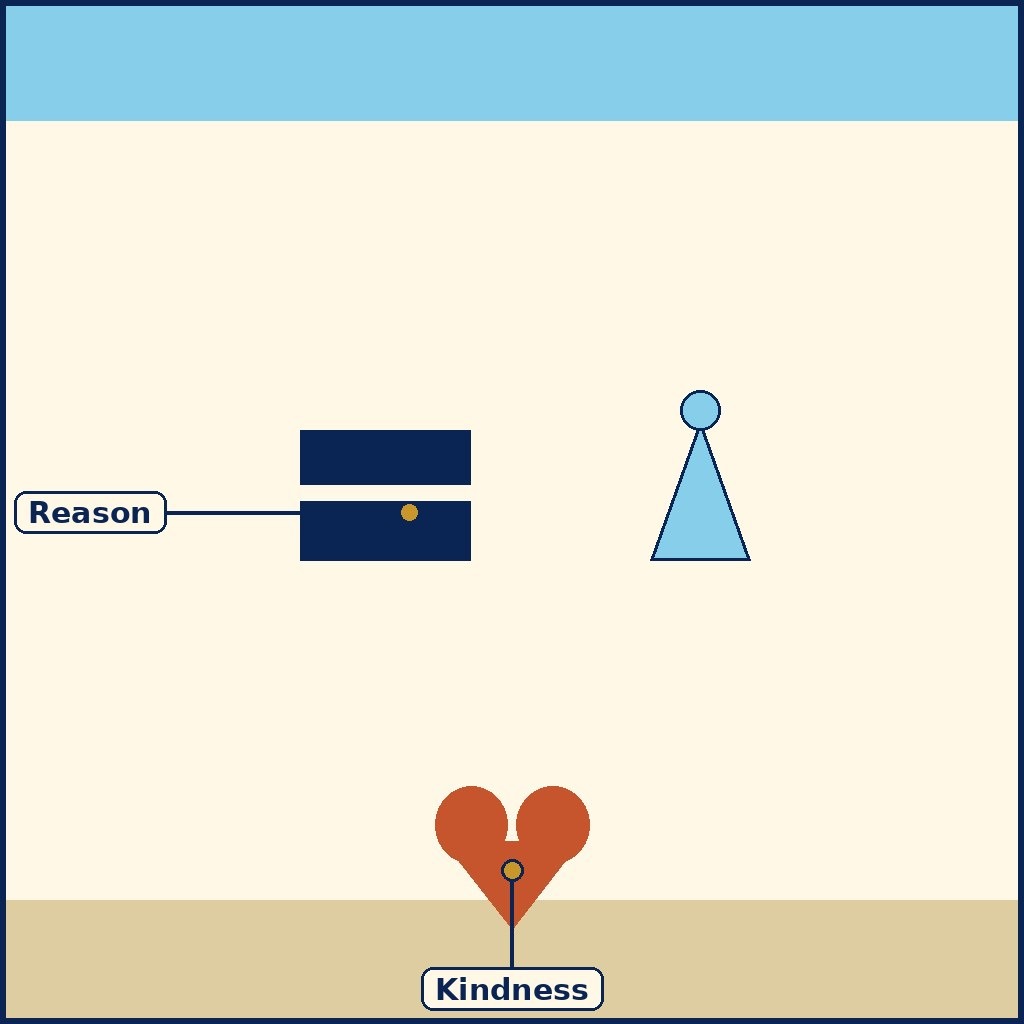
Diagram (labels are printed on the image): A thinker at his desk — ideas as mankind's real power. (PIL-drawn diagram: the Flux service was unavailable, so this diagram was drawn directly.)

Students experimenting — science replacing fear with understanding.
What the chapter is about
In this essay, Bertrand Russell asks a simple question: which ideas have really helped mankind? His answer is surprising. It is not weapons or riches that helped most, but ideas — ideas like reason, science, kindness and freedom.
Russell says that early humans lived in fear of nature. Ideas changed that: science taught people to understand nature instead of fearing it; reason taught them to think instead of blindly believing; kindness taught them to live together in peace.
The lesson is that ideas are the real power of mankind. A good idea, like tolerance or scientific thinking, can improve millions of lives, while a bad idea, like hatred, can destroy them.
Russell judges ideas by their results, not by their age or popularity. An idea helps mankind if it makes life longer, happier, kinder and more full of knowledge. By that test, superstition fails even though it is old, and science passes even though it is young. This test is the essay's most useful tool, and exam answers should name it.
Notice also the warning hidden in the praise of science. Science gives power, but power alone does not decide whether the power helps or harms. Only ideas about kindness, tolerance and freedom steer power toward good. That is why Russell puts moral ideas beside scientific ones: knowledge without kindness is only half of progress.
What you should learn
Understand Russell's claim — ideas, not weapons or riches, are mankind's real power.
Key Terms
- Idea — A thought that can change how people live.
- Reason — Thinking clearly, with logic and evidence.
- Tolerance — Accepting people who differ from us.
- Superstition — Belief without reason or evidence.
- Mankind — All human beings together.
Remember
- The ideas that helped most are reason, science, kindness and freedom.
- Early humans lived in fear of nature.
- Science replaced fear with understanding.
- A bad idea, like hatred, can destroy millions of lives.
Exam Tip / Common Mistake
Common mistake: writing only 'science is useful'. In exams, name Russell's set of ideas — reason, science, kindness, freedom — and contrast good ideas with bad ones.
Chart / Table
| Point | Detail |
|---|---|
| Author | Bertrand Russell |
| Question | Which ideas helped mankind most? |
| Good ideas | Reason, science, kindness, freedom |
| Old fear | Fear of nature, superstition |
| Message | Ideas are mankind's real power |
Practice set — try it yourself
- What is Russell's surprising answer?
Hint: Think about ideas versus weapons and riches. - How did science help mankind?
Hint: Think about understanding nature instead of fearing it. - What does reason do for people?
Hint: Think about thinking instead of blindly believing. - How can a bad idea destroy lives?
Hint: Think about hatred as an idea. - Name one good idea that helps your school.
Hint: Think about tolerance or honesty.
Core Questions with Answers
- What question does Russell ask?
Which ideas have really helped mankind? - What is his answer?
Ideas — reason, science, kindness and freedom — helped more than weapons or riches. - How did early humans live?
In fear of nature, ruled by superstition. - How did science change that?
It taught people to understand nature instead of fearing it. - What is the main message?
Ideas are mankind's real power: good ideas improve millions of lives, bad ideas destroy them.
Extension Questions with Answers
- What test does Russell use to judge whether an idea has helped mankind?
Its results: does it increase life, happiness, knowledge, variety of experience and friendliness among people? An idea that passes this test has helped, whatever its age. - Why does Russell say fear was early man's greatest enemy?
Because fear of nature — of storms, disease and darkness — kept early humans helpless and superstitious. Ideas that replaced fear with understanding freed them to act. - How can a bad idea harm more than a bad weapon?
A weapon harms those it strikes, but a bad idea like hatred spreads through whole societies and generations, turning neighbours into enemies. Ideas multiply; weapons do not. - Why does Russell put kindness beside science, not below it?
Because science gives power, but kindness decides the use of power. Knowledge without kindness can build weapons; kindness without knowledge cannot cure disease. Mankind needs both. - Give a modern example of Russell's test in action.
The idea of vaccination passes his test: it lengthens life, reduces fear and increases happiness. The idea of spreading rumours fails it: it increases fear and unfriendliness without adding knowledge.
Board Exam Questions (board-pattern practice)
These are Educational Galaxy's own board-pattern practice questions, written in the style of board questions. They are not claimed to be real past-year questions.
- Why does Russell call ideas mankind's real power? Answer: Because ideas change behaviour on a large scale — reason, science, kindness and freedom improved millions of lives, while weapons only destroyed.
- How did reason help mankind? Answer: Reason taught people to think with logic and evidence instead of blindly believing, which weakened superstition.
- Contrast a good idea with a bad idea. Answer: Tolerance builds peace and cooperation; hatred builds conflict and destruction. Both are ideas, but their effects are opposite.
- How did science replace fear? Answer: By explaining nature — storms, disease, seasons — science turned feared mysteries into understood facts.
- What lesson does this essay give students? Answer: To value good ideas, to think reasonably, and to reject ideas of hatred and superstition.
How to use this page: First read the summary, say the key terms in your own words, then try the practice set without looking. Finally check yourself with the questions and answers. Get your answers checked by your teacher or parents.
- The ideas that helped most are reason, science, kindness and freedom.
- Early humans lived in fear of nature.
- Science replaced fear with understanding.
- A bad idea, like hatred, can destroy millions of lives.