

Poetry 4: Stopping by Woods on a Snowy Evening
Poetry • Author: Robert Frost • Original EG notes in simple English
Stopping by Woods on a Snowy Evening — EG's own notes, in simple English
Book: Rainbow Bhag-1 (Purani pustak — 2025 se pehle wali) (BSEB, Class 11) | Poetry 4 | Type: Poetry | Author: Robert Frost
This page carries Educational Galaxy's own original notes — a theme-level summary in simple English, not a copy of the textbook. No official textbook PDF is given here.
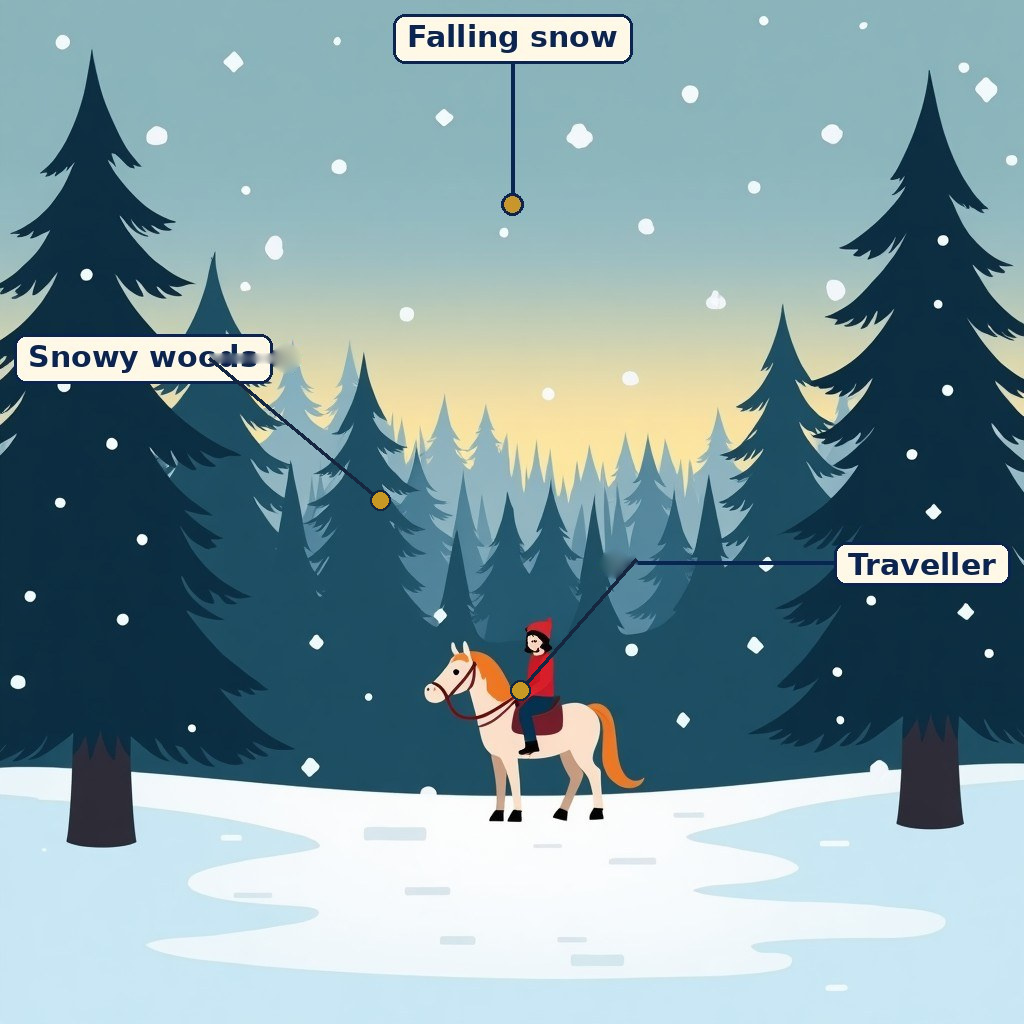
Diagram (labels are printed on the image): A rider pausing by snowy woods — a general picture of the poem's scene, not a book scene.
A snowy path leading onward — a general picture of miles still to go.
What the chapter is about
On a dark, snowy evening, a traveller stops his horse by a lovely, dark and deep wood. The owner of the woods lives in a village and will not see him stop. The horse shakes its harness bells, as if asking why they stop where there is no farmhouse.
The woods are beautiful and the traveller longs to stay, but he has promises to keep and miles to go before he sleeps. Duty calls him back to the road — a quiet lesson that rest must wait until work is done.
What you should learn
Beauty tempts us to linger, but duty and promises call us onward.
Key Terms
- Woods — A forest.
- Harness bells — Bells on the horse's harness that ring when it shakes.
- Promises to keep — Duties and commitments one must fulfil.
- Miles to go — The journey still ahead.
- Sleep — Here, rest — and, in deeper reading, life's end.
Remember
- The traveller stops by woods on a snowy evening.
- The woods' owner lives in the village.
- The horse shakes its harness bells in surprise.
- The woods are lovely, dark and deep.
- He must go on: promises to keep, miles to go.
Exam Tip / Common Mistake
Common mistake: reading 'sleep' only as bedtime. In the poem it also hints at life's final rest — duties come first.
Chart / Table
| Point | Detail |
|---|---|
| The woods | Lovely, dark, deep — tempting rest |
| The horse | Surprised at stopping in nowhere |
| The traveller | Torn between beauty and duty |
| The choice | Go on — promises first |
Practice set (try on your own)
- When and where does the traveller stop?
Hint: Think about a snowy evening and woods. - Who owns the woods?
Hint: Think about the village. - Why does the horse shake its bells?
Hint: Think about stopping where there is no farmhouse. - Why does the traveller not stay?
Hint: Think about promises and miles. - What does 'miles to go before I sleep' mean?
Hint: Think about duties before rest.
Questions with Answers
- Describe the scene of the poem.
On the darkest evening of the year, snow is falling, and a traveller stops his horse by a wood between the woods and a frozen lake, far from any farmhouse. - Why is the horse surprised?
Because there is no reason to stop there — no farmhouse, no work. Its harness bells shake as if asking whether some mistake has been made. - What tempts the traveller to stay?
The beauty of the woods — lovely, dark and deep — and the quiet snowfall. He longs to watch them fill up with snow. - Why does he go on?
Because he has promises to keep and miles to go before he sleeps. Duty and commitments call him back to his journey. - What is the poem's lesson?
That life offers beautiful pauses, but duty must come first. Rest is earned after promises are kept.
How to use this page: First read the summary, say the key terms in your own words, then try the practice set without looking. Finally check yourself with the questions and answers. Get your answers checked by your teacher or parents.
- The traveller stops by woods on a snowy evening.
- The woods' owner lives in the village.
- The horse shakes its harness bells in surprise.
- The woods are lovely, dark and deep.
- He must go on: promises to keep, miles to go.