

Poetry 3: The Chimney Sweeper
Poetry • Author: William Blake • Original EG notes in simple English
The Chimney Sweeper — EG's own notes, in simple English
Book: Rainbow Bhag-1 (Purani pustak — 2025 se pehle wali) (BSEB, Class 11) | Poetry 3 | Type: Poetry | Author: William Blake
This page carries Educational Galaxy's own original notes — a theme-level summary in simple English, not a copy of the textbook. No official textbook PDF is given here.
Diagram (labels are printed on the image): Rooftops at sunrise with birds — a general picture of the cold morning the sweepers rise to work, not a book scene. (The first chimney-sweeper prompts repeatedly returned blank black images from Flux and were rejected; this sunrise scene was used instead.)
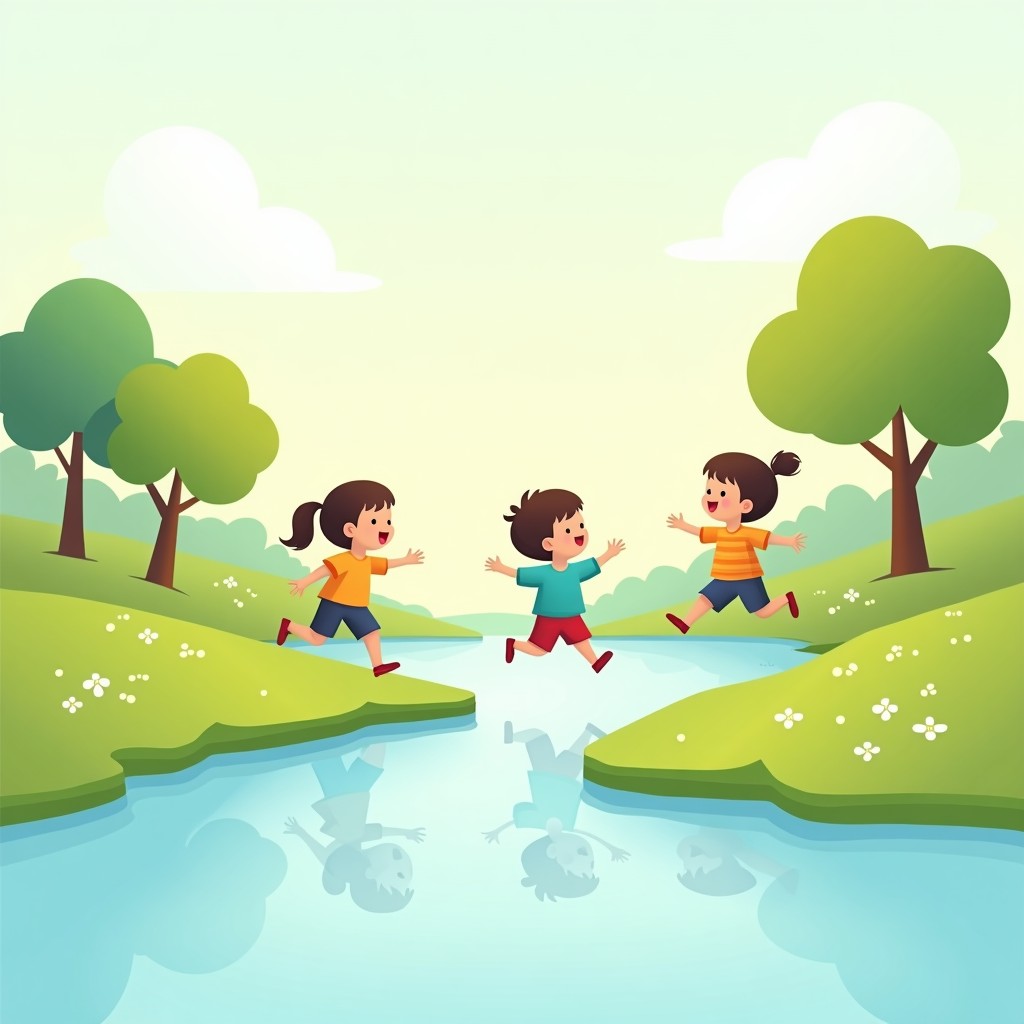
Children playing by a river in sunlight — a general picture of Tom's dream of freedom.
What the chapter is about
A small boy, sold by his father to sweep chimneys, tells his sad story. His mother is dead, and he cries 'weep' as he works in soot and darkness. Another boy, Tom Dacre, cries when his curly hair is shaved, and the speaker comforts him.
At night Tom dreams of an angel who frees the sweepers from black coffins, washes them in a river and lets them play in the sun. The dream gives hope, but the poem's real protest is clear: innocent children should not suffer such cruel work.
What you should learn
Innocence suffers under cruel child labour — and hope survives even in a dark dream.
Key Terms
- Chimney sweeper — A child worker who cleaned soot from chimneys.
- Soot — Black powder from burnt coal.
- Coffins of black — The dark chimneys, imaged as coffins.
- Angel — A heavenly helper in Tom's dream.
- Innocence — Childlike purity and goodness.
Remember
- The speaker's mother is dead; his father sold him.
- He sweeps chimneys and cries 'weep, weep'.
- Tom Dacre cries when his hair is shaved.
- Tom dreams an angel frees the sweepers.
- The poem protests against child labour.
Exam Tip / Common Mistake
Common mistake: calling Tom's dream the happy ending. The dream is HOPE, but the protest against child labour is the poem's point.
Chart / Table
| Point | Detail |
|---|---|
| Real life | Soot, darkness, hard work |
| Tom's dream | Angel, river, sun, play |
| Comfort | The speaker consoles Tom |
| Protest | Children must not be exploited |
Practice set (try on your own)
- Who is the speaker and what happened to him?
Hint: Think about his mother and father. - Why does Tom Dacre cry?
Hint: Think about his shaved hair. - What comfort does the speaker give Tom?
Hint: Think about soot and shaved hair. - What does Tom dream?
Hint: Think about an angel and a river. - What is Blake protesting against?
Hint: Think about children and cruel work.
Questions with Answers
- Who is the chimney sweeper?
A young boy whose mother is dead and whose father sold him into sweeping chimneys. He works in soot and cries 'weep' as he calls his trade. - Why does the speaker comfort Tom Dacre?
Tom cries because his curly hair is shaved for the work. The speaker says soot cannot spoil his shaved head — a child's kindness in a cruel place. - Describe Tom's dream.
An angel with a bright key opens the black coffins, sets the sweepers free, washes them in a river, and lets them play naked and white in the sun. - Why are the children happy after the dream?
Because the dream gives them hope of freedom and purity. They rise in the dark morning ready to do their duty, warmed by hope. - What is Blake's message?
That society is cruel to exploit innocent children. The poem asks readers to see child labour as a shame, not as a normal custom.
How to use this page: First read the summary, say the key terms in your own words, then try the practice set without looking. Finally check yourself with the questions and answers. Get your answers checked by your teacher or parents.
- The speaker's mother is dead; his father sold him.
- He sweeps chimneys and cries 'weep, weep'.
- Tom Dacre cries when his hair is shaved.
- Tom dreams an angel frees the sweepers.
- The poem protests against child labour.