

Chapter 13: Earth as a System: Energy, Matter, and Life
Original notes — ready CBSE (NCERT, English Medium) • Class 9 • Science • Book: Exploration
Chapter 13: Earth as a System: Energy, Matter, and Life — EG's own notes, in simple words
Book: Exploration (CBSE, Class 9) | Chapter 13 | Medium: English
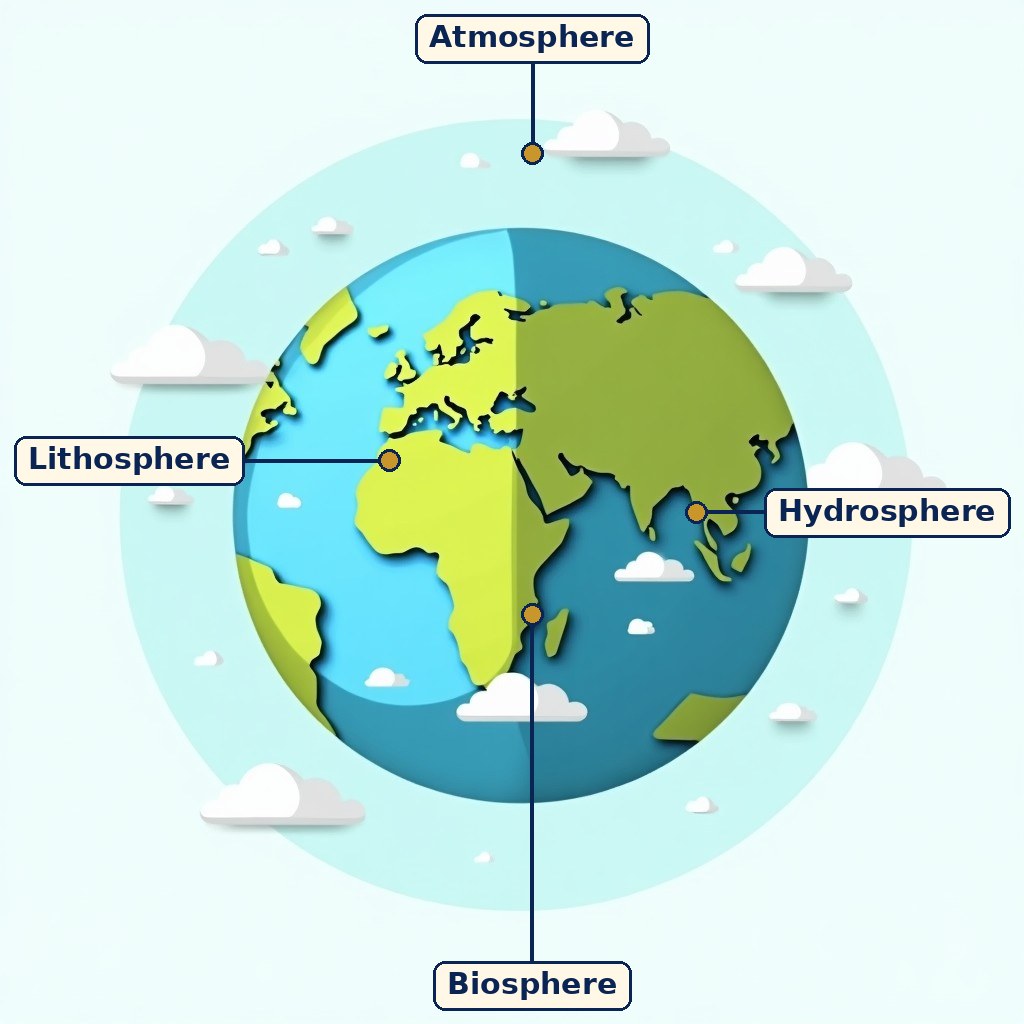
Diagram (labels are printed on the image): Diagram (labels are printed on the image): Earth as a system: the atmosphere, hydrosphere and lithosphere together support the biosphere, where life exists. A general diagram for study, not a figure copied from the book.
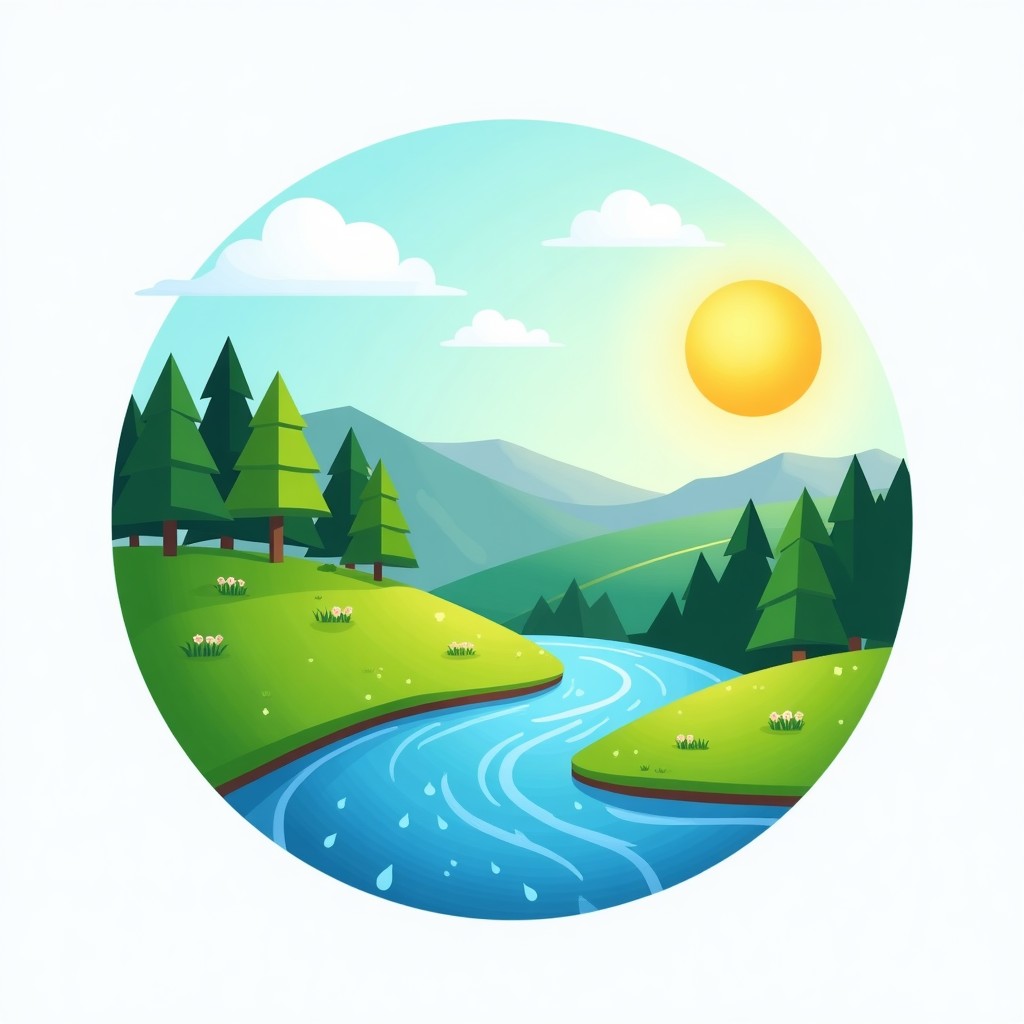
Earth's systems working together — air, water, land and life. A general picture about Earth as a system, not a book scene.
What the chapter is about
Earth is not a collection of separate parts but one connected system. Scientists describe it as four interacting spheres: the atmosphere, the air around us; the hydrosphere, all the water on Earth; the lithosphere, the solid land and rocks; and the biosphere, all living things. A change in one sphere affects the others.
Energy drives the whole system. Almost all energy on Earth comes from the Sun. It warms the air, drives winds and the water cycle, and is captured by green plants in photosynthesis, passing through food chains from producers to consumers. Matter, meanwhile, is recycled: water moves through evaporation, condensation and rain, and carbon moves between air, living things, soil and oceans.
Because the spheres are linked, human actions have wide effects. Cutting forests reduces rainfall and soil health, burning fossil fuels adds carbon dioxide to the atmosphere and warms the climate, and polluting rivers harms the life that depends on them. Understanding Earth as a system helps us use resources wisely and protect the balance that supports life.
What you should learn
Notice the four spheres, how energy flows from the Sun through food chains, how matter cycles, and why a change in one sphere touches the others.
Key Terms
- Atmosphere — The layer of gases surrounding Earth.
- Hydrosphere — All the water on Earth — oceans, rivers, lakes, ice and groundwater.
- Lithosphere — The solid outer part of Earth: rocks, soil and land.
- Biosphere — All living things on Earth and the places where they live.
- Water cycle — The continuous movement of water between Earth and the atmosphere.
Remember
- Four spheres: atmosphere, hydrosphere, lithosphere, biosphere.
- The Sun is the main source of energy for Earth's system.
- Energy flows through food chains; matter is recycled in cycles.
- A change in one sphere affects the others.
Exam Tip / Common Mistake
Common mistake: saying energy is recycled like matter. Matter cycles again and again, but energy flows one way — from the Sun through food chains and out as heat — and must keep being supplied.
Chart / Table: Earth's four spheres
| Point | Detail |
|---|---|
| Atmosphere | Air and gases around Earth |
| Hydrosphere | Oceans, rivers, lakes, ice and groundwater |
| Lithosphere | Rocks, soil and solid land |
| Biosphere | All living things and their habitats |
Practice set — try it yourself
- Name the four spheres of Earth and give one example of each.
Hint: Think about air, water, land and life. - Where does almost all energy on Earth come from?
Hint: Think about what drives winds and photosynthesis. - How is the cycling of matter different from the flow of energy?
Hint: Think about recycling versus one-way flow. - How can cutting down forests affect rainfall?
Hint: Think about links between spheres. - Name two human actions that disturb Earth's balance.
Hint: Think about fuels and pollution.
Questions with Answers
- What are the four spheres of Earth?
The atmosphere (air), the hydrosphere (all water), the lithosphere (solid land and rocks) and the biosphere (all living things). They interact with each other continuously. - What is the main source of energy for Earth's system?
The Sun. Solar energy warms the air and land, drives winds and the water cycle, and is captured by plants in photosynthesis, entering food chains. - How does matter cycle on Earth? Give one example.
Matter is reused again and again. In the water cycle, water evaporates from oceans, condenses into clouds, falls as rain, and collects again in rivers and oceans. - How is energy flow different from matter cycling?
Matter cycles and is reused, but energy flows in one direction: from the Sun through producers and consumers, and finally out as heat. It is not recycled and must be supplied continuously. - Why should we understand Earth as a system?
Because the spheres are linked, an action in one sphere affects the others — for example, burning fossil fuels warms the atmosphere, melts ice and changes sea levels. Seeing the links helps us protect the balance that supports life.
How to use this page: Read the summary, say the Key Terms in your own words, then try the practice set without looking. Use the Questions with Answers to check yourself afterwards. Ask your teacher or parent to check your answers.