

RTE 1: Three Days to See
Prose (Read, Think and Enjoy) • Author: Helen Keller • Original EG notes in simple English
Three Days to See — EG's own notes, in simple English
Book: Rainbow Bhag-1 (Purani pustak — 2025 se pehle wali) (BSEB, Class 11) | Read, Think and Enjoy 1 | Type: Prose (Read, Think and Enjoy) | Author: Helen Keller
This page carries Educational Galaxy's own original notes — a theme-level summary in simple English, not a copy of the textbook. No official textbook PDF is given here.
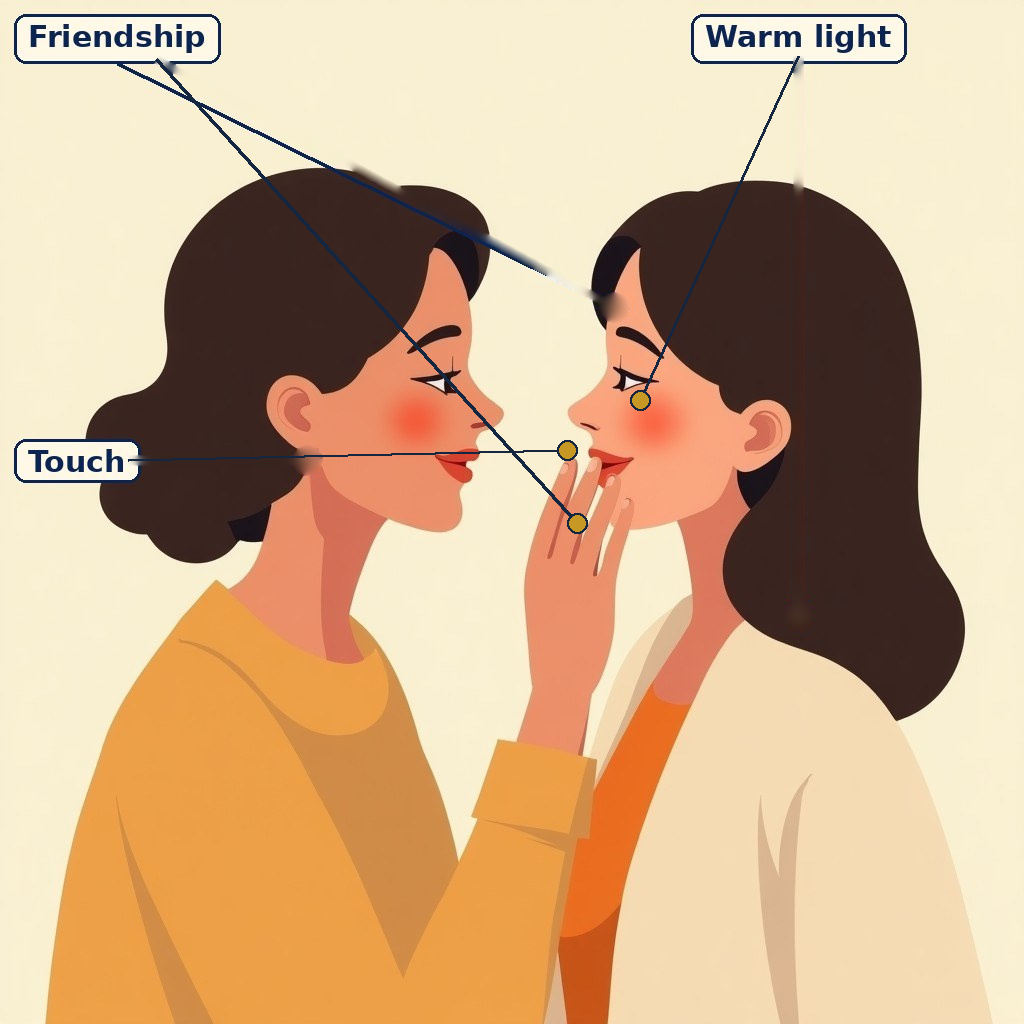
Diagram (labels are printed on the image): A woman touching a friend's face gently — a general picture of knowing by touch, not a book scene.

Countryside at sunrise — a general picture of nature Keller longed to see.
What the chapter is about
Helen Keller, who could neither see nor hear, imagines what she would do if she had three days of sight. On the first day she would look at the faces of friends, on the second at nature and the countryside, and on the third at the busy life of a city.
Her point is sharp: people who can see often look without really seeing. They rush past beauty and take sight for granted. Keller asks us to use our senses fully — to see, as if we might lose sight tomorrow.
What you should learn
Use your senses fully today; sight taken for granted is sight wasted.
Key Terms
- Sight — The sense of seeing.
- Take for granted — To value too little because it is always there.
- Countryside — Rural land outside towns.
- Gratitude — Thankfulness for what one has.
- Senses — Seeing, hearing, touch, smell, taste.
Remember
- Keller could neither see nor hear.
- She imagines three days of sight.
- Day 1: faces of friends. Day 2: nature. Day 3: city life.
- People with sight often look without seeing.
- We should use our senses with gratitude.
Exam Tip / Common Mistake
Common mistake: listing the three days only. Keller's POINT is gratitude — use sight fully before it is lost.
Chart / Table
| Point | Detail |
|---|---|
| Day 1 | Faces of dear friends |
| Day 2 | Nature and countryside |
| Day 3 | Busy city life |
| Message | See fully, gratefully, today |
Practice set (try on your own)
- Who is Helen Keller?
Hint: Think about a woman who could not see or hear. - What would she see on day one?
Hint: Think about friends' faces. - What would she see on day two?
Hint: Think about nature. - What would she see on day three?
Hint: Think about city life. - What is her message to people with sight?
Hint: Think about taking sight for granted.
Questions with Answers
- What does Keller imagine in this essay?
That she is given three days of sight, and she plans how she would use them: friends' faces first, then nature, then the busy life of a city. - Why does she choose friends' faces first?
Because she knows them only by touch. Seeing their faces would complete her love and knowledge of them. - What does she want to see in nature?
The countryside in all its beauty — fields, forests, sky and the changing light — things sighted people rush past. - What is her complaint about sighted people?
That they look without really seeing. They take the gift of sight for granted and miss the beauty around them. - What should readers learn?
To use every sense fully and gratefully, as if it might be taken away tomorrow. Attention turns ordinary sights into gifts.
How to use this page: First read the summary, say the key terms in your own words, then try the practice set without looking. Finally check yourself with the questions and answers. Get your answers checked by your teacher or parents.
- Keller could neither see nor hear.
- She imagines three days of sight.
- Day 1: faces of friends. Day 2: nature. Day 3: city life.
- People with sight often look without seeing.
- We should use our senses with gratitude.