

Prose 1: Animals in Prison
Prose • Author: Jawaharlal Nehru • Original EG notes in simple English
Animals in Prison — EG's own notes, in simple English
Book: Rainbow Bhag-1 (Purani pustak — 2025 se pehle wali) (BSEB, Class 11) | Prose 1 | Type: Prose | Author: Jawaharlal Nehru
This page carries Educational Galaxy's own original notes — a theme-level summary in simple English, not a copy of the textbook. No official textbook PDF is given here.
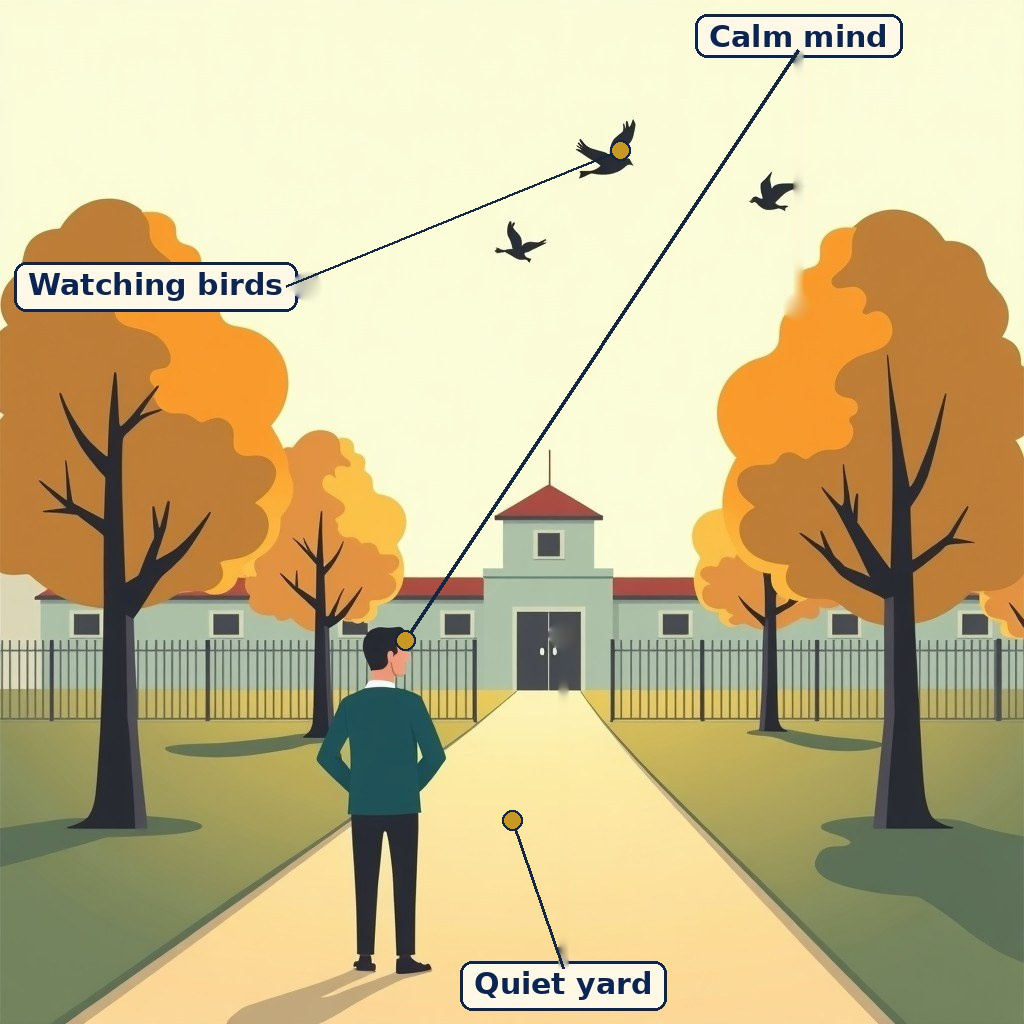
Diagram (labels are printed on the image): A man watching birds in a quiet yard — a general picture of finding joy in nature during lonely days, not a book scene.

Small creatures near a wall in the morning — a general picture of the lively company Nehru found in prison.
What the chapter is about
In prison, Nehru's life was dull and lonely, but the animals around him brought it alive. Birds sang near his cell, insects moved about his room, and small creatures visited his yard. Watching them became his daily joy, and he began to notice their habits with care and affection.
The lesson shows that even a caged man can find freedom in watching nature. Nehru treats the animals as friends, not as pests. He also notes a sad truth: people worship animals yet are often unkind to them. Kindness, patience and close observation are the real lessons here.
What you should learn
Even in a lonely place, nature and kindness can keep the mind free and alive.
Key Terms
- Monotony — The dull sameness of doing the same thing every day.
- Diversion — Something that breaks dullness and gives fresh interest.
- Cell — A small room in a prison.
- Companion — A friend who shares one's time and company.
- Observation — Careful watching and noticing of details.
Remember
- Prison life was dull, but animals broke its monotony for Nehru.
- Birds, insects, squirrels, dogs and even snakes visited his cells.
- Nehru watched animals with affection and noticed their habits.
- He says people worship animals but are often unkind to them.
Exam Tip / Common Mistake
Common mistake: listing animals only. Add what Nehru LEARNT from them — patience, joy and kindness.
Chart / Table
| Point | Detail |
|---|---|
| Birds | Song near the cell — daily joy |
| Small creatures | Ants, lizards, squirrels — lively company |
| Unwelcome visitors | Scorpions, snakes, centipede — fear, but no hatred |
| Lesson | Kindness and close observation beat dullness |
Practice set (try on your own)
- Why was prison life dull for Nehru?
Hint: Think about sameness and loneliness. - Which animals gave Nehru joy in prison?
Hint: Think about birds and small creatures near his cell. - How did Nehru feed lost baby squirrels?
Hint: Think about a small everyday object used as a bottle. - What did Nehru notice about people and animals?
Hint: Think about worship versus kindness. - What does this lesson teach about loneliness?
Hint: Think about finding life even in a deserted yard.
Questions with Answers
- What made Nehru's prison days less dull?
The animals around him — birds singing, insects moving, squirrels and dogs visiting — broke the monotony and gave him daily joy. - How did Nehru feel about snakes and scorpions in his cell?
He feared their bites, but he did not hate them. He watched them calmly and even welcomed the break they gave from dullness. - What did the brave monkey in Bareilly Jail do?
A baby monkey was caught by a crowd, and its parent jumped down bravely among the people and rescued it. Nehru admired that courage. - What sad truth does Nehru point out about Hindus and animals?
He says Hindus worship animals, yet they are often unkind to them in daily life. Worship without kindness is hollow. - What is the main message of the lesson?
Even in hardship, a kind and observant mind finds joy in nature. Patience and compassion keep a person truly free.
How to use this page: First read the summary, say the key terms in your own words, then try the practice set without looking. Finally check yourself with the questions and answers. Get your answers checked by your teacher or parents.
- Prison life was dull, but animals broke its monotony for Nehru.
- Birds, insects, squirrels, dogs and even snakes visited his cells.
- Nehru watched animals with affection and noticed their habits.
- He says people worship animals but are often unkind to them.